

This has been a difficult year for climate and environmental journalism, with many established newsrooms either scaling back their coverage or scrapping it altogether.
The loss of expertise and coverage is nothing short of devastating, because after all, we’re talking about our own survival here and the current energy crisis should underscore the importance of action. Besides, science has been unequivocal about where we are heading if we don’t change course.
So I’m happy for a tiny light in this tunnel. Lighthouse Reports is hiring an experienced editor committed to climate and environmental issues (including food systems, obviously) and with a track record of leading a diverse team of reporters and story editors. Yes, I’m part of that team.
If you know anyone who fits the bill, please encourage them to apply here.
As usual, there has been a flurry of reports over the past few weeks. Here are four you may have missed but are well worth your time.
The underlying thread running through them is this: the systems we rely on are increasingly unfit for purpose.
Why ending hunger requires moving beyond calories, staples, and fragmented policymaking
“Can the agricultural development community end hunger differently?” asked a new report from the HESAT2030 coalition that provides donors and policymakers with evidence and tools to make data-driven decisions for transforming agrifood systems and ending hunger sustainably, nutritiously, and equitably.
The question is both timely and urgent: our obsession with yields, calories, and a few staple crops at the expense of healthy, nutritious, and diverse diets has led pretty much every country in the world to struggle with multiple forms of malnutrition.
At the same time, the negative environmental costs of how we produce food - biodiversity loss, soil degradation, deforestation, worsening water scarcity, and the emissions of multiple greenhouse gases heating up the planet - continue to mount.
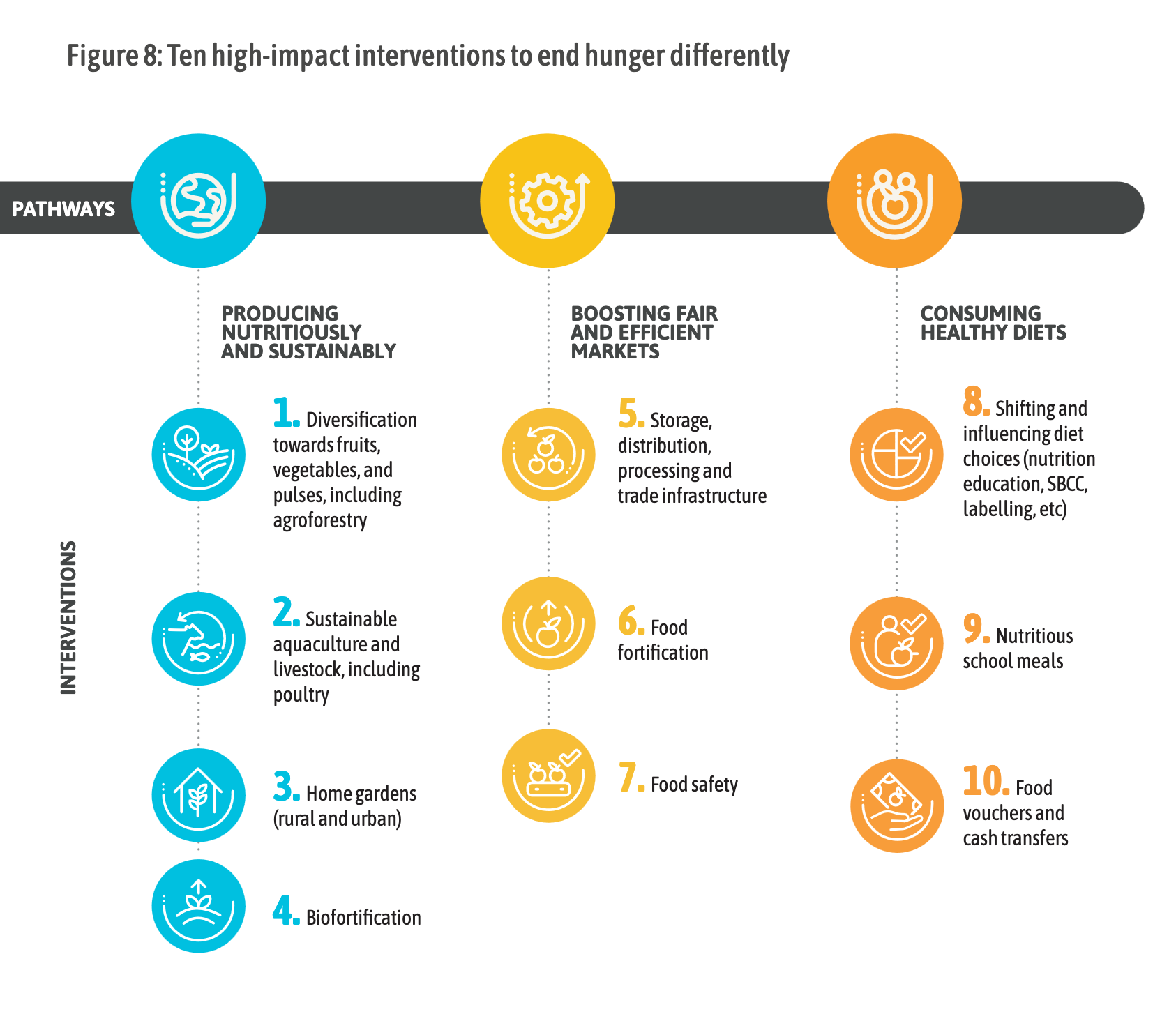
The 56-page report focuses on how to improve the access, availability and affordability of healthy diets for the poorest and most vulnerable populations in low-income countries and identifies 10 high-impact interventions, based on a review of 1,732 studies across 83 countries published over the past 20 years.
It then places these interventions in three broad buckets: producing sustainably and nutritiously (production), boosting fair and efficient markets (markets), and consuming healthy diets (consumption). The image below illustrates it better than I can put into words.
There are two other critical elements:
1. Bundling and intentionality are essential.
“When households received inputs like vegetable seeds, livestock, or fruit trees without accompanying training on production techniques, food preparation, or child feeding practices, gains in yield or income often fail to translate into improved diets or nutritional status.” (See also the third point in last week’s issue.)
2. Nutrition is still sidelined.
“80 percent of the agriculture and food security projects that had been screened with the OECD nutrition policy marker did not target nutrition.”
While acknowledging the importance for aid in reducing hunger, the authors say the current siloed approach is no longer sufficient and urge donors to better integrate agricultural development, food security, and nutrition programmes.
“Agricultural development has been highly successful at increasing the supply of staple foods and proteins. The world continues to produce more food per inhabitant every year, including more proteins. There is enough food to feed the world, or rather, enough staples and proteins.” (See also this previous Thin Ink issue.)
“The problem is not the lack of calories, but the lack of diverse foods needed for healthy diets, the discrepancies between where it is produced and where it is consumed, and the inability of vulnerable populations to buy it.”
Subsidies that overwhelmingly favour staple foods and extreme levels of concentration are distorting markets at every level and affecting people’s diets, they add.
This is a digestible, interactive version of the report.

Extreme heat is becoming a systemic threat to food production
“Extreme heat magnifies existing weaknesses across agricultural systems. Higher temperatures parch soils, reduce harvests, strain livestock, disrupt fisheries and increase wildfire risk. When combined with water scarcity, the consequences intensify, cutting production, lowering incomes, and tightening food supplies.”
“(These impacts) represent a systemic risk to global food security and to the livelihoods of more than 1.23 billion people who rely on agriculture.”
This warning comes from a joint report by the FAO, the U.N. food and agri agency, and the World Meteorological Organisation (WMO).
It gives a detailed account of what’s in store for food production as extreme heat becomes the norm rather than the exception.
Extreme heat in this case “refers to the exceedance of temperature thresholds that result in increasing levels of physiological stress (moderate and above) and/or, direct physical damage” to crops, livestock, fisheries and aquaculture, forestry, and agricultural communities.
In general, most major crops species suffer productivity losses at temperatures above 30°C and while the threshold for most livestock species is above 25°C (a bit lower for chickens and pigs, which are unable to cool themselves by sweating).
Few fish species thrive in water temperatures above 28°C (except for tropical freshwater species) and many begin to show negative impacts well below this temperature (20°C to 24°C).
The impacts can be both direct and indirect, wide-ranging, and consequential, to a vast range of products, services, and ecosystems we’ve come to take for granted.
Crops
Studies show high temperatures will slash yields of maize, rice, soy, and wheat, four major grains that supply 60% of global caloric food intake.
Already, heat and related stresses have caused an overall global reduction in total agricultural productivity, which led to an estimated 88 million more hectares of land being brought into production worldwide between 1992–2020.
The conversion of this land in turn resulted in tens of billions of tonnes in GHG emissions, which of course fuel further global warming and increase the potential for extreme heat impacts, leading to a negative feedback loop.
Yields of staple crops like maize and wheat have declined by 7.5% and 6.0% per 1°C of warming and are projected to decline by up to an additional 10% for every 1°C of warming in the future.
Livestock
Under high-emission scenarios, nearly half the world’s cattle could be exposed to dangerous heat by 2100, with annual losses nearing USD 40 billion.
For each additional degree above 30°C, cattle, sheep, goats, pigs and chickens reduce their feed intake by 3% to 5%, which can lead to reduced productivity (e.g. less milk, fewer eggs) and weight loss.
Overall, repeated exposure to extreme heat weakens animals’ immune response, making individuals more susceptible to infections and disease, and leading to higher mortality rates.
Given that demand for meat is anticipated to rise due to population growth and changing dietary patterns, this could lead to further land use conversion which will result in more emissions and accelerate global warming. The negative feedback loop strikes again.
Fisheries
Compared to terrestrial systems, the vulnerabilities and responses to climate change and extreme heat events in aquatic systems are vastly more complex.
Still, the impact can occur through three general pathways:
(1) the direct impact of rising temperatures on water quality, and the indirect impact this has on organism health, productivity and survival;
(2) the impacts of extreme heat such as coral bleaching events, mangrove dieback, the thinning of seagrass beds and the reduction in kelp forests, on species’ supportive habitats;
(3) the broader impacts of extreme heat events on species’ food chains.
In 2024, 91% of the global ocean experienced at least one heatwave, 46% of which were strong, and 8% severe.
A marine heatwave in the eastern Bearing Sea in 2018–2019 triggered a collapse in the snow crab population, leading to the closure of one of the Arctic’s most valuable fisheries. About 10 to 47 billion snow crabs were estimated to have died, mainly due to starvation.
Also in 2016, sea surface temperatures rose by 2°C to 4°C above average in southern Chile, triggering massive algal blooms in an area of concentrated aquaculture. An estimated 100,000 tonnes of farmed salmon and trout were lost, the largest aquaculture mortality event ever recorded.
Forestry
Extreme heat has impacts on trees from the cellular to ecosystem level. Forests are approaching and at times exceeding critical physiological tolerances.
A common optimal temperature of fruit and nut species productivity is between 30°C to 32°C. Temperatures above 35°C cause damage and yield loss in a wide range of fruit (e.g. apple, cherry, peach), nut (e.g. hazelnut, macadamia, walnut) and plantation crops (e.g. cacao, coffee, oil palm).
Climate change in general seems to be a key meteorological factor linked to the increased frequency and intensity of severe fire weather days.
Global carbon emissions from wildfires increased by 60 percent between 2001 and 2023.
The warning on fires is particular salient given the latest findings from the Global Forest Watch, which said: “Globally, fires were again a major driver of tree cover loss in 2025, consistent with recent trends. For the past three years, fires burned more than twice as much tree cover as they did two decades ago.”
Agricultural Workers
Heat stress, if not addressed, can lead to dehydration, loss of consciousness, heatstroke and death. Repeated exposure to heat stress over time can increase the risk of cardiovascular issues, kidney damage, and other long-term problems.
Women are particularly vulnerable. Research in the rain-fed rural areas of Punjab, Pakistan, indicates that each 1°C rise in temperature is associated with a 4% increase in the likelihood of preterm birth, jumping to 26% during heatwaves.
Agricultural workers were found to be 35 times more likely to die from occupational heat exposure than other workers, an analysis in the U.S. said.
Worker productivity drops by 2% to 3% for every additional degree above 20°C.
Tropical deforestation elevates heat stress in people, and reduces safe outdoor working hours.
Under a 3°C warming scenario, there will be a decline in the combined measure of labour supply and productivity of approximately 33% in Africa, 25% in Asia and 17% in the Americas.
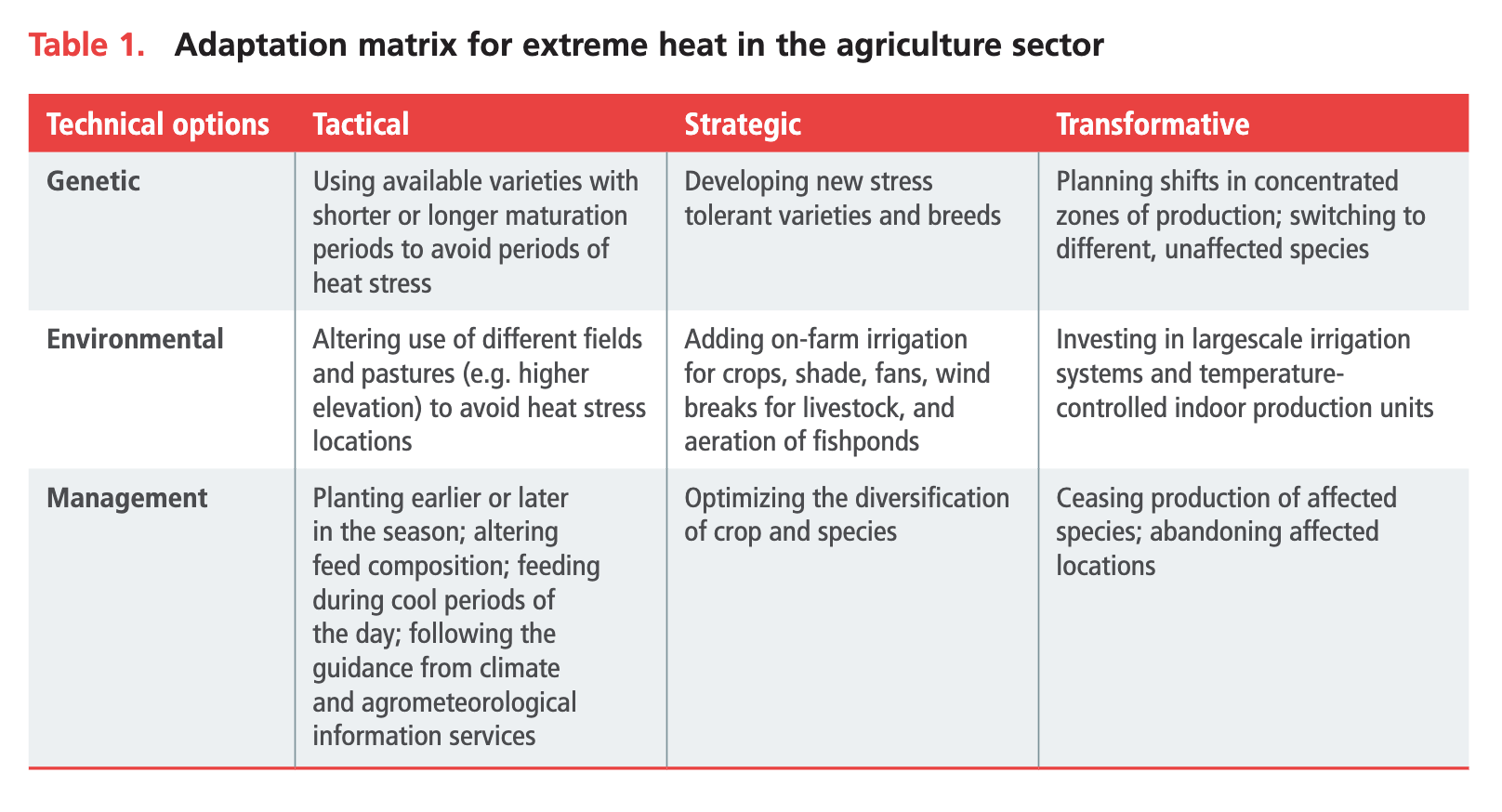
Adaptation matters, and should be done across three main time frames:
tactical (short-term),
strategic (medium-term), and
transformational (long-term).
But there are limits. It’s not supported by the financial sector and received only 4% of total climate-related development finance in 2023.
We should also be aware of possible trade-offs, and the emergence of new vulnerabilities: irrigation to alleviate water stress could worsen aquifer depletion and soil salinisation, switching to more resilient species to extreme heat may result in reduced genetic diversity, shifting to new locations (e.g. higher elevations) can increase deforestation.
“There are profound limits to what adaptation can achieve….. The only durable solution to protect the future of global agrifood systems from the escalating threat of extreme heat lies in ambitious, multilateral climate change mitigation.”

Food crises are worsening, just as the evidence base weakens
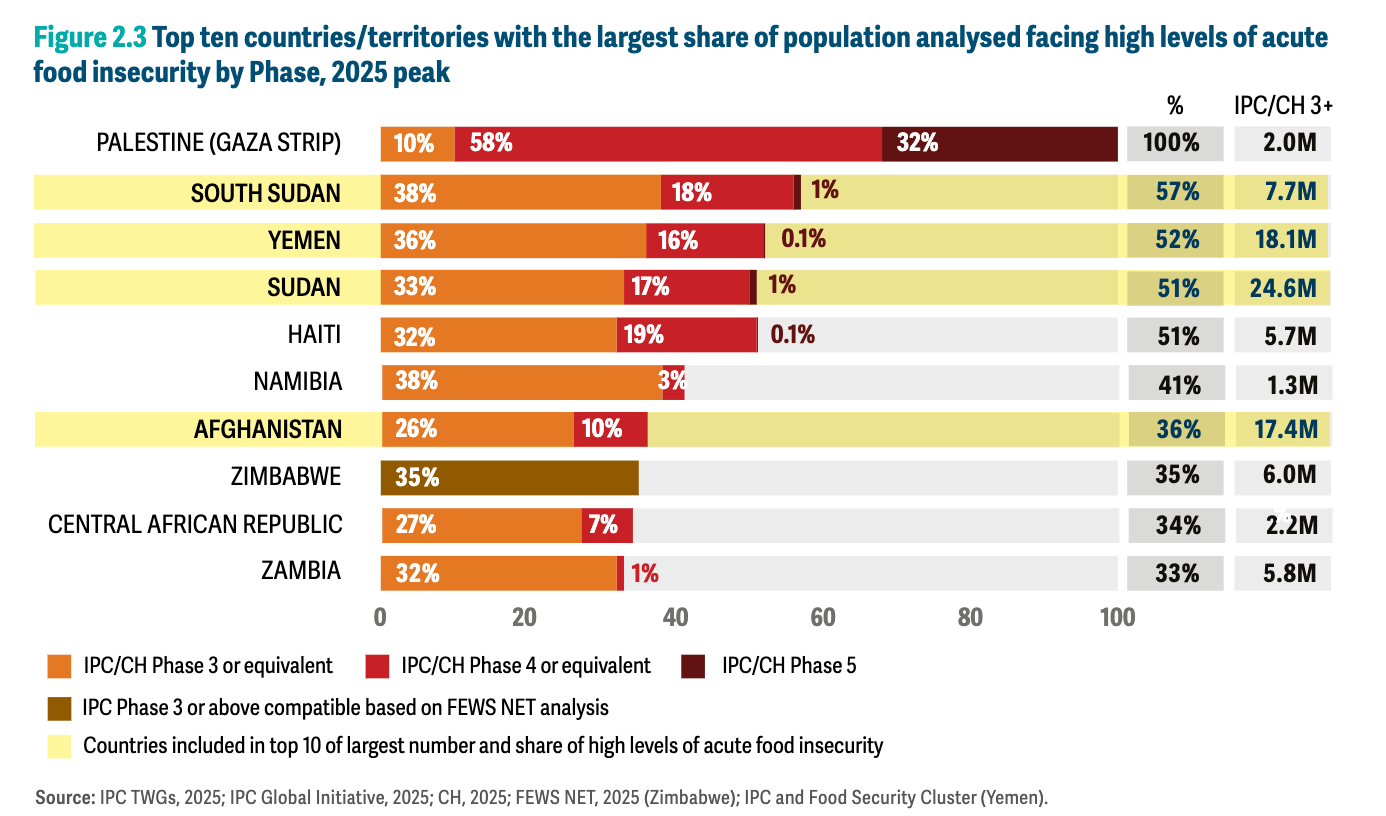
Last year, more than 1 in 5 people in 47 countries and territories suffered acute hunger, according to the 2026 Global Report on Food Crises, a 10th edition of the report.
It’s a flagship publication of the Global Network Against Food Crises (GNAFC), a coalition of 18 partners that include many U.N. agencies as well as organisations working in food systems.
Famine was confirmed in two countries/territories in 2025, in parts of the Gaza Strip (Palestine) and the Sudan. Famine risk remained in other areas of the Gaza Strip, the Sudan and South Sudan.
1.4 million people in six countries and territories were on the verge of starvation. This is “a more than nine-fold increase since 2016”.
In 2025, Afghanistan, South Sudan, the Sudan and Yemen ranked among the largest food crises globally, in both relative and absolute terms.
More than 80% of hungry people lived in areas of protracted conflict and crisis (33 countries/territories).
Countries with weather extremes as the primary driver accounted for around one‑third of the global number of people in high acute food insecurity.
In 2025, humanitarian and development financing to food sectors in food crisis contexts both declined, falling to levels last observed in 2016–2017.
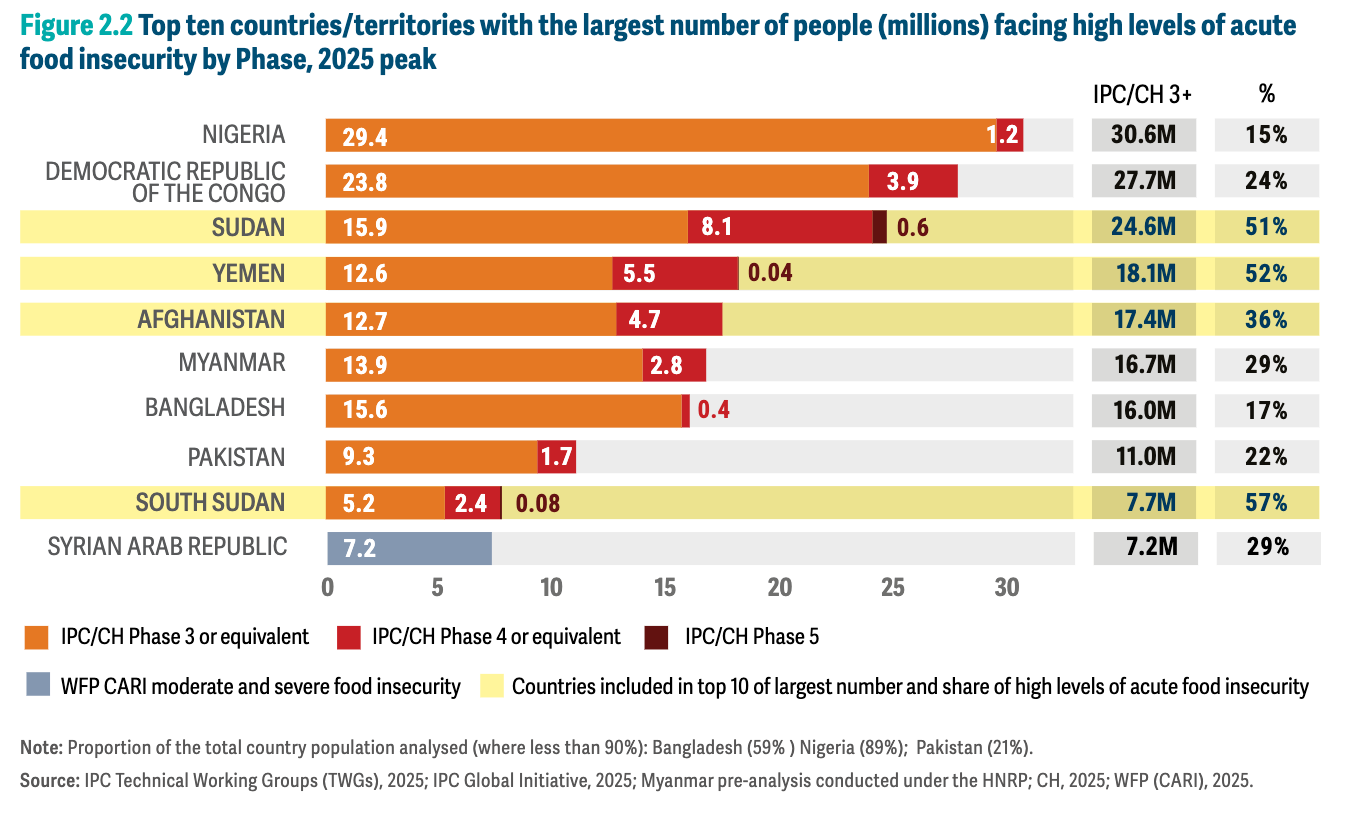
To me, as worrying as the unacceptability high levels of hunger is the gap in knowledge.
This year’s report features the lowest number of countries and territories with acute food insecurity data meeting GRFC technical requirements in a decade.
This is because in 2025, “18 countries and territories selected for the GRFC did not have acute food insecurity data, or did not have data meeting the GRFC’s technical requirements, including the requirement on consensus-based estimates”.
This is mainly due to a combination of factors, including challenges to obtain authorisation to collect or share data, limited funding and a lack of priority for data collection.
“The integrity of the data systems underpinning the GRFC is increasingly at risk. Protecting and investing in food security and nutrition information systems is critical to safeguard evidence-based decision-making.”
How betting on food fuels hunger
As the HESAT2030 report above made clear (and I’ve written ad nauseam), we produce enough calories in the world for everyone. So why do food crises keep happening and why do they keep getting worse?
A new report from the Bretton Woods Project argues that a big part of the answer lies in the way financial institutions like the IMF and World Bank - created after World War II to stabilise the global economy - have encouraged excessive speculation of food commodities, privileging global financial interests at the expense of populations in the Global South.
The Background
This is a topic we’ve covered at Lighthouse Reports with our Hunger Profiteers series (see Thin Ink issue here). It’s quite technical and I continue to wrap my head around it, but this report does a good job explaining the different financial instruments, what they do, and how they fuel speculation.
For most of history, the people buying and selling wheat, maize, and rice, were the ones actually growing, shipping, or using them. That has changed dramatically. Today, food commodities are increasingly treated like stocks or bonds: things to bet on and profit from, rather than necessities to grow and distribute.
“Markets once dominated primarily by actors engaged in the physical production and trade of food are now increasingly shaped by banks, hedge funds and institutional investors whose primary objective is portfolio diversification and financial return rather than the exchange of commodities themselves.
“This process, known as financialisation, has shifted the purpose of commodity trading away from supplying food and towards profit-driven speculation and risk hedging.
“Essential goods such as wheat, maize and rice are increasingly treated as financial assets rather than basic necessities that underpin fundamental human rights.”
The Instruments
Futures contracts which are “agreements to buy or sell food at a fixed price in the future”.
“In theory, futures markets should reflect real‑world fundamentals such as weather, harvest yields and consumption needs, and should offer a useful hedge for farmers and traders. In reality, financialisation has increasingly detached price formation from these physical conditions. Instead, they are bought and sold repeatedly by investors, including via computerised high-frequency trading, who have no intention of ever delivering or receiving the grain.”
Commodity index funds and similar products structured as exchange traded funds (ETFs) or exchange traded notes (ETNs) are “more speculative”.
They invest in baskets of commodity futures, often in a long-only format, meaning they continuously bet that prices will rise, regardless of supply or demand signals.
‘Over-the-counter’ (OTC) swaps – private agreements usually between a bank and an investor – are at the highest level of speculation, working like a side bet on commodity prices.
“Instead of trading on a public exchange, the investor agrees to pay or receive the change in price of a commodity (or a commodity index) over time. Because swaps are OTC deals, they are often opaque and unregulated, making it hard for the public or regulators to see how much speculative exposure there is in the market.”
The Impacts
2007-2008
Global food prices more than doubled within a single year and food import bills of developing countries jumped.
While poor harvests and increased biofuel demand played a role, investigations – including a 2009 US Senate report – confirmed financial speculation was a decisive amplifier. Commodity index fund holdings in wheat and other staples surged from a few tens of billions to over $200 billion by 2008.
2010-2011
After wildfires in Russia led to a temporary wheat export ban, financial investors again poured into grain markets.
The result was another speculative spike in global food prices, including bread prices which played a major role in the wave of political unrest known as the Arab Spring.
A study by the New England Complex Systems Institute found that the timing and magnitude of the 2011 price spike were strongly correlated with increased speculative activity.
2022
When Russia invaded Ukraine in 2022, the shortfall in global grain exports was estimated to be less than 1% of the global crop, yet wheat prices spiked 50% in a single month as investors poured into commodity futures, betting prices would rise further.
The result: 122 million more people pushed into hunger. Meanwhile, hedge funds were estimated to have made nearly £1.4 billion on grain trades in the first three months of 2022 alone, and four companies that control the global grain trade (more on them here) saw profits soar to £11.3 billion in 2021–22 from £2.3 billion in 2019.
The Culprits
For decades, as a condition of loans and financial assistance, IMF and World Bank pushed developing countries to dismantle the very things that protected their food systems: public grain reserves, price controls, subsidies, and state marketing boards.
The logic was that free markets would be more efficient. In practice, it cleared the way for speculative capital and a handful of giant corporations to fill the vacuum.
The result was a global food system structurally wired for volatility and for the costs of that volatility to fall on the world’s poorest people, particularly women and girls, who make up the majority of those who go hungry.
The Remedies
Allow governments to use capital controls to limit speculative flows into food markets.
Stop pressuring countries to remove food subsidies and dismantle safety nets
Rebuild public institutions that once stabilised food prices.
Increase oversight of the handful of corporations that dominate global grain trade.
Align performance measures with human rights principles, and stop equating progress with liberalisation, privatisation, or ease of doing business in agriculture without regard to actual outcomes in hunger reduction, price stability, or food system resilience.
Thin’s Pickings: making-up-for-lost-time edition
How farmers challenged Kenya’s ban on seed sharing — and won - Devex
Anthony Langat on a November court decision striking down sections of a law that prohibited farmers from sharing and selling indigenous seeds as unconstitutional. The government is appealing.
I’ve written about the global standard behind the kind of national legislation that was enacted in Kenya. Read it here.
Who Really Wins and Loses in the Food System? - Wilder Podcast
Sue Pritchard, CEO of the Food, Farming and Countryside Commission (FFCC) in the UK and a farmer herself, is a brilliant communicator and perfect guest in this hour-long discussion on food systems. Sue appears from about 8 minutes onwards.
Climate Change Is Already Showing Up in the Cost of Living - Bloomberg
Emma Court on a phenomenon known as “climateflation”, where climate change has a direct impact on prices, how economists, climate scientists and central bankers are working to calculate this, and what the challenges are.
“Not Every Shiny Robot Is a Solution” - Offrange
Andrew Rosenblum on the promises and pitfalls of technological solutions to address agricultural problems (mostly in the industrialised nations, mind you), based on a white paper that analysed 18 agtech shutdowns that occurred in 2025.
The US cattle industry is eating its own tail - Financial Times
Stephanie Walton says ranchers are risking its own survival by continuing to ignore climate impacts and sticking to “a stubborn refusal within the industry to acknowledge that it is the source of its own destruction”.
Women Grow Our Future: Regenerative Food Systems for People and Planet - 2026 Skoll World Forum
For anyone who wanted to watch the session I moderated at Skoll last week.

As always, please feel free to share this post and send tips and thoughts on bluesky @thinink.bsky.social, mastodon @ThinInk@journa.host, my LinkedIn page, twitter @thinink, or via e-mail thin@thin-ink.net.