

I spent much of this week running around making sense of the beast that is the World Health Assembly, an annual gathering of member states that make up the World Health Organization (WHO).
I’m still recovering from the myriad of meetings and side events (someone told me over 200 were planned, see here for a taste), the small bout of food poisoning (hello, cafeteria salad?), the crush of people and the lack of power outlets at the grand Palais des Nations, and the aggressive French immigration police at the border. In that order.
So apologies in advance for any typos. This week’s issue was prompted by the dominant chatter at the WHA and a worrying trend I noticed over the past few months.
Also, full transparency - I asked Gemini and Mistral for specific examples of corporate partnerships and then verified them.
Finally, very sad to hear Carlo Petrini, founder of Slow Food, has passed away. He did much to bring the concept of fair food for all to a wide audience. Full bio here.

Imagine a tobacco company assisting the health ministry. Or a fossil fuels giant partnering with an environmental agency. Or an alcohol conglomerate shaping curriculum with education providers.
If you think these scenarios are too far-fetched, I have some cryptocurrency with a guaranteed 150% return to sell you.
History is littered with close parallels:
Philip Morris International establishing the Foundation for a Smoke-Free World;
Public Health England working with an alcohol-funded charity (also here);
BP, Shell, and Japan Tobacco International funding museums;
the Global Fund to Fight AIDS, TB, and Malaria’s brief dalliance with Heineken to “fight infectious diseases in Africa”; and
Monash University linking arms with Woodside Energy (also here).
In many ways, it is a tale as old as time: a match between a suitor with deep pockets but no legitimacy, and a cash-strapped noble in desperate need of a large dowry.
But the stakes are rising. We’re now seeing more and more institutional alliances between companies whose products harm our health and the United Nations itself, a body at the highest echelon of global governance.
The Context
A few days before the opening of the 79th World Health Assembly, the WHO published its annual compilation of health and health-related indicators, known as the World health statistics report.
It has chapters dedicated to health-related SDGs, COVID-19, and the availability and quality of data, but I want to zero in on some sobering numbers related to funding and food systems.
More children under five were overweight in 2024 than in 2012 (5.5% versus 5.3%).
More women (both pregnant and non-pregnant) were anaemic in 2023 than in 2012 (30.7% versus 27.6%). That’s 605 million women between 15 to 49 years of age suffering from anaemia compared to 506 million before.
2.1 billion people faced financial hardship due to health spending in 2022.
Premature deaths from the four main noncommunicable diseases (cardiovascular disease, cancer, chronic respiratory disease, and diabetes) has declined by over 20% since 2000 but progress has slowed since 2015.
As a result, no WHO region is on track to meet the 2030 SDG target (indicator 3.4) to reduce this by a third through prevention and treatment.
Official development assistance for health was estimated to be 30% to 40% less in 2025 than in 2023, Dr. Tedros Adhanom Ghebreyesus, the WHO Director-General, noted in his foreword.
These numbers matter because they’re the backdrop against which the general funding crisis at the UN, and the corporate partnerships it’s spawning, need to be understood.
Let’s also not forget:
Obesity and overweight are associated with increased risk of disease or death from noncommunicable diseases (NCDs).
Anaemia can be a result of several factors - nutrient deficiencies and inadequate diets are two main causes.
Consuming foods that harm your health is a key driver of NCDs, which, by the way, are the world’s largest killers, responsible for an estimate 41 million deaths every year.
Ultraprocessed foods, high intakes of red and processed meat, and insufficient consumption of fruits, vegetables, and beans are associated with the development of NCDs. Don’t take my word for it, see The Lancet, the WHO, World Cancer Research Fund International, and the NCD Alliance.
The Chatter at WHA
As befits the difficult times for anyone wanting a healthier, fairer, and greener world, the WHO is facing a major funding shortfall.
Part of it is that the whole humanitarian and development sector is struggling as donors tighten their purse strings, but a major cause is Trump 2.0’s withdrawal of the United States from the WHO, which was the organisation’s single biggest funder.
So unsurprisingly, a lot of the discussions at the WHA was around what this means, not just for the WHO but also for countries that rely on the WHO for technical assistance and other support.
There was also a lot of concerns about the outbreaks of various infectious diseases, not surprising given news of hantavirus, norovirus, and Ebola just over the past few weeks.
The other buzzwords I heard repeatedly: health sovereignty, domestic resource mobilisation, and public-private partnerships. All three deserve space, but it’s the last one I want to dwell on, because the most recent examples are genuinely alarming.
The Unholy Alliances?
Given resource constraints and the urgency needed to improve health and nutrition outcomes, I understand the appeal of private sector money.
I’m not naive either - it’s hard to find private sector partners that are 100% clean, and the needs are so great we have to find a way to work together. I’m also well aware that the U.N. system is bloated and imperfect.
But… and there’s always a ‘but’… the most recent examples of said public-private partnerships leave many of us extremely worried.
1. United Nations Capital Development Fund and Bayer Foundation
An August 2025 press release announced the partnership and launch of “an initiative aimed at addressing global food security challenges and promoting sustainable agricultural practices through innovative, high-impact food systems enterprises operating in underserved markets across developing countries”.
“Bayer Foundation, as Bayer’s corporate foundation, generates impact by supporting breakthroughs in social innovation and science for a world with Health for all, Hunger for none,” it added.
This is the same Bayer that bought Monsanto, is one of the world’s biggest pharmaceutical and agricultural companies, and whose exploits, including lobbying against attempts to make agriculture more sustainable, are well-documented.
It is also the same Bayer that has been embroiled in multi-billion dollar legal battles over whether Monsanto’s Roundup weedkiller causes cancer, and has asked the U.S. Supreme Court for a ruling that will bar - or at least limit - state-level lawsuits.
The Trump administration has sided with the German agrochemical giant, “aided by officials who came from Bayer’s law firms”, according to U.S. Right to Know.
In a recent open letter, academics, public health advocates, and food systems experts said they oppose the partnership “because it risks further entrenching corporate power in food systems and undermining the independence, credibility, and public-interest mandate of the UN system”.
The collaboration “raises serious concerns about conflicts of interest, institutional integrity, and the governance and legitimacy of the UN system itself”, they added, and called the UNCDF to reconsider and suspend it pending an independent corporate accountability and conflict-of-interest assessment.
“The framing of declining official development assistance as justification for expanding blended finance and corporate investment reflects a wider shift toward the financialisation and privatisation of development governance.”
2. United Nations University Institute for Water, Environment and Health (UNU-INWEH) and Nestlé
This “strategic partnership” will establish the World Food Academy 4 Sustainable Food Systems to support university students and early career professionals in food and nutrition, host Nestlé’s free Science & Technology Seminars, and “complement university education by connecting scientific theory with real‑life application”, a March 2026 news release claimed.
“The partnership will grow to include global career opportunities, collaborative projects, and a joint symposium on Sustainable Food Systems later this year,” it added.
Setting aside the cringe-y use of 4 instead of “for” and the shockingly tone-deaf release, where do I even start with Nestlé, the world’s largest food and beverage company?
It is known for aggressively marketing breast-milk substitutes in developing countries that undermined breastfeeding and caused infant deaths, and has been shown to add sugar or honey to baby-food products sold in poor countries already struggling with obesity (which they don’t do to products sold in rich countries).
In addition, they’ve extracted millions of gallons of water without legal permits in California and been accused of using child labour in cocoa production in Ivory Coast (together with Cargill and others).
The partnership announcement prompted an open letter signed by over 700 experts.
In an article for Health Policy Watch, Dr. Unni Karunakara wrote:
“When UNU lends its name to a company whose practices the UN has spent decades regulating against, the exchange is clear: the corporation gains legitimacy and access to the next generation of food and nutrition professionals. The UN loses its legitimacy as the arbiter of the standards it exists to uphold.”
He also highlighted other worrying, new Nestlé-UN partnerships including with the UNFPA and the ILO.
“None of these partnerships, nor their concentration in a single four-month window, has been the subject of any published UN-system review.”
The current partnership contravenes the UN’s provisions on engaging with businesses, including UNU’s own due diligence policy, he added.
3. The Pan American Health Organization (PAHO) and Ferrero
This three-year partnership was to “support public health initiatives across the Americas, with a focus on improving the health and wellbeing of children, adolescents, and families living in vulnerable conditions”, according to a January 2026 news release.
Perhaps anticipating the furore that would follow, it added: “This collaboration builds on a shared commitment to advancing public health through ethical, science-based partnerships that respect the independence of health institutions.”
The partnership was dissolved following significant pushback, according to an article for the BMJ by three experts in three different continents who criticised the agreement.
“While strengthening vaccination coverage is an undeniable health priority, achieving this through an institutional partnership with a transnational ultraprocessed food corporation is highly inappropriate,” they wrote.
“It is deeply concerning that PAHO even considered formalising a partnership with a multinational company whose corporate object to maximise profit from the sale of unhealthy food runs contrary to national efforts aimed at improving population health.”
The letter also highlighted Ferrero’s actions in countries such as Chile, Colombia, and Mexico to counter policies designed to improve the nutritional outcomes of their populations. The company’s products such as Kinder Eggs, Nutella, and Ferrero Rocher chocolates are widely considered to be high in added sugar, saturated fat, and calories.
Also, farms providing hazelnuts to Ferrero have been linked to widespread use of child labour and the company opposes the NutriScore nutrition labelling in the EU (here and here). In November 2020, a year after child labour accusations emerged, Ferrero teamed up with the International Labour Organization (ILO) on a programme to eliminate child labour in hazelnut harvesting in Turkey.

These are just three of the most recent examples that came across my desk. There are many more and equally worrying examples and the pattern is hard to ignore.
Some have quietly ended.
Like the partnership between the Food and Agriculture Organization of the United Nations (FAO) with CropLife International, an industry group for producers of pesticides and other agrochemicals. Announced with fanfare at the height of COVID-19, it led to fierce criticism from civil society groups, including food and farm organisations. The partnership wasn’t renewed, according to Pesticide Action Network.
Some are ongoing. The World Food Programme lists BASF Stiftung, Cargill, and Mars as corporate partners on their website. UN Women has a long-running partnership with Unilever which seems to still be going on. FAO works with Danone and Mars.
It’s not like guidelines don’t exist.
The WHO’s Framework of Engagement with Non-State Actors (FENSA) is a landmark document with strict provisions preventing engagements with tobacco and arms. However, as the BMJ authors noted, it “still falls short in addressing engagement with the ultraprocessed food or alcohol industry”.
The Takeaway
I may be an eternal optimist - how can I do my job otherwise? - and Georgette Heyer, queen of the Regency romance, will remain one of my all-time favourite authors, but I don’t believe the age-old tale of marriages of convenience was truly equal.
I don’t want to say “never”, but in a vast majority of cases, the one holding the purse strings will be holding the power, and therein lies the problem. One has much to lose and the other much to gain from these partnerships.
So what’s the answer at a time of scarcity for the vast majority of us and excess for a few? I don’t have an easy solution, because what we need is structural change of a system that allowed a few to amass so much power and so many of us to have so little.
But I do know that the three partnerships highlighted above aren’t it.
If we must have public-private partnerships because of the dumpster fire we’re in, there’s enough academic literature out there suggesting steps to take: having conflict of interest assessments, establishing independent review bodies, and setting out clear exclusion criteria for harmful industries.
Why not support the WHO framework, strengthen it, and make it consistent across the whole of the U.N.?
We can also start off by voting with our wallets against companies whose products harm people, do our part to make the world a little fairer, and exercise our civic duty to elect leaders who can face up to corporate power rather than dismantle the multilateral system.
Too idealistic? I told you I’m an eternal optimist.
“(The UN’s) authority rests on the premise that it represents collective public interest, not the interests of particular donors or sectors. Each partnership of this kind erodes public trust in the multilateral system itself, at a moment of declining public confidence in international institutions.” - Dr. Karunakara

Thin’s Pickings I - The Other Unholy Alliance
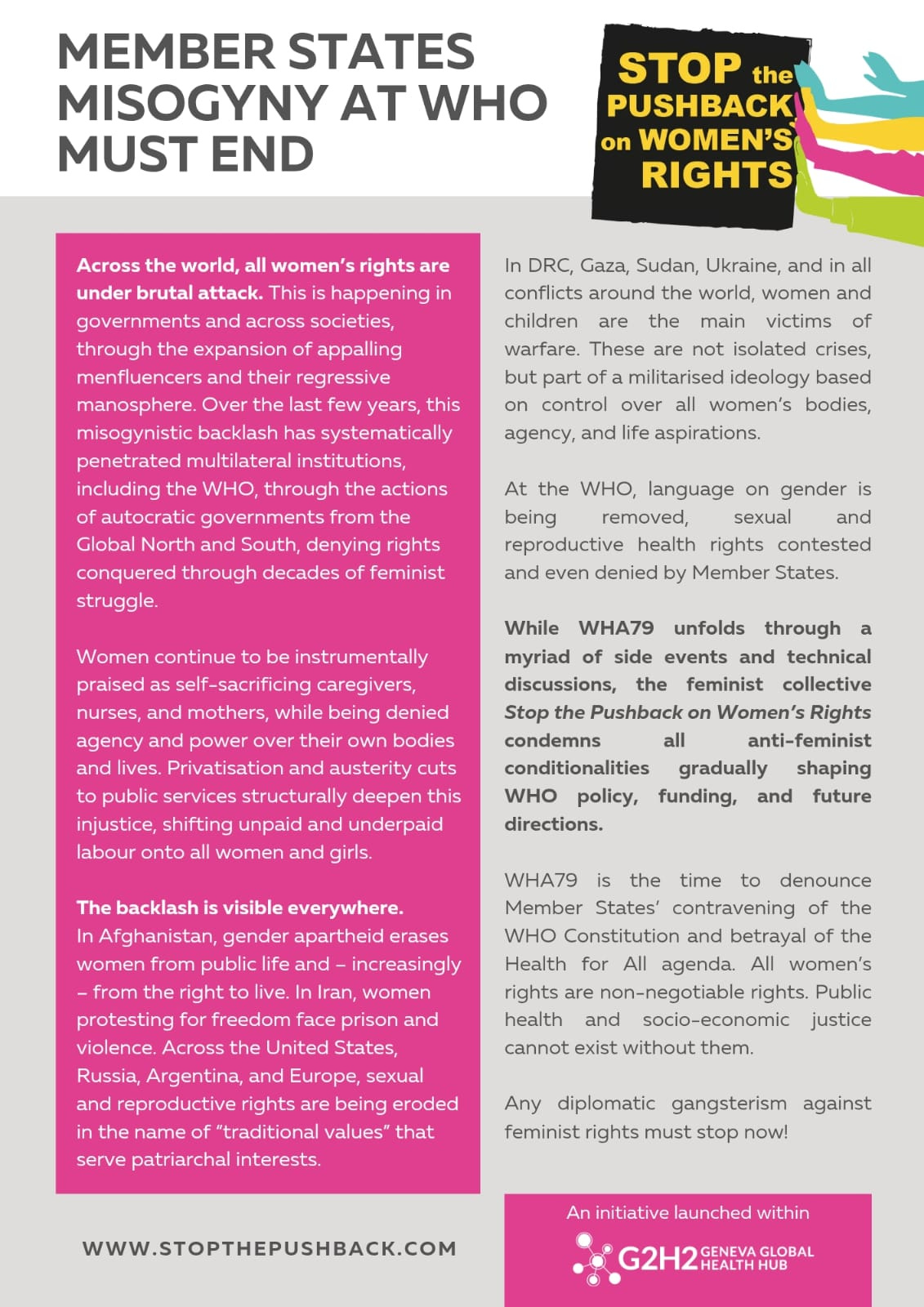
Speaking of the World Health Assembly, a group of women scholars and advocates is raising alarm bells that “language on gender is being removed, sexual and reproductive health rights contested and even denied by Member States”.
This seems to be linked to the concerted effort to erase gains on women and LGBTQI rights. A report last year identified over $1 billion in funding from 275 actors in Europe alone, including private foundations with Catholic roots, investment firms managing the wealth of Catholic Church, groups linked to former Hungarian ruling party Fidesz, and Russia.

Thin’s Pickings II - The Usual Fare
‘I couldn’t breathe’: the sinister spread of France’s killer seaweed - The Guardian
Great long-read from Marta Zaraska about the terrible and terrifying consequences of industrial farming in what used to be a beautiful corner of France.
Words that dehumanise: The language behind anti-Rohingya hatred in Myanmar - Myanmar Now
Brave piece - Nyein Chan Aye for writing it and Myanmar Now for publishing it in both languages despite the potential backlash - on the need to confront my home country’s deep-rooted xenophobia.
The Intrepid Humanitarian | Into the heart of dankness, part 2: Brave Hearts - The New Humanitarian
End the weekend - and this depressing issue - with a brilliantly funny piece from Patrick Gathara of his travels to parts of the UK, “a flavour-starved island nation strategically located off the coast of sub-Scandinavian Europe”.
This Guardian interview with Patrick is also worth a read.

As always, please feel free to share this post and send tips and thoughts on bluesky @thinink.bsky.social, mastodon @ThinInk@journa.host, my LinkedIn page, twitter @thinink, or via e-mail thin@thin-ink.net.
For so long, we have been told that we need to engage the private sector to develop “real solutions” that can be implemented. Well, that clearly has not worked. It is a shame that the WHO is still calling for more public-private partnerships, rather than trying to restore its credibility and independence. Trust in private companies is continuing to erode, and public institutions should capitalize on that by positioning themselves as the better alternative.
Thanks for sharing "Heart of Dankness". The picture Patrick Gathara paints is spot on and extremely funny. Now I will read his interview.