

Both the GIJC (the biennial investigative journalism conference) and the COP30 (the annual climate negotiations) are over and I suspect attendees are feeling a little worse for wear, after battling killer humidity and days of torrential downpours on different sides of the world.
The journo meet-up in Kuala Lumpur was defiant, inspiring, and exhilarating. From breakfast to supper, over 16-hour days, we exchanged ideas on how to hold power to account under increasingly challenging political and financial landscapes. Climate and fossil fuels were key themes. Food systems weren’t as present as I’d like, but hey, this is the story of my life.
Just as the GIJC was wrapping up, I received a flurry of emails informing me that the discussions to save humanity were bought back from the brink at the last minute.
So I wanted to reflect on these two parallel events before going on a short but much-needed break. Wish me luck.
P.S. - This issue and next week’s will arrive in your inboxes earlier because I’m still in SE Asia.
Food: Plenty Yet Invisible
“There’s so much food. They keep feeding us.”
Usually said in awed tones, this was a common refrain I heard from foreign journalists again and again over the course of the conference.
Southeast Asian journalists, including yours truly, took the comments with grins and chests swelled with pride.
“This is how we do it. We can’t let our guests go hungry.”
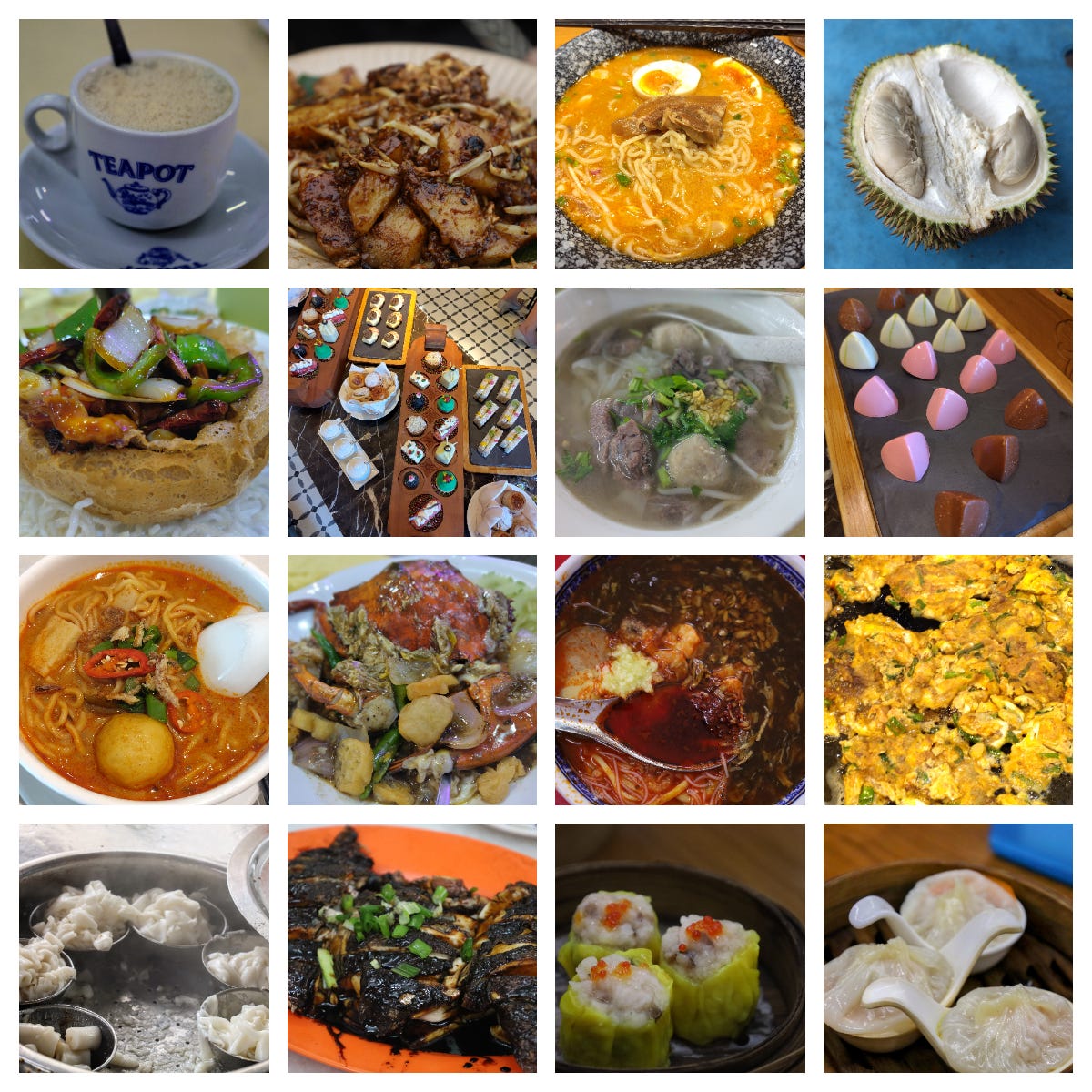
There were morning sessions that provided breakfasts of beautifully prepared quiches, bite-sized sandwiches, curry puffs, and an assortment of drinks.
There were multiple tea and coffee breaks with trays of vegetarian and non-vegetarian snacks, sweets, and more substantial eats. One break featured Japanese-style fried rice (with mushroom or chicken), vegetarian samosas with a tomato relish, deep-fried meat balls, and jewelled-toned local sweets called kueh made with glutinous rice, tubers, flour, coconut milk, and palm sugar.
Then there were lunches - the obligatory long buffet table laden with at least half a dozen dishes of meat, fish, vegetables, and rice, plus individual stations serving bowls of hot noodle soups or one-dish meals, as well as fruits and desserts.
So yes, the foreign journalists were right. There WAS a lot of food.
On the other hand, I also had people come up to me and say something along the lines of, “The work you’re doing is so interesting. It’s also quite niche, isn’t it?”
I find it fascinating that despite the critical role food plays in our daily existence - all of us have to eat every day, even multiple times a day - we take it completely for granted to the point where investigating the forces that shape our food systems is considered ‘niche’.
Perhaps that also explains why there were only two panels during the main conference days that touched on aspects of food systems: global health under siege (the only session under “health & medicine” category) and investigating world hunger (under “human rights” category and where I was a speaker).
On the other side of the world, the food in Belém sounded delicious, healthy, and planet-friendly.
There were acai berry dishes and regional juices prepared from cupuaçu, cacao and acerola, with nearly a third sourced from family farmers, indigenous producers, and agroecological cooperatives. This is a far cry from the previous COPs in Glasgow and Sharm El-Sheikh that were criticised for emissions-heavy menus.
Still, in the cover text for COP30’s Global Mutirão decision, none of these words were mentioned: food, food systems, hunger, agriculture, or farming. Mutirão means “collective efforts”.
Food is all around us, but it seems we don’t see or look beyond what’s on our plate.
Climate: Hot, Cold, & Wet
“Why is it so cold in here?”
There was another common refrain, this time uttered incredulously.
The temperatures outside were balmy - low 30s°C or high 20s°C - and often, it was raining cats and dogs, but there was permanent winter inside the conference centre. There didn’t seem to be any thermostat we could adjust, and the friendly and normally helpful staff couldn’t do much either.
Some rooms were colder than the others - I needed a sweater, a scarf, multiple rounds of hot tea, and moving around to stop myself shivering while delivering my presentation.
It wasn’t just the conference venue either. All the shiny malls and fancy hotels I went to were just as bad. In my own room, the temperature was 24°C, so I got a shock being blasted with chilly air when I went down to breakfast, and was again jolted when I stepped outside for a short walk to the event.
I’m convinced this large disparity in outdoor and indoor temperatures is really bad for our bodies, not to mention terrible for the climate. I wondered how much emissions could be cut if only overzealous building managers in Southeast Asia could be persuaded to lay off the air-conditioning a bit.
It’s not like Malaysia is immune to climate change. A 2025 report by the IFRC said floods, already the country’s most damaging natural hazard, are likely to worsen, and that rising temperatures will alter regional precipitation patterns and intensify drought and flood cycles.
Already, floods in December 2024 caused vegetable prices to skyrocket while a heatwave in early 2024 affected both human and marine life.
The whole Southeast Asia region is struggling with the wet and dry cycles this year, starting with an extreme heatwave that arrived early and ending with deadly floods and landslides.
In fact, climate change and more extreme weather events were identified as the region’s top challenge for the first time in an annual survey by the ASEAN Studies Centre at ISEAS – Yusof Ishak Institute, beating out concerns over geopolitics, economics, and unemployment.
Where They Meet (1)
From droughts and floods to pests and marine heatwaves, disasters have caused an estimated $3.26 trillion in agricultural losses worldwide over the past 33 years or about 4% of global agricultural GDP, the Food and Agriculture Organization (FAO) said in its most comprehensive global assessment to date.
The heaviest losses were suffered by cereals (4.6 billion tonnes), followed by fruits and vegetables (2.8 billion tonnes) and meat and dairy (900 million tonnes), wiping out 320 kilocalories that would otherwise be available daily to each individual around the world. This is equivalent to about 13% to 16% of average energy needs, the agency said.
Even if it wasn’t spelled out explicitly, the finger prints of climate change are everywhere in the report, from the increasing frequency and severity of large-scale marine heatwaves to the outbreak of Rift Valley fever (“an acute, climate-sensitive, vector-borne viral zoonotic disease”).
We also know that any shifts in precipitation patterns and temperatures can throw farming and fisheries out of whack (“unhappy marriage” ad nauseam).
So it is particularly disappointing that neither the Global Mutirão or the draft decision on the Global Goal on Adaptation mentioned “food systems” or acknowledge that they’re responsible for a third of global greenhouse gas emissions.
The latter document at least mentioned “food” 10 times, but of the five indicators to achieve “climate-resilient food and agricultural production and supply and distribution of food” (see Page 7, Point 4), I don’t see a single one to measure if the practices are sustainable, whether smallholders will receive support, nor any suggestion to shift to renewables.


These outcomes heighten “climate and hunger risks”, warned IPES-Food in a press release, where Raj Patel, IPES-Food panel expert and professor at the University of Texas did not mince his words:
“Food systems, which governments claimed were central to climate action, have been erased from these negotiations. Not by accident. Industrial agriculture holds extraordinary power over this process, and it shows.
Two years ago, 160 countries signed a Declaration on Sustainable Agriculture with great ceremony. Today they cannot bring themselves to mention the word ‘food’ in the Muritão decision.
This is not failure. This is capture. And until we name it for what it is—until governments choose people over corporate interests—these negotiations will continue to betray the very communities they claim to serve.”
Where They Meet (2)
Adaptation became a central issue at this year’s COP because we have failed so profoundly on mitigation. After years of chasing techno-fixes and tinkering at the margins, we’ve reached a point where the world no longer has the luxury of choice.
That’s why the Global Goal on Adaptation and its indicators matter: they help shape action plans and track progress. The reverse is also true: if there isn’t an indicator, there won’t be any measurable targets and harder to keep governments accountable.
At least the Gates Foundation’s announcement in Belém cheered groups fighting for smallholders: $1.4 billion over the next four years to help these farmers across sub-Saharan Africa and South Asia adapt to extreme weather.
The money will go towards expanding digital advisory services, work on crops and livestock “that withstand drought, heat, and emerging pests while improving yields and nutrition”, and work on improving soil health.
Unfortunately, such news were few and far between (please feel free to correct me, I’d love to be wrong here). Instead, we got:
A methane summit that didn’t seem to touch on agriculture or livestock, two of the biggest sources.
The former accounts for 40% of methane emissions from human activity. For context, fossil fuels account for 35% of methane emissions and waste 20%. Livestock itself is responsible for 80% of agricultural methane.
So what is the point of governments pulling “the Climate Emergency Brake” when the the largest human source of methane emissions isn’t mentioned?
The absence is particularly conspicuous because the 2025 Global Methane Status Report, published during COP30, said this of agricultural emissions:
“Without additional mitigation, emissions are expected to rise by 8% by 2030 and 17% by 2050, compared to 2020 levels, mainly due to increases in livestock populations in Africa and Latin America.”
Perhaps this is inevitable when the climate discussions are held in a country with a massive population of livestock.
Talks under the Sharm el-Sheikh joint work on implementation of climate action on agriculture and food security yet again came to an abrupt halt without any specific agreements.
Countries agreed to continue discussions on a draft text in Bonn next year, according to Carbon Brief.
Context: This is the only formal process through which food and agriculture are included in the UN climate discussions and it has yet to have its moment since inception. See my previous coverage below.


Greenwashing and lobbyist galore from Big Ag, attempts to sell biofuels as a sustainable, and a number of great-sounding pledges and declarations but whose ultimate impacts on food systems transformation are unclear.
Like the Belém declaration on hunger, poverty and human-centered climate action which said all the right things but gave me pause because of the presence of countries like Sudan, North Korea, and Myanmar.
With each year, COP increasingly feels like waiting for an unrequited love to change their mind.
Surely we’re going to have to move on at some point?

Thin’s Pickings
Guide to Investigating Food Insecurity - Global Investigative Journalism Network
I co-wrote this guide with Deborah Nelson, Pulitzer-winning journalist and professor of investigative journalism at the University of Maryland, for folks who want to dive into why we are hungry, where to find the statistics, and what the bigger picture is.
Please share this far and wide if you know anyone for whom this might be useful. Feedback also very much welcome.
More COP30 coverage
“At least 195 influencers - from models and news anchors to doctors and right-wing activists - posted Instagram content sponsored by 10 of the world’s biggest livestock, fertiliser, and food companies in the 12 months leading up (to COP30),” according to an investigation by DeSmog (in English) and Agência Pública (in Portuguese).
Meanwhile, the latest issue of Devex Dish will take you on a whistle-stop tour of COP30’s AgriZone for fascinating glimpses of Big Ag talking points and how they were positioning themselves at the talks.
Then there’s this great wrap-up from The Guardian on how early-morning diplomacy prevented the complete collapse of the talks and resulted in an “oblique commitment in the legally agreed text of the deal” that kept alive - just about - the global commitment to transition away from fossil fuels made two years ago in Dubai.
If you want a detailed breakdown of key outcomes for food, forest, and nature, you cannot go wrong poring over Carbon Brief’s detailed summary.
‘Climate smart’ beef? After a lawsuit, Tyson agrees to drop the label. - Grist
Tyson, which produces 20% of beef, chicken, and pork in the United States, backed down - while denying any wrongdoing- on its marketing claims of “climate smart” beef, wrote Frida Garza.
“According to the settlement provided by Earthjustice, over the next five years Tyson cannot repeat previous claims that the company has a plan to achieve net-zero emissions by 2050 or make new ones unless they are verified by a third-party. Similarly, Tyson also cannot market or sell any beef products labeled as “climate smart” or “climate friendly” in the United States.”
Larry Summers and the Hunger Games - System Change
For those among us who only know about Summers following his post-Treasury secretary roles or from the Epstein Files, Ann Petitfor teaches us a history lesson about his role in the 2005-2008 global food price crisis when speculation in financial markets pushed food prices up by 83%.
“Higher prices pushed an additional 40 million people into hunger in 2008, raising the overall number of under-nourished people in the world to 963 million, compared to 923 million in 2007”.
One of the most striking things is that 2008 was a record year for food production.We investigated similar shenanigans during the most recent crisis. More here.
Gut Check: The Foods We Eat - ABC News
This is 24 minutes of looking at UPFs through a distinctly U.S.-centric lens, using France as a cautious foil to USA’s anything-goes approach when it comes to regulating food ingredients. Still an interesting watch though.

As always, please feel free to share this post and send tips and thoughts on bluesky @thinink.bsky.social, mastodon @ThinInk@journa.host, my LinkedIn page, twitter @thinink, or via e-mail thin@thin-ink.net.
In addition, the five selected #GGA indicators for food and agriculture are not measurable. They are full of terms, which can be interpreted differently, or are just completely vague. This will lead to an endless debate on their meaning, which further diminish their value.