

This week in Oslo, I spoke about the plight of Myanmar journalists and newsrooms, and listened to journalists, human rights defenders, and former and current lawmakers talk about their fight for freedom. It made me feel less alone. I hope to write about it more next week.
There were also talks about China and its security apparatus, by people who have felt its ire, and whether and how to engage with the superpower.
Given that this week’s Thin Ink is about China and its food systems, I guess it was inevitable that I’ll see some parallels in how Beijing’s thinking on security and control shapes not just its politics, but also in the way it feeds its population.
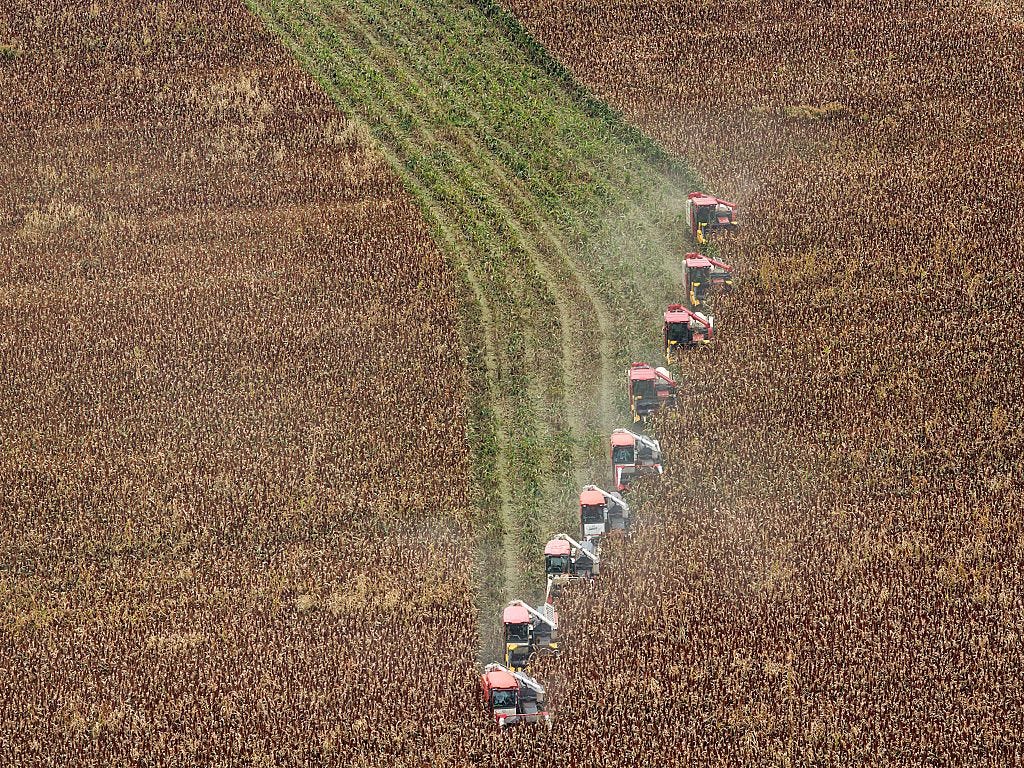
“Why China? It’s the elephant in the room in the global food system. It’s the thing that has an enormous impact that we’re just not discussing... From the outside, it’s either incredibly critical or overly celebratory, and we try to strike a tone that isn’t either of those things. There’s still so much inaction in the whole food system. And here, there’s just massive action, and it’s coordinated, and it’s happening in an actual transformation, not just a transition.” — Matthew Kessler
Matthew was explaining why the latest TABLE podcast he is hosting is focused on China. His eloquent comment illustrates the challenges of reporting on China: it’s easy to veer towards either extreme, particularly when it comes to food.
Because in terms of sheer numbers, China is the true centre of gravity in global food systems. It is also moving at an incredible pace, to the point where the whiplash could affect countries and ecosystems thousands of miles away.
Take just two examples:
China has the world’s largest fishing fleet and the biggest fish processing capacity. The associated labour rights abuses and their impacts on migrants from countries like Indonesia have been well-documented by groups like the Outlaw Ocean Project.
State-owned COFCO (China National Cereals, Oils and Foodstuff) has also muscled its way into an elite group of companies - collectively known as the ABCDs - that controls up to 70% of the global trade in essential cereals, oilseed, and protein crops.
It is also a deeply undemocratic country, and it can be hard not to see food systems changes entirely through that lens. But while we’re debating about transitions in Europe and analysing the power of MAHA versus MAGA in the United States, China is executing hyper-scale transformations before our very eyes.
If we care about food systems transformation, we ignore what is happening in China at our own risk. The quote above encapsulates this.
Titled Feeding 1 in 6, the four-part podcast series managed to stay away from the two extremes, highlighting China’s achievements as well as problems. The first episode gives a good grounding for the following episodes that each focus on pork, rice, and fish. I thoroughly recommend it.
This week’s issue is based on my conversation with Matthew, who has appeared before on Thin Ink, the contents of the podcast, and some of my own past reporting.
Below are five key takeaways on how China is shaping what the world grows and eats.
1. The sheer scale of China affects global data and metrics.
When the UN published the 2020 SOFI report (an annual flagship report on chronic hunger), it seemed like we were looking at a success story.
While more than 820 million people (11% of the population) went to bed hungry in 2018, that number had dropped dramatically to 690 million (8.9%) by 2019.
The real cause of the 2% drop, however, was largely driven by China.
“Newly accessible data enabled the revision of the entire series of undernourishment estimates for China back to 2000, resulting in a substantial downward shift of the series of the number of undernourished in the world,” according to the FAO, the UN food and agriculture agency.
Due to China’s size - home to 1.4 billion people, 17% of the world - its bureaucratic adjustments altered the global baseline for undernourishment by tens of millions of people overnight.
The impacts on the ground have been consequential too and show how nutritional outcomes have shifted in a generation.
According to the long-running China Health and Nutrition Survey, more than 1 in 6 children and adolescents between 6–17 years are overweight, and 1 in 9 are obese. Alarmingly, more than 1 in 4 suffer from both overweight/obesity and micronutrient deficiency. This dietary and nutritional shift is likely to affect future metrics.
“We heard in like 2018 or 2019 that (China) has used more concrete than the US did in its entire 20th century. So, there’s this root of growth and development. But obviously, concrete has a huge environmental cost to it,” Matthew said.
“Similarly with the food production, the industrialisation of it means you have a huge increase in available calories and also access to more diverse diets than there were before. So you do have a very real effect of like rural areas moving from under nutrition to having calories and availability of other food sources.”
“That helped with real nutrient deficiencies, but with it, you also have these diet-related diseases connected to abundance in the industrialisation of food systems. So obesity and overweight - China grapples with all that at the same time. The most fascinating thing is you have every dynamic of the food system at play in China, dialled up in good and bad ways.”
Another statistics that stood out for me was in Episode 2, when Ron Lane, a Canadian swine expert who has been in China for over a quarter of a century, spoke of Muyuan Foods Group. The company has 3.23 million sows, exactly one half of the U.S. total sow population, he said.
2. China similarly shapes global food trade, production, & consumption.
Because of its massive consumer base, when China shifts its sourcing for whatever reason, it causes dramatic economic and environmental ripples across the globe.
For example, when African Swine Fever - a viral disease often fatal to pigs - swept through China in August 2018 and the country lost an estimated 27.9 million metric tonnes of pork output, it turned to other countries, particularly Spain, which led to an explosion of pig farms and agricultural waste in rural areas.
Spanish pork products to China accounts for 18% of Spain’s total exports, and the sudden surge in Chinese demand turbocharged an already fast-expanding industry which counted more than 33 million sows in November 2025, the largest in the EU.
The environmental consequences have been severe. As we have documented at Lighthouse Reports, the ecological collapse of Europe’s largest saltwater lagoon, Mar Menor, can be traced in part to the explosion of industrial pig farms upstream.
The same pattern repeats on the other side of the world for feed, a key ingredient of pork production. China is Brazil’s biggest soy customer, and between 2010 and 2017, imports increased by 170%. In September 2025 alone, 93% of Brazil’s soy exports went to China.
As Matthew puts it, the numbers defy easy comparison: “60% of globally traded soy (goes to China)… It’s just such a large number, and no other country occupies more than 3%. There’s no one even close in the ball park.”
That demand increased Brazil’s soy growing area by nearly 11 million hectares between 2017 and 2024, and according to Global Canopy, has driven over 70% of the carbon dioxide emissions risk from deforestation linked to China’s soy imports.
Then there is fish.
China touches a third of all internationally traded seafood, processing cheap protein on a scale that has reshaped coastlines from South America to West Africa, Matthew said. To feed billions of farmed shrimp, tilapia, and carp, Chinese aquaculture mills require millions of tonnes of fishmeal, and they are buying it up off the shores of some of the world’s most food-insecure nations.
One local fisherman told the BBC: “The Chinese are exporting our bonga fish to feed it to their tilapia fish, which they’re shipping back here to Gambia to sell to us, more expensively.”
Matthew acknowledges both sides of this ledger.
“(China is) providing an affordable protein source... you can look at local markets and see what was there before and what wasn’t, at what prices. At the same time, it’s absolutely devastating for local coastal communities. And because they don’t account for a lot of their environmental and social costs, everything has remained at such a low price.”
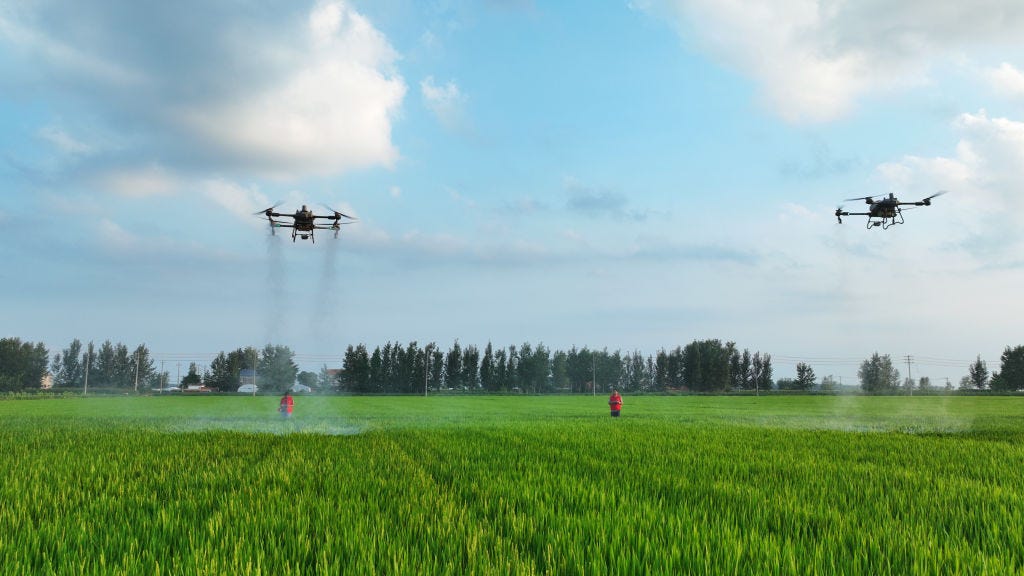
3. China is also reversing the direction of global learning.
For decades, the prevailing narrative about China and knowledge transfer ran in one direction only: China acquiring, borrowing, or outright stealing Western intellectual property and technology. That story is now obsolete in significant parts of the food system, according to Matthew.
“At least in the US, the only story about China and learning is about intellectual property theft. Now you have producers and the industry from the US and Europe, going to visit China to learn how they’re operating, with biosecurity.
“You can definitely have lots of negative things to say about the industrial food system, but if you compare strictly the industrial animal production in China to the US, I would say you can find examples where China has built some cleaner, more efficient, more circular systems. But there are also huge risks because it’s become more and more concentrated.”
How about hybrid rice commercialisation?
Estimates say this has led to yield increases of up to 30%, and fed millions more people. The man behind it, Yuan Longping - known as the “Father of Hybrid Rice” - is China’s version of Norman Borlaug, though far less known, said Matthew.
Yuan estimated that if half of the world’s rice-growing areas were replaced with hybrid rice varieties with a 2 tonne per hectare yield advantage, the increase in global rice production would be enough to feed between 400 and 500 million more people.
That is, of course, if you set aside concerns around the higher costs of hybrid seeds, the environmental trade-offs through increased use of chemical inputs, and the loss of farmer autonomy.
There’s also the South-to-South knowledge transfer, specifically in aquaculture, that receives almost no attention in Western coverage. China’s model has potential for replication elsewhere precisely because it has not yet been fully consolidated into large corporate entities.
“The fish farming is largely done by smallholders,” Matthew explains. “It’s a more resilient story, just because of the sheer numbers... And the bond between China and African countries is that they see themselves in each other, they see themselves at just different trajectories, different parts of their timeline and story.”
4. China’s shift from scarcity to abundance provides plenty of lessons.
Beyond the scale, what’s truly striking about China’s food system transformation is its speed. A country that experienced one of the worst famines within living memory has vaulted into an era of abundance and diet-related disease, skipping the slow, incremental transitions that took Western nations much, much longer.
A key reason for this sudden change is China’s willingness to experiment at scale as well as course-correct, aided by its strict, hierarchical system.
Matthew describes the aquaculture sector as the clearest example:
“Fish became the most unregulated sector of all, so it had the most innovation and also the most harm. They didn’t even have baseline assessments. There was tons of overfishing, tons of aquatic ecosystem pollution. That’s where the major example of course-correction happens. But I think it’s a trend you can find across all the sectors - the market was unleashed, yields were prioritised first, and then there’s been a reckoning.”
Unlike Western countries, which often get mired in ideological battles between industrial and agroecological models, China has the institutional capacity - and the political will - to run both simultaneously. It is simultaneously testing gene editing, intensive chemical inputs, and ecological farming in large provincial pilots, using top-down coordination that no market economy can replicate.
“China is a great experimenter,” Matthew notes, adding the country has invested a lot in agricultural research and development. “They are happy to try 15 different pilots and give them serious investment at a provincial level to see what works.”
“They’re dominating the present and future of papers, and they’re also attracting a lot more people to go through their schools. I heard so many anecdotes of researchers saying when they work with Chinese agricultural universities versus European or North American universities, (the Chinese) are spending weeks or months with farmers, as opposed to doing digital surveys. They’re in the field trying to figure out, are these results practical and being implemented?”
5. But not all of China’s achievements are transferable, replicable, or even desirable to replicate.
There is a version of this story that ends with a simple lesson: look at what China has done, and do likewise. But that would be wrong, and incomplete.
While the speed and scale of China’s food system transformation is genuinely extraordinary, some of it rest on foundations that no other country can simply import. For example, the kind of economic growth China has experienced is unique and unlikely to be repeated.
There is also the sheer concentration of state power, derived from a governance model that brooks limited dissent and has no meaningful equivalent anywhere in the democratic world.
As Matthew puts it, thinking aloud: “The incentives globally are different than what they are in China. It’s just more contained. They are not beholden to multinational actors and their bottom line and all the other perverse incentives in our food system. Whereas there, because of their history with food security, they really care about food availability.”
Of course, China’s ability to make fast decisions and enforce them consistently is partly a function of what it doesn’t have: an independent civil society that can slow, contest, or reshape those decisions.
Then there’s “induced demand” - the state taking an active role in creating and shaping markets. This is not just about regulating or providing subsidies - it is a fundamentally different conception of the relationship between state and market. Most governments and international development institutions shy away from this sort of thing.
However, this does not mean we veer towards the other extreme: portraying China simply as a story of what not to do.
As Matthew notes, “They’re doing the exact same thing that the West has done, but just on a much bigger scale and at a much faster pace. And so the impacts are so much greater.”
Yes, the environmental devastation wrought by China’s industrial livestock expansion is massive. But it is also not unique because it is the story of industrial agriculture everywhere. It’s just bigger and faster in China. But China also has the institutional capacity to course-correct when it chooses to, in ways that makes it difficult - if not impossible - for market economies.
“It would be disingenuous to not be critical at all. But it would also not be very real to not be impressed by the state and scale of transformation that’s occurred. The important part, or the difficult part, is that they are all connected. They are not separate stories happening to different people at different times. It’s all a version of the same story that’s happening. There are improvements and there are costs and consequences, and they fall on all these different people, and that’s real and true.” — Matthew Kessler
Thin’s Pickings
What the Meat Industry Doesn’t Want You to Know - The New York Times
Nick Kristof highlights a provision in this year’s farm bill, which has already passed the House of Representatives, “to suppress the will of voters so that giant meat companies can abuse pigs”.The Enshittification of Big Food - The Future Market
”Each substitution is individually defensible inside a procurement spreadsheet. Cumulatively, they produce food with the shape of the original and almost none of its content.” Great read from Mike Lee.

As always, please feel free to share this post and send tips and thoughts on bluesky @thinink.bsky.social, mastodon @ThinInk@journa.host, my LinkedIn page, twitter @thinink, or via e-mail thin@thin-ink.net.