

A few notes before we start:
There’s a fair bit of self-promotion this week.
There won’t be much food systems content, but the issues we care about are still front and centre: human rights, independent journalism, refusing to give up in the face of what can seem like insurmountable barriers, exposing profiteers, and good governance.
There are a lot of videos to watch and stories to read so there’s no separate Thin’s Pickings section this time.
And if you’re wondering about the sub-title, it’s not about the infamous slap. Keep reading.
I’ve often talked about the two worlds I inhabit: food systems and Burma/Myanmar. I move between them daily, and have spoken before about how growing up in a poor, agrarian, and isolated military dictatorship has shaped my reporting and understanding of global food systems.
Still, last week, the two collided in a way they hadn’t before.
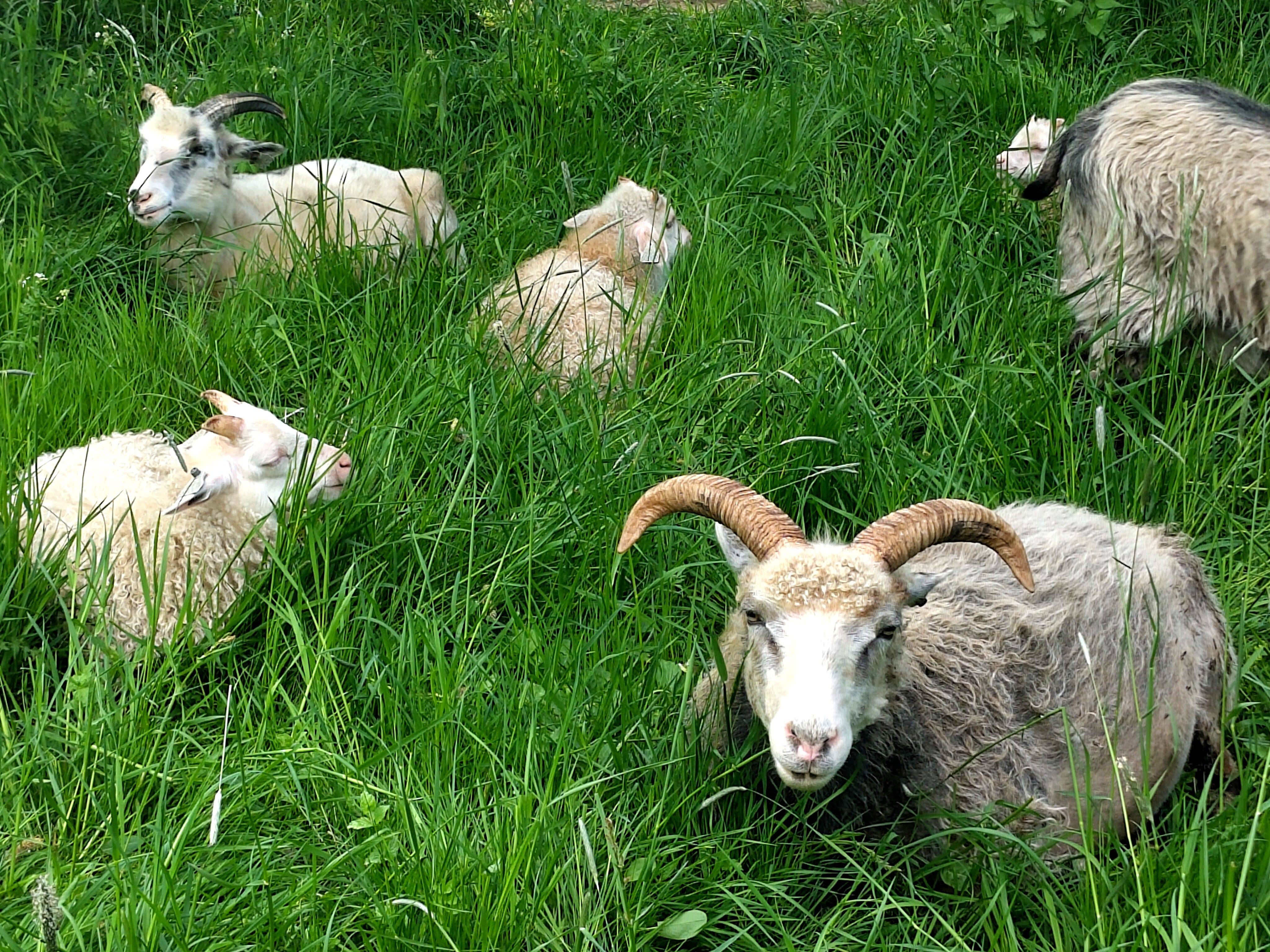
I was in Oslo, attending and speaking at the Oslo Freedom Forum. Two days before my speech, an old friend who knows about my food systems work brought me to a municipal farm just outside the city. It was a clear, beautiful day and families were out of in force.
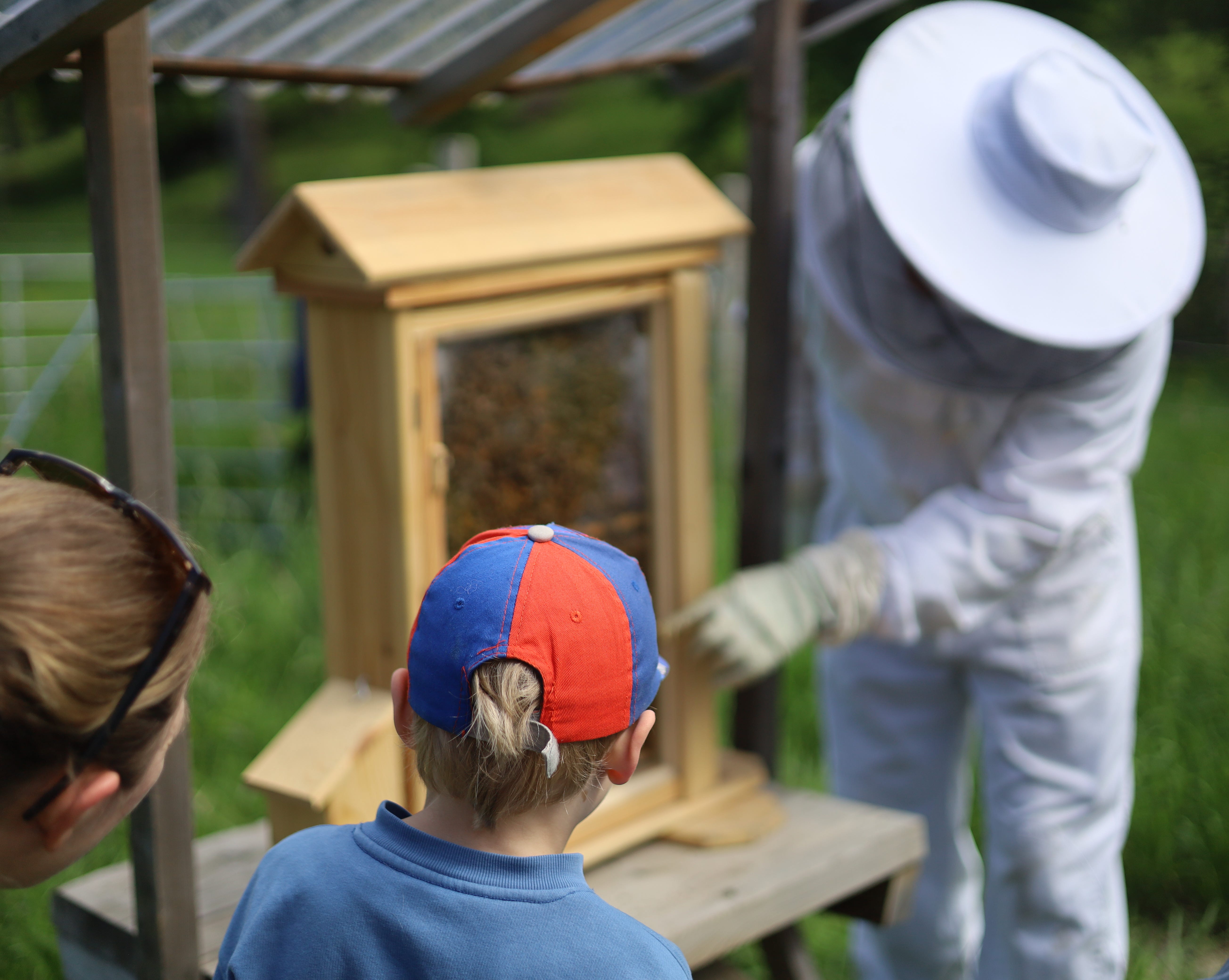
There were vegetable patches, regal-looking chickens, ducks, bees, and the fluffiest, friendliest sheep I’ve ever met. I won’t forget the image of a curly-haired boy whose eyes lit up with wonder as his palm travelled down a lamb’s back, or the collective awe of a group of kids when a volunteer unveiled a beehive.
The 1.8-hectare farm has a manager - a farmer employed by the city government - and two volunteers. She told me every animal plays a role - chickens for the eggs, ducks to eat invasive slugs and snails, and sheep to provide wool for clothing and cover plants in lieu of plastic.
She’s also getting piglets, she said, for their manure and their ability to root through the earth, clearing weeds and providing natural tilling. But pigs are voracious foragers and need ample space to roam. Having more than two on this farm would overgraze the land and destroy rather than regenerate the soil, she added.
Her comments brought to mind the multi-storey pig farm in China with over 3 million sows, which I mentioned in last week’s newsletter. I’m still thinking about that comparison.
The Oslo farm is a working one but set up specifically for education - schoolchildren visit three times over the course of the year, helping to prepare the land, sow seeds, care for the animals, and witness the harvest - and possibly, slaughter - at the end.
Listening to her filled me with a wish I’ve always had - that everyone’s education should involve some learning about the land and food production. I’d happily have traded some hours of high school spent reading pages upon pages of heroic mythical kings or trying to make sense of physics for time on a farm like this.
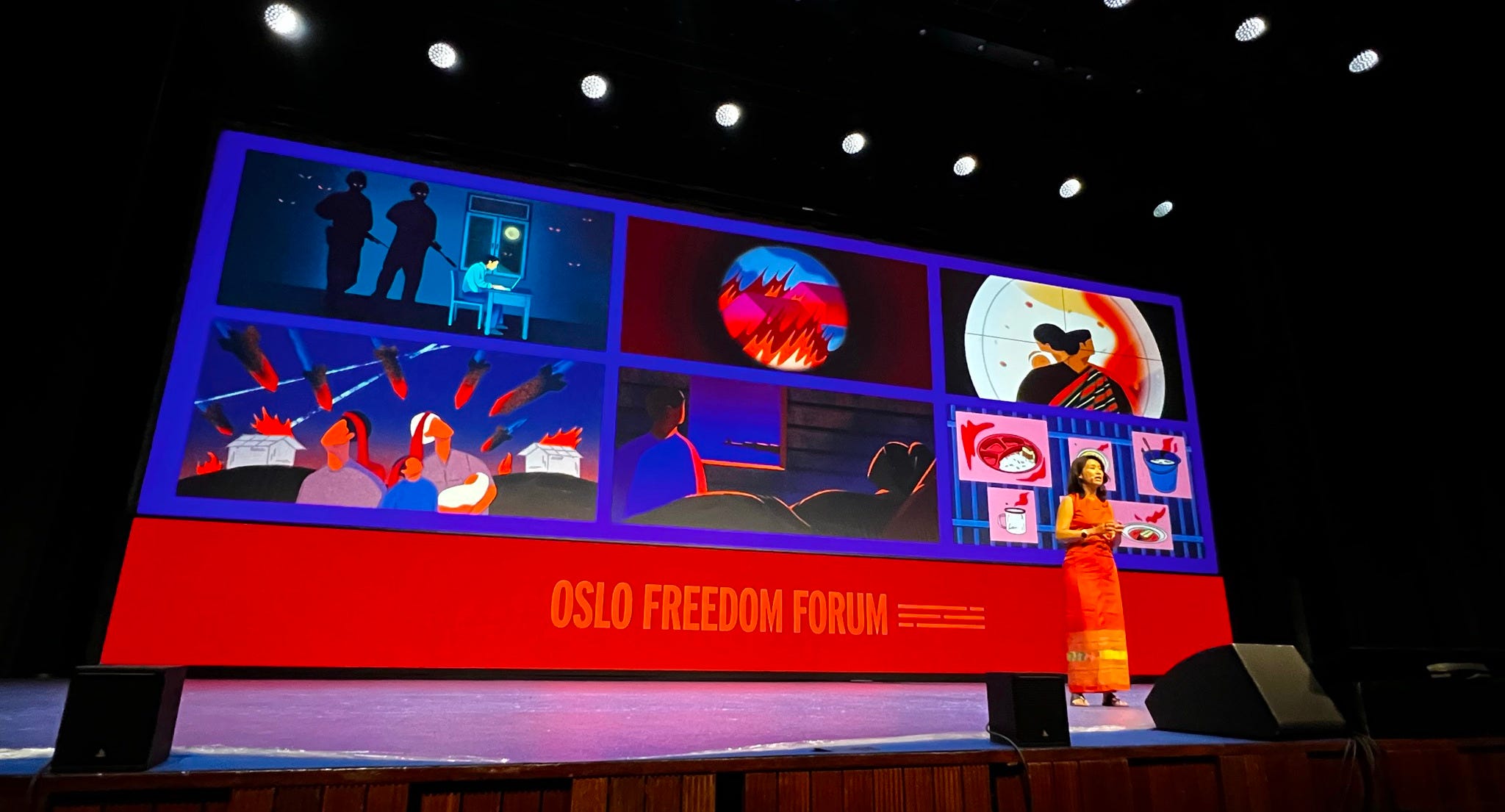
Two days later, I went on stage in front of more than a thousand people, urging them not to forget about Myanmar and warning them that what happened to my country isn’t an anomaly. Later that week, the Global Investigative Journalism Network publicised a 10-minute video of me sharing tips on how to investigate food insecurity, and food systems expert Jose Luis Chicoma published a newsletter in which, for once, I was the interviewee rather than the interviewer. On Friday, the Democratic Voice of Burma (DVB) published an interview with me, where they asked me to connect my food and climate reporting with my work on Myanmar and my speech at OFF.
That’s when it hit me: I’d come full circle.
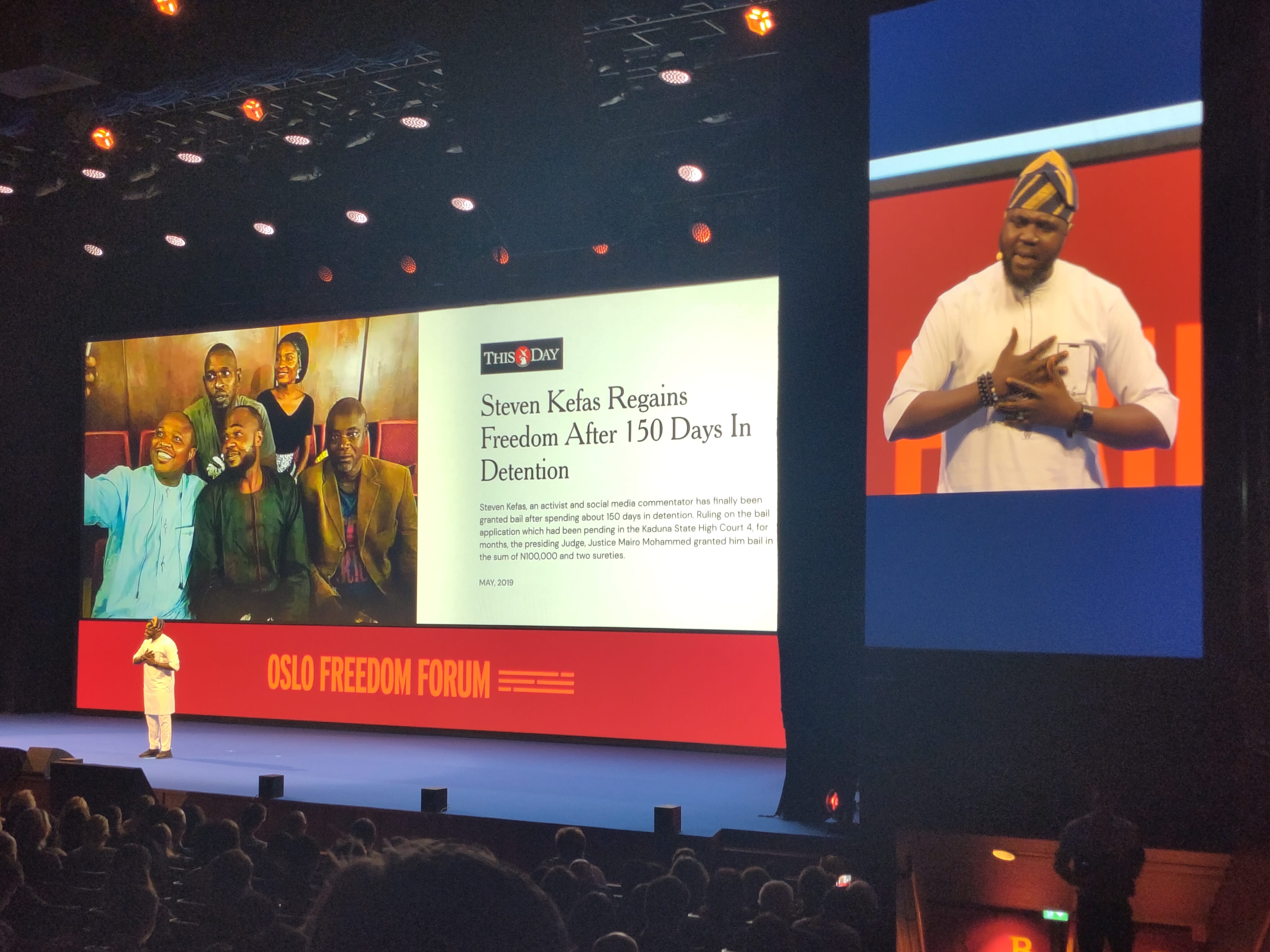
OFF was the third big global conference I attended in as many weeks this Spring, and at first it was truly discombobulating to see the deterioration of human rights and democratic norms at the front and centre of every session and discussion.
There were rousing speeches, thoughtful takes, and inspiring conversations, all centred on how power is being wielded to oppress, discriminate, and sow fear and division.
Notwithstanding the heavy subject matter, I found it incredibly refreshing, because I was beginning to despair at how some of the premier global events on social change and public health I’ve recently attached brush past these issues. I also believe governance, power, and rights are where food systems failure are most entrenched and most in need of change.
That said, I did have some qualms.
The theme for OFF this year is “Dismantling Dictatorship”, and while listening to Noor Pahlavi’s powerful speech, I couldn’t help but think of how her grandfather - the last Shah of Iran - consolidated his power with the help of Britain and the U.S. after the overthrow of a democratic government that nationalised Iran’s oil; how he ruled with an iron fist; and how that legacy helped pave the way for the current Islamic Republic. Nor did she mention the U.S. - Israel attacks that are contributing, at least in part, to the suffering of Iranians today.
I also felt there was far too much optimism, and far too little scrutiny, around cryptocurrency and artificial intelligence - technologies with theoretical potential to help resist authoritarianism, but whose real-world use so far has largely been limited to fraudsters, self-promoters, and billionaire tech bros, several of whom have either cosied up to authoritarians, bought up media outlets to shift narratives on climate, food, and rights, or both.
I also wish there was someone from the Global North - maybe the United States? - and someone from Palestine to talk about the situations in their own countries.
Still, I came away with some surprising realisations: Richard Gere seems like a genuinely decent guy, truly committed to the cause of Tibet; María Corina Machado came across as remarkably stateswoman-like (though I have questions about some of her strategies), and eight minutes, it turns out, is enough time to tell a story that resonates.
So here’s a selection of speeches from OFF that struck several chords with me. Please do watch them. The topics are dark, and the speeches paint a picture of a world moving backwards, but they stop well short of what I’d call torture Olympics territory.
These speeches aren’t about suffering for its own sake, they show us what we can do, and they are galvanising. I hope they have the same effect on you.
The Journalists
Stefan Kefas: in lesser hands, this speech about mass abductions by Fulani Islamist militants in Nigeria’s Middle Belt region could easily stoke knee-jerk division and prejudice. Instead, in explaining how his exposés of the crimes made him a target of both the government and the militants, Stefan brought balance, nuance, and a big heart to the story.
Supriya Sharma: as Executive Editor of Scroll, a fiercely independent Indian news outlet, Supriya painted a vivid picture of the erosion of human rights in a country that once prided itself on being the world’s largest democracy, and the continued shrinking of space for media, civil society, and minority groups.
While Stefan, Supriya, and I were the only journalists on the main stage, I met many more at dinners and panel discussions and those stories were sobering.
A Ukrainian journalist said her staff no longer wear flak jackets marked “PRESS” because it makes them deliberate targets for Russia forces. A veteran Cambodian reporter based in DC, who lost his job to Trump-era, cuts told me he and his former colleagues drive Uber by day and continue broadcasting at night, using their own resources. A Norwegian journalist reminded us that press freedom now exists in only a handful of countries - 7, to be precise - with the host country topping the list.
The Rebels
Luaty Beirão: you might be tempted to do an eye roll at the term “dissident rapper”, but ponytailed Luaty, jailed for discussing Gene Sharp’s book “From Dictatorship to Democracy”, is the real deal. In shorts and a t-shirt, he spoke about his time in a maximum-security prison, his 36-day hunger strike, and his ongoing work to free Angolans from fear and get them to the polls. He also called out Will Smith for cosying up to Angola’s dictator and helping promote the country.
Yirgalem Fisseha: a poet who once worked for Eritrea’s state media, Yirgalem didn’t grasp the truth about her country until she angered the authorities, was imprisoned, and tortured until she lost consciousness. Yet she refuses to be broken. I hope one day to own a stage with half her swagger.
Mohammad Al Abdallah: a human rights lawyer who shared a prison cell with his father under the Assad regime, Mohammad founded of the Syria Justice and Accountability Centre and continues to call out government failures and demand accountability, regardless of who’s in power.
The Lawmakers
Lobsang Sangay: in less than six minutes, the former elected Presdient of the Central Tibetan Administration delivered a powerful and clarifying advice: don’t just dismantle dictatorships, replace them with people who know how to administer and govern, not just protest.
Claudia Ortiz: one of only three opposition legislators in El Salvador, Claudia spoke, with nuance and empathy, about having a front-row seat watching how democracy was dismantled and due process discarded in her country, in the name of cracking down on gangs.
Carmen Lau: a former elected councillor who fled Hong Kong in 2021, Carmen now has a million-dollar bounty on her head and has faced gender-based attacks for defying China. Despite the threats, she soldiers on, and her parting words reminding us of the link between our addiction to cheap goods and China’s global reach particularly hit hard.
The Self-Promo (coming full circle)
My speech at OFF2026, titled “From Dictatorship to Democracy and Back Again”
My video with GIJN Academy, “Reporting on Food Insecurity: Tips and Tools for Journalists”
My interview with DVB, “Dismantling Dictatorship in Myanmar”
My Q&A for Jose Luis Chicoma’s newsletter Food + 1
Let’s move on from authoritarianism and power to bureaucratic gatekeeping and passport privilege…
This part will be a familiar one to those of us with what I’d call “crappy passports” - which, not coincidentally, often means we also come from crappy, dictatorial governments. Whether or not you have heard of the name VFS Global will depend almost entirely on where you were born.
For the unfortunate among us, VFS Global often stands in the way of our aspirations to travel for work, study, or to reunite with family. It is often our first - and only - port of call before our entry to most EU countries, the UK, and Canada: the company accepts and processes visas on behalf of 71 governments around the world.
I have spent countless hours of my life at VFS Global centres across Asia and Europe, clutching reams of printouts detailing my financial, employment, and marital status, stressing about whether I’d be granted a visa for my master’s studies, a family reunion, a work trip, or a nice holiday I had been dreaming about.
I’ve had to pay extra to expedite the process around my work schedules. I’ve had to pay extra to keep my passport with me during the two to three weeks the visa was being processed. But I’m luckier than most: it was painful, but for the most part, I could afford to pay.
Two weeks ago, my colleagues at Lighthouse Reports, in collaboration with 14 media outlets, published a year-long investigation into how the company - majority-owned by Blackstone, the private equity giant and major Trump donor - has built a system of aggressive, and at times dishonest, upselling that exploits people travelling on “weak” passports.
“VFS has built a highly profitable business around supplemental services: SMS alerts, courier delivery, document scanning, premium lounges and at-home appointments, according to the company’s financial statements and an analysis of customer receipts,” wrote Politico in its piece on the investigation. It’s a must-read.
You can find Lighthouse Reports’ page on the investigation here: The Visa Empire: Borders As A Business.

As always, please feel free to share this post and send tips and thoughts on bluesky @thinink.bsky.social, mastodon @ThinInk@journa.host, my LinkedIn page, twitter @thinink, or via e-mail thin@thin-ink.net.