

I hope everyone is staying cool and safe amid yet another heatwave and forest fires.
Unless, of course, you’re in parts of the world experiencing torrential downpours… in which case, I hope you’re staying warm and dry.
This week, I’m focusing on a key front we discovered in the Big Food vs. The People investigation: the fight over labelling, a policy that not only received the largest number of legal challenges, but is also triggering major battles.
To me, the lack of transparency about what we’re putting in our bodies is one reason many of us struggle to eat healthily.
And that struggle is linked to the latest SOFI report, the UN’s annual flagship food security and nutrition assessment. This year, it focuses on how expensive healthy diets have become. I cover this link below.
Also: I’m going on a much-needed break so this will be the last newsletter for a wee while. I’ll be back the week of August 24.
Do you ever feel like you need an advanced Maths degree to decipher the myriad of labels on your food? Well, I did a short video about this for our investigation.
Of the 239 lawsuits industry has filed against public health policies in six countries since 2010, nearly two-thirds target front-of-pack labelling mandates specifically.
This is partly because of the sheer number of lawsuits in Mexico (80% of total), of which 80% targets the country’s comprehensive labelling law.
But even if you look past that, the fight in Brazil, ostensibly about advertising and marketing, is on a regulation that requires products with low nutritional value to provide customers with more information. The U.S., where we found two lawsuits on labelling and transparency, is likely to see more as MAHA pushes states to adopt additional labelling rules.
In India, the 12-year battle to enact a front-of-pack labelling law sees no end in sight, while Brussels has given up on a bloc-wide effort following pressure from industry and Italy (see our Italian partners’ stories here and here).
So many systems, so little agreement
The kind of system you have very much depends on where you live. This image below, from the Global Food Research Program at UNC-Chapel Hill, provides the best at-a-glance picture.
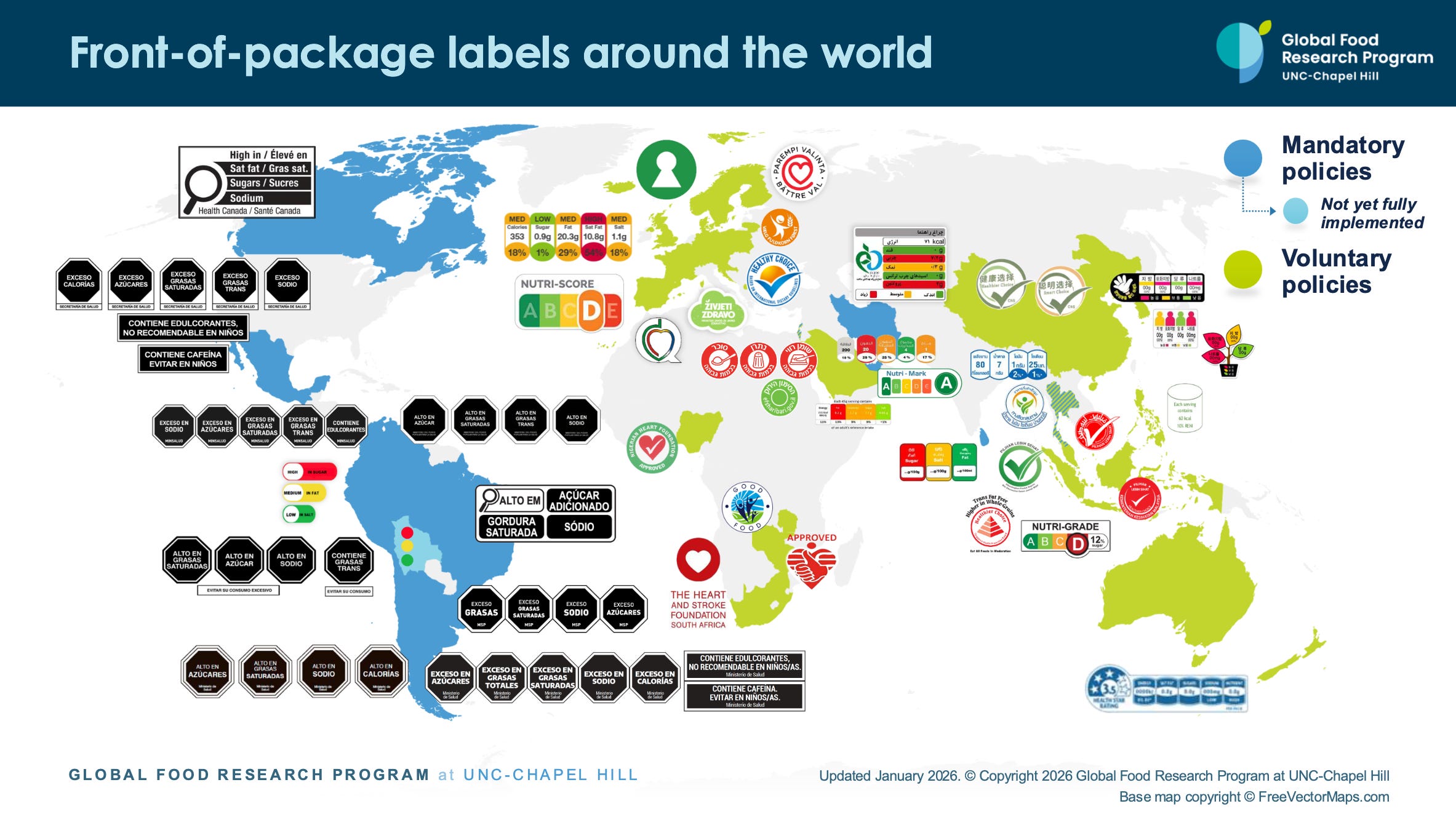
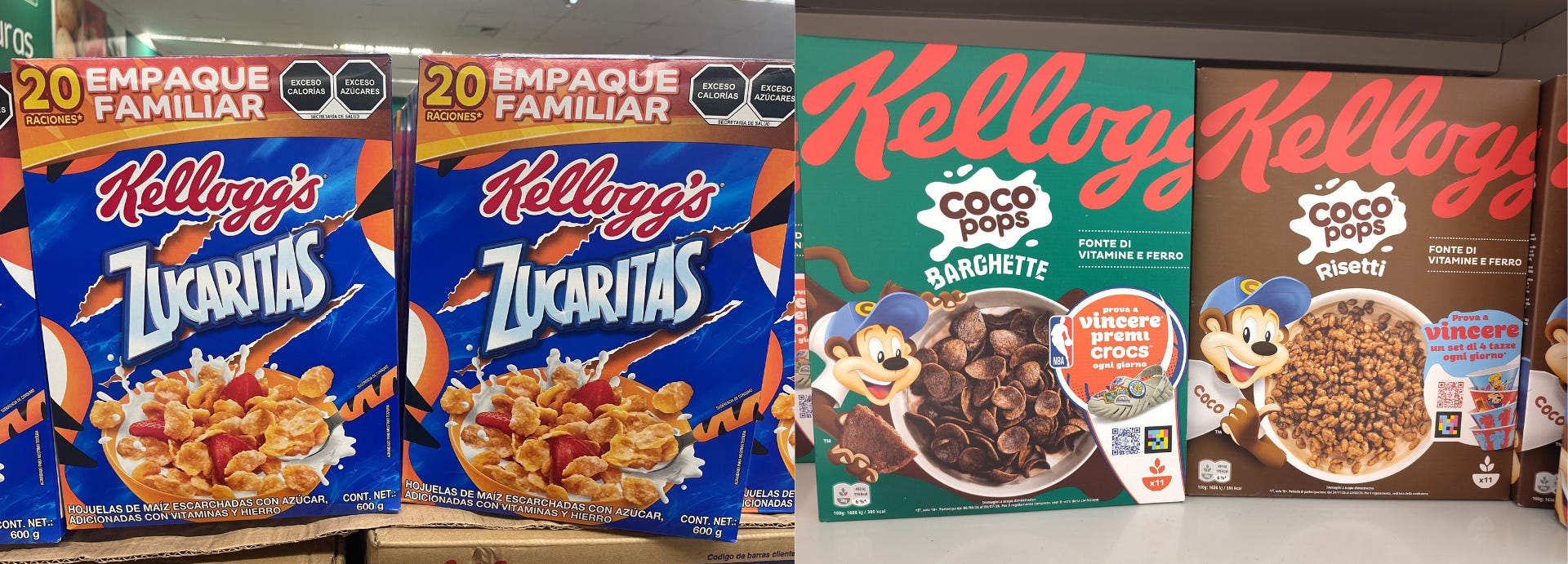
If you happen to walk into a supermarket in Chile or Mexico, you’ll encounter black octagonal signs on the front of packaged products saying “High in Sugar”, “High in Salt”, “High in Fat”. In France, Germany, or the UK, you’re likely to see colour coded labels, although in the former you’ll also see a grading from A to E.
In Sweden, it’s a small, green keyhole. In New Zealand and Australia, a row of stars. In parts of Asia, there’ll be a tick sign but with different background and foreground colours.
There are four broad front-of-pack labelling systems:
Warning labels allow customers to easily identify products that exceed set limits on sugar, sodium, saturated fat or calories. This was pioneered by Chile and now used in Mexico, Peru, Uruguay, Argentina, Brazil, Colombia, Venezuela, Canada, and Israel.
Summary score systems that provide an overall score, like the ones in France, Spain, and Germany (Nutri-Score) or New Zealand and Australia (Health Star).
Traffic light labels use the colours we know so well to indicate whether a product has low, moderate, or high levels of nutrients of concern but without the overall grade. Used in the UK, Sri Lanka, and Ecuador.
Endorsement logos, like the Nordic Keyhole or the tick marks in Singapore, Indonesia, Malaysia, China, and Brunei that highlight healthier products. The idea is that a carrot approach (promoting good products) is better than a stick (shaming the bad). I remain unconvinced of this argument.
Then there is the dreaded Guidelines for Daily Allowance labels which the industry seems to love but is impossible to make head or tail of for ordinary consumers.
Case in point: this video from Consejo Latinoamericano de Información Alimentaria (Clia) or the Latin American Nutritional Information Council.
Interestingly, when I tried to find out more about Clia, the first hit was a listing on The Union of International Associations (UIA) that said it has a relationship with the International Life Sciences Institute (ILSI), created by a top executive from Coca-Cola and which The New York Times has called “A Shadowy Industry Group” for its efforts to shape food policy.
The curious case of Latin America
As you can see from above, there are varying levels of strictness and interpretability with the labels. Guess which ones get the most push back?
You’re right - warning labels.
There’s another important element to consider: whether the labels are mandatory (or) voluntary. Research shows the latter is much less effective than the former.
For example, a review of Australia’s Health Star Rating found that a decade after its introduction, only 37% of eligible products carried the label at all, because uptake was never mandatory.
These two factors explain why we’re seeing such intense industry push back in Latin America, which has some of the world’s strictest labelling laws, and - as Stuart Gillespie said in his newsletter covering the investigation (thank you!) - “the continent that was hit hardest and fastest by the ultra-processed tsunami”.
We’d welcome other reporters or researchers digging into whether similar suits were filed in other countries outside our dataset (Mexico, Brazil, Colombia, US, UK, India) because Latin America’s labelling fights likely run wider than what we were able to track.
It was Chile who paved the way, with a landmark food law in 2016 that mandates comprehensive labelling of foods that are high in sugar, salt, saturated fats and calories, does not allow the use of toys or cartoon characters in sugary cereals, and prohibits the sale of junk food in schools. This NYT article provides a great overview.
I met the architect of the Chilean law, senator and doctor Guido Girardi, in October 2018 in Madrid, at the first global parliamentary summit against hunger and malnutrition.
“Education is not enough. We need to use laws,” he told me.
There is now substantial evidence that the policy worked.
A study tracking 2,383 urban Chilean households from 2015 to 2017 found that purchases of sugar-sweetened beverages fell by 24% after the law took effect. This was a bigger drop than standalone soda taxes had achieved elsewhere in Latin America, and one that held up consistently across income groups.
Another study comparing more than 3,000 packaged products before and after the law’s first phase found manufacturers had reformulated fast: sugar content dropped significantly in breakfast cereals, dairy, and sweet and savoury spreads, while sodium fell in processed meats, cheeses, soups and ready meals. This was done within less than a year of the labels appearing on shelves.
That’s precisely why the industry has fought so hard against them elsewhere in the region.
Take Mexico. In court documents, companies argued that the country’s labelling law violated their constitutional rights and consumer rights, and demonised” their products. Here are just two of the arguments we found:
“Front-of-package labelling violates our right to privacy and family life, and represents state interference in the decisions parents make about their children. These decisions cannot be restricted by the government unless there is a duly justified reason.”
“The regulation requires us to adapt our packaging and conduct assessments of the nutritional values of our pre-packaged products, which represents an economic loss.”
Broadcaster Televisión Azteca also argued that requiring food and beverage advertisers with front-of-pack labels to get a permit would ultimately affect its ad revenue. An executive at Nestlé Mexico said the problem was not the information on the label but the consumer, who simply lacks the discipline to change their behaviour.
India: 14,000 comments, yet we don’t know what most of them say
India’s story is, “same, same, but different”.
There, the national regulator, called the Food Safety and Standards Authority of India (FSSAI), has been deliberating a front-of-pack labelling rule since 2014. In 2022 it proposed the Indian Nutrition Rating, modelled on Australia’s Health Star system, following a study with more than 20,000 consumers.
That proposal drew more than 14,000 public comments from consumer groups, health experts, lawyers and industry associations. The FSSAI has never released them, and denied our Right to Information requests for access.
What we do know, from the regulator’s own affidavit to India’s Supreme Court, is that the comments split sharply: nearly 3,000 came from food businesses arguing for a voluntary scheme, while more than 3,500 came from citizens and public health groups demanding it be mandatory.
In February 2026, the FSSAI told the Supreme Court it intended to withdraw the star-rating proposal altogether, citing a lack of consensus.
The Court pushed back, saying pre-packaged food must carry front-of-pack warning labels and ordering the FSSAI to report on how it will implement that within a month. As of the publication of The Wire article last week, the FSSAI hasn’t reported back.
The tension inside FSSAI’s own consultations has, at times, turned openly hostile. At an August 2025 meeting, consumer groups pushed for tougher rules while industry representatives warned that warning labels would hurt sales and argued current standards were sufficient.
When Dr. Arun Gupta, a nutrition advocate and convener of Nutrition Advocacy in Public Interest, said businesses should be upfront about the salt, fat, and sugar in their products, one industry member suggested he simply tell people to exercise more. When Dr. Gupta pushed back that the fix was policy, not blame, another accused his organisation of being foreign-funded, an accusation that has become incredibly common in today’s India.
The fight in Europe
Europe’s version of this fight has been on one specific label: Nutri-Score, the A-to-E colour grade adopted voluntarily by France, Belgium, Germany, Spain, the Netherlands, Luxembourg and Switzerland.
In 2020, the European Commission promised to deliver a mandatory, EU-wide front-of-pack label as part of its Farm to Fork (F2F) Strategy. Then, the proposal quietly disappeared from the Commission’s agenda following food industry lobbying, according to consumer group foodwatch, which obtained documents suggesting the mandatory rollout of Nutri-Score was dead.
The decision was made despite the European Court of Auditors’ verdict that a “maze” of different national labelling schemes have confused consumers.
Since then, foodwatch, together with Access Info Europe, has sued the Commission over its refusal to release the documents explaining why the plan vanished.
Public health advocates we spoke to say the demise of the labelling policy is just one symptom of the broader roll back - and sidelining - of public health promises.
Out of a total of six health-related actions under F2F that includes labelling, reformulation of processed foods, and restricting the promotion of unhealthy foods, five remain unfinished as of June 2025, even though they were supposed to have been completed by the end of 2023 or before, according to a thesis submitted to the Wageningen University & Research.
Meanwhile, individual food companies are fighting the label. Danone, which appeared five times in our dataset as the plaintiff, dropped out of the voluntary Nutri-Score scheme in 2024 after its dairy products were affected in a revised scoring algorithm.
Lactalis, one of Europe’s largest dairy companies, went further: it asked the French Council of State in September to annul the decree adopting the revised methodology, arguing the new scoring does not conform with EU law. In June 2026, the Council referred the case to the Court of Justice of the European Union.
Opposition to Nutri-Score has been led by Italy, which promotes its own system amid rising “gastronationalism” touted by its far-right government which has close ties with the agrifood industry. The country now has one of the highest rates of childhood and adolescent obesity and overweight (26%) in Europe, according to our media partner L’Espresso.
Yet labels are not a silver bullet
For all this fighting, there’s an uncomfortable truth that even the people who’ve spent careers pushing for labelling transparency will tell you: it is a weak lever on its own.
Tim Lang, a veteran food policy academic, told me that in his experience, labelling is “a weak form of intervention” and worth pursuing mainly because it pushes some manufacturers to reformulate.
Barry Popkin, a renowned nutrition epidemiologist who was involved in the Chile studies I cited above, put it to me more bluntly over email.
Global food companies have “in their DNA” a resistance to any regulation they do not get to help design, and they are wary of rules that seem minor, because a small win for public health could open the door for other policies.
“They created websites, lobbied hard, and did so much to obstruct our progress and this happens in all our countries - now in Africa and Asia, and they play hard ball. The courts is one tool.”
Mélissa Mialon, a researcher at Inserm/Université Paris Cité and co-coordinator of the Global Commercial Determinants of Health Action Network, frames industry’s resistance as strategic.
“The industry doesn’t want front of pack labelling because it’s a first step towards classifying the products for its healthiness or not, and then it gets easier to tax them, it gets easier to put bans on them for marketing and those types of things.”
Scott Faber, Senior VP for Government Affairs at the Environmental Working Group (EWG) and an adjunct professor at Georgetown Law, told us the industry has built a sophisticated bench of lawyers, nutritionists, marketing experts and lobbyists with two jobs: protect the status quo, and shift the blame for diet-related disease from the companies making the products to the consumers buying them.
He should know. Before joining EWG, he was chief lobbyist for the Consumer Brands Association, whose membership includes many of the same beverage and food manufacturers now suing governments over public health laws.
“It’s impossible to estimate all of the resources that are being dedicated to defeating efforts like beverage taxes, and food disclosures,” he said.
“This isn’t so much about whether consumers might choose to buy less soda or more soda. If consumers do choose to buy less soda, the beverage companies will make the same money selling them other beverages.”
“This is not a fight about money. This is a fight about power, and companies simply don’t want policymakers playing a role in shaping how consumers make choices.”
In the above sentence, he was speaking specifically about soda taxes in the United States, but I feel the same logic applies to food labelling globally.
The SOFI connection
This is where the labelling battle and the latest State of Food Security and Nutrition in the World 2026 (SOFI) report meet.
The decline in chronic hunger is encouraging - 7.8% of the population in 2025 (that’s nearly 1 in 13 people) compared to 8.1% in 2024 and 8.6% in 2022.
What’s less encouraging - Africa now accounts for the largest number of hungry people in the world for the first time.
But the biggest concern - to me at least - lies in the nutrition numbers.
Anaemia in women aged 15 to 49 years is worsening in nearly all regions: 30.7% in 2023, from 27.6% in 2012.
Adult obesity now affects 16.2% of the global population. That’s nearly 1 in 6 adults. In 2012, that number was 12.1%.
The average global cost of a healthy diet has climbed to $4.28 (in purchasing power parity terms) per person per day in 2025 in line with the overall rise in food inflation.
This is an increase from $3.44 in 2021 and $2.94 in 2017.
This is too expensive for around 2.69 billion people, close to a third of humanity. In Africa, roughly two-thirds of the population are priced out of a healthy diet.
Globally, 69% of children 6 to 23 months, and 37% of women lack minimally diverse diets.
In the opening foreword of the report, which came out last week, the heads of five UN agencies - FAO, WFP, IFAD, WHO and UNICEF - behind it wrote: “A healthy diet is fundamental to human development”.
“A healthy diet supports childhood growth, protects long-term health and well-being, and fosters productive and resilient communities. Yet, it is economically out of reach for one-third of people globally, thereby contributing to all forms of malnutrition. At the same time, the costs to society of diet-related non-communicable diseases continue to rise.”
In case you’re wondering…
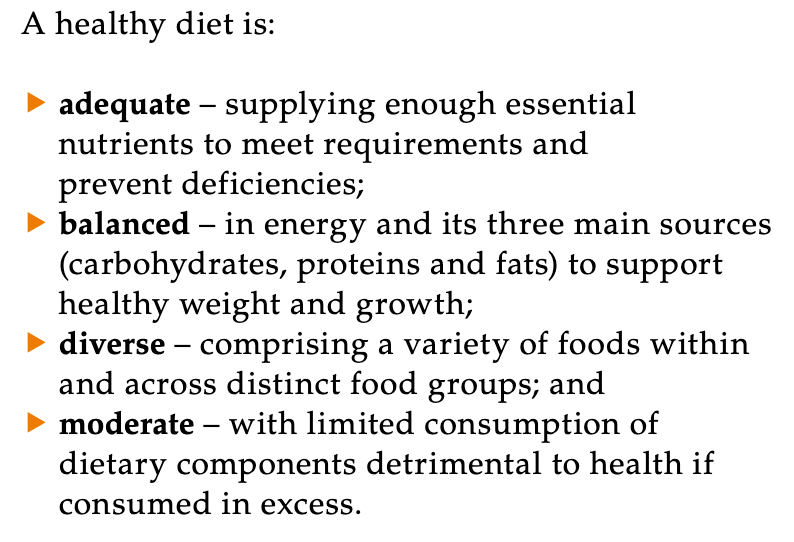
Because of its focus on the national average cost, the report acknowledges it excludes things like food environments that influence what we eat, but said they’ll be addressed in a forthcoming FAO report.
Even without the bigger framing, I believe the numbers here, together with our investigation, paint a fairly comprehensive picture of how we are boxed in by rising costs of nutritious foods on the one hand and powerful companies making it hard for us to determine if what we can afford is healthy.
Tackling this requires tailored approaches but there are two broad interventions we can embark on:
Make nutritious foods more available and affordable (suggested by SOFI)
Establish a Big Tent coalition that will pressure governments to govern, vote with our wallets on companies blocking public health policies, and support folks doing either or both.
That means, among other things, repurposing subsidies and directing research towards fruits, vegetables, and legumes, improving infrastructure and logistics to reduce food loss and waste, and reducing labour and other input costs.
It also means enacting policies that will raise the price of foods that harm our health, so that the cost is not borne by us or the environment (“externalities”) but those who are producing the food.
There is a through line between the 239 lawsuits we found and the cost-of-living crisis affecting so many people around the world.
Like Scott Faber said, this is about power. Some are wielding it in a way that allows them decide who can afford healthy diets and who cannot.

Thin’s Pickings
This Teen Took on a $10 Trillion Industry. We Might All Be Healthier Because of Him. - The New York Times
Julia Belluz, co-author of Food Intelligence, one of my favourite books this year, argues that strategic litigation “may be our only path to a healthy food environment”.
I mean, if companies are suing governments to stop public health policies, perhaps it can be a two-way street?
Skeptics of the Ultra-Processed Food Concept Get a Lot Right, But Reach the Wrong Conclusion - Confounding Factors
Nutrition science researcher Erin Hudson’s thoughtful response to the recent Vox article that said concerns about ultra-processed foods are a nothingburger (I’m rephrasing here).
MAHA’s Fascist Turn - Raj Patel
This is worth a read whatever your thoughts are of MAHA, and if you were as bewildered as I by Senior advisor at the U.S. Department of Health and Human Services and MAHA leader Cally Means’ unprovoked attacks on Marion Nestle.
Duped - ABC Four Corners programme
The first of a two-part investigative TV show that looks into problems with food labelling in Australia, featuring the Health Star rating system I mentioned above. Fascinating and horrifying. Thanks Jezza for sending me the link.

As always, please feel free to share this post and send tips and thoughts on bluesky @thinink.bsky.social, mastodon @ThinInk@journa.host, my LinkedIn page, twitter @thinink, or via e-mail thin@thin-ink.net.