

This week’s issue - yet another done on planes, trains, and automobiles - centres on reflections and recommendations from two different kinds of food systems insiders.
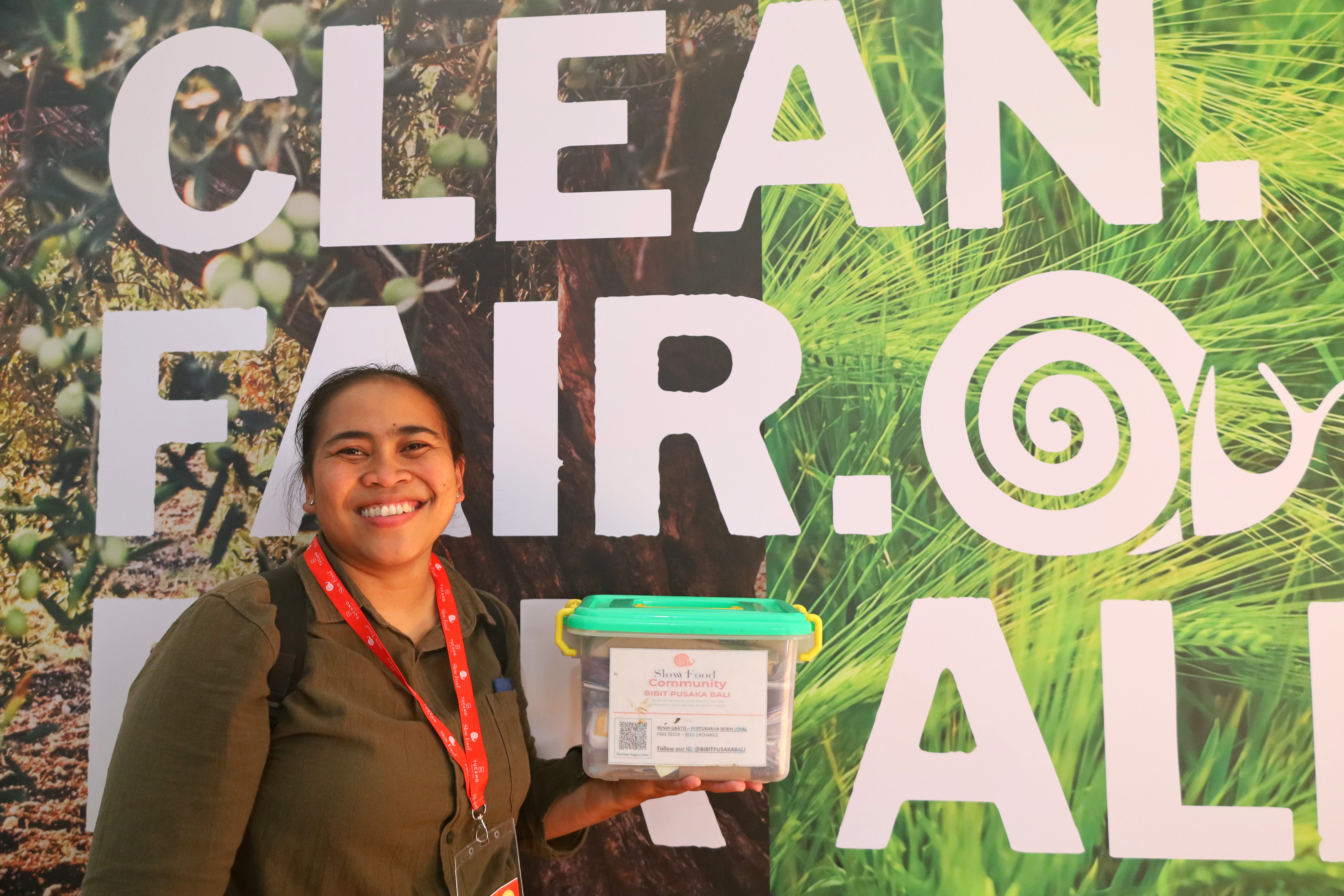
The first is the food producers who nourish us, both physically and mentally, through their commitment to fresh, clean, and fair food, the ethos of the Slow Food movement.
The second is the executives who have incredible power on the policies and environments that govern our food systems.
Both have important things to say, and I hope we’re listening.
Lastly, solidarity with friends and colleagues in Brazil who must be incredibly concerned about the human rights and food systems implications of the next round of elections.
A political gathering disguised as a food festival
There’s a lot that’s wrong in this world (see last week’s issue). There’s also a lot that’s right.
One of them is Terra Madre, the biennial gathering of Slow Food members, food sovereignty activists, thought leaders, academics, and writers. The other is Inside Track, a young but ambitious non-profit that brings together senior executives who want their industries to play a more positive role in society.
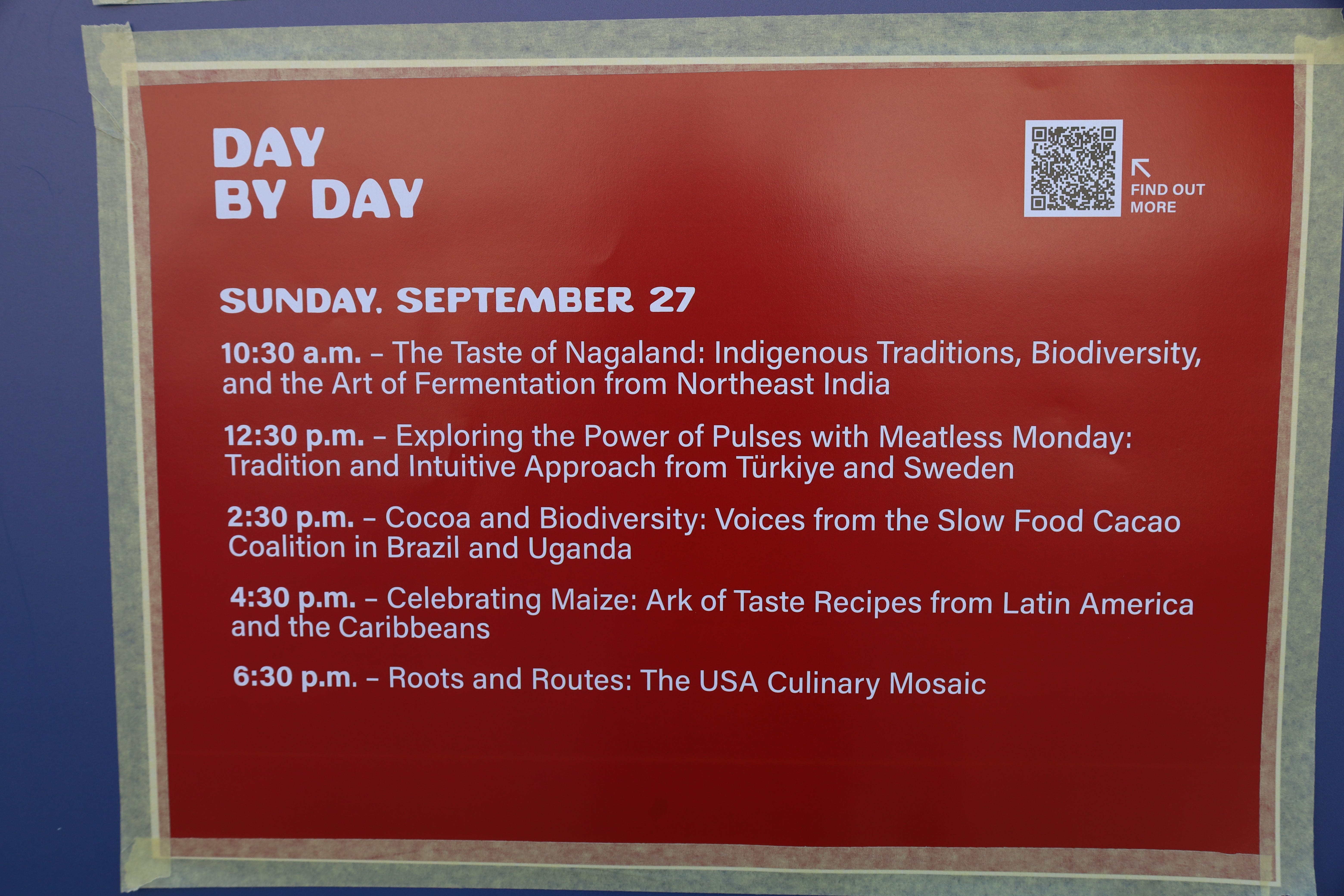
The former is a highlight of my calendar, and this edition ran on Sep 24-27, under the theme “Biodiversity, Be Diversity”.
It is also open to the public. Over four days, tens of thousands of visitors throng the stalls and workshops to taste the best porchetta from Lazio, the finest olive oil from Abruzzo, the artisanal soy sauce from Japan, or the dried fish from the Nordics.
Only a fraction of them may turn up at the conferences and discussions about food, power, and justice, but I still take it as a win.
I must admit this year’s event was particularly special for a few reasons.
For one, Alice Waters came to the panel discussion I moderated, stayed the whole 90 minutes, and graciously let me take a picture with her (!!!).
For another, I had wonderful conversations over meals with people whose work I’d long admired, and these included new friends like Jessica Duncan, Eric Schlosser, and Tom Philpott, and old friends like Raj Patel.
It was also the first Terra Madre without Carlo Petrini, the larger-than-life founder of Slow Food who passed away in late May, and it’s always a bit of a toss-up on whether a movement can sustain its momentum after losing its charismatic leader. But the success of this year’s event, which took over many parts of central Turin, bodes well for its future.

“Us” versus the System
Edward “Edie” Mukiibi, Carlo’s successor as president of Slow Food International since July 2022, was trained as an agronomist in the agricultural department of Kampala, where he learnt of Green Revolution-style farming practices that encouraged the use of chemical inputs.
One day, he was tasked with convincing local farmers to adopt a new maize variety. It came with a long list of fertiliser and chemical inputs required for the best yield, and it worked best as a monoculture rather than the mix of species they were used to.
“And then in 2007, after convincing a lot of farmers in Western Uganda… to take up the new hybrid maize seed and also giving out fertilisers on credit, the drought hit, and it failed. They had given a lot of resources to acquire the seed, to acquire the fertilisers, but also allocated land to this trial. Then many farmers told me, “Yeah, if still had our beans and cassava, and some other crops, we would survive the next season”,” he recalled.
“This is a system that many of us went through as trained agronomists. This is a system that is creating fragility. This is a system that is pushing communities and farmers to be dependent on this system.”
So he decided to go against it, went back to the communities, and started working with them to return to the traditional systems, which he found were diversified and a boon for biodiversity.
“I felt alone going against the definition of agricultural progress for Africa, which is rooted in Green Revolution. And when I came to “Terra Madre” (in 2008) I found a lot of people. I met Carlo for the first time. I told him about this issue, and he told me, “Come, let’s launch resistance. Let’s support you to go against this system.””
Nearly two decades on, the system Edie set out to resist has found subtler ways to capture the narrative. One of them is the discussion around personal and consumer choice.
“It’s not about choice because there is no other choices in some places. The system has been so rigged that there is only one choice, and that choice is not favourable to the people.”
This includes how food is being marketed to children on television, often through cartoons. Edie witnesses this whenever he visits farming families in Africa and Asia and watches TV with them.
“They are creating a new generation of eaters whose choice has already been rigged since when they are young.”
The rigging also happens in the rooms where decisions about our food systems are made.
Jessica Duncan, associate professor of rural sociology at Wageningen University, spoke of how agrifood firms have been pushing into food governance at every level through the creation of many different groups, coalitions, and networks.
“They are creating a lot of tables. We are getting tables everywhere, and it’s becoming very, very hard to know who’s sitting at the table, who they represent, and what menu is being served. But that is increasingly being decided by powerful corporate actors.”
“This is really important because we see that participation might be increasing, and I would venture to guess that a lot of people in this room over the last year, have spent quite a lot of time participating in food policy processes, only to find out that the agenda was already set, the report already written, the declaration already drafted before they participated, and that has huge implications for democratic practice.”
Yet, “the most affected are not at the table, or they are not at the right table”. Worse, it’s getting increasingly hard to hold bad actors to account, “and that is by design,” Jessica said.
(These comments - like others attributed to Edie, Jessica, and Raj - come from the Food Justice and The Taste for Power panel discussion I moderated on Sep 25.)
Edie’s three steps to rebalance power
Confront power, using the knowledge and resources they have, including taking legal action. “But communities need to be empowered and supported to stand because they look like a small drop against a big mass of power.”
Resist. “The corporations, those with power, they want the whole world to lose biodiversity. If we preserve biodiversity, we are mounting emblems of resistance. If we support farms that are agroecological, that is emblem of resistance.” So is setting up more diverse farmers’ markets “which are not only serving the economic interests of the system, but also serving a civic and social and environmental interest.”
Dialogue: negotiating with decision-makers to make sure “the rights of the communities are observed”. “It needs a very good level of negotiation, but who negotiates for the communities? We need more and more empowerment for the communities.”
Resistance from the ground up
Between attending events and eating my weight in food, I spoke to people who are doing some version of this in their fields, forests, and kitchens.
The Slow Food Farmers
Beatrice Ndungu’s farm in a village in Kenya is just half an acre, yet she grows maize, beans, sweet potatoes, and bananas.
She also leads several farmer groups in her community to build resilience and improve soil fertility, including by building a seed bank, making compost, setting up kitchen gardens, and harvesting water.
Recurring droughts have been particular nuisance in her community, but simple things like digging trenches and laying logs inside them are proving effective, because they hold water when rain finally comes, she told me.
None of it needs machines. “We are trained to use local available resources… So if we want to do bokashi (fermented organic matter), we have animals, we have manure, we have dry grass, we have everything.”
“Now I can able to feed my family,” she said. And her neighbours are learning “that we can grow many many vegetables or foods without using chemicals.”
Beatrice is part of the growing Slow Food Farms network, which applies agroecological principles to farming and recently celebrated reaching 1,000 farms.
Francis Muia, Slow Food Farms Accelerator and Coordinator in Africa, said interest in joining the network is growing.
“Now we don’t have to look for the farmers… they’re coming to us,” he said.
Of course, it remains an uphill battle while governments continue to push and subsidise commercial agriculture that relies heavily on synthetic inputs.
But farmers are fighting back with street marches and court challenges, and in Kenya, they are also nurturing grassroots leaders ahead of next year’s elections, he said.
His message to farmers is to start small.
“Don’t buy fertiliser. Make your compost. Make your bokashi using the locally available resources. Get seeds from seed banks. You don’t have to pay.”
The money saved goes a long way. “They can take children to the schools. They can buy food.”
The Coffee Maker
When I first interviewed Ayu “Lee” Chuepa nine years ago, the founder of Akha Ama Coffee in Chiang Mai was about to open his third coffee shop and was working with 20 farmers.
Today, Akha Ama has three cafés in Chiang Mai, and three in Tokyo. Each year, he runs training workshops and other activities with some 200 to 300 families.
But Lee, a member of Chiang Rai’s Akha ethnic minority and the first person in his village to graduate from university, insists it was never just about selling coffee.
“We work on knowledge. We work on inspirations. We work on biodiversity… because coffee is related to everything,” he said. “It’s not only about how much I can sell.”
Fittingly for someone who first came to Terra Madre as a Slow Food Youth member, a big part of his work is bringing young people back to their territory, where they can become agricultural entrepreneurs.
He is also adamant that indigenous products shouldn’t be sold on sympathy, something he has insisted on since the start. He wants customers to come back again and again, and this only happens through quality, not just the origin story, he said.
The climate crisis is making all of this harder, though. The farmers he spoke to this year reported drought, too much rain, landslides and shifting seasons, as well as biodiversity loss.
“You cannot (be) just like, “Okay, I’m doing coffee and I have to protect the coffee”. I have to protect the whole ecosystem,” he said.

The Food Forester
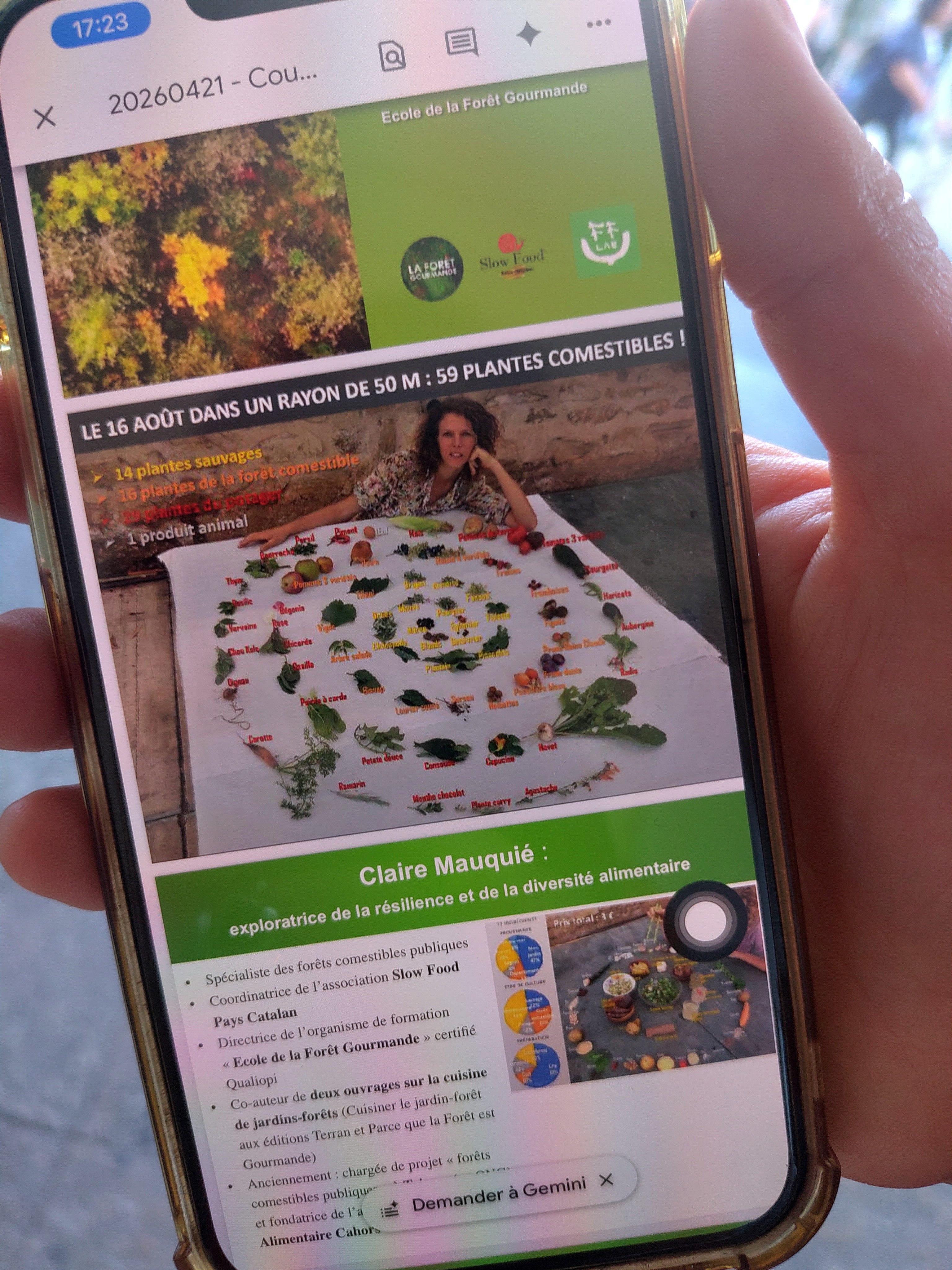
Claire Mauquié, coordinator of Slow Food Pays Catalan, grows food in forests, and preferably public ones, “because… it’s accessible, visible, and it can inspire people to do the same at home”.
She started in Taiwan while working for an NGO. There, she found that edible forests solved a common problem with tree planting.
“When you plant edible forests, (people) are attracted to care for the trees, because there is a harvest after.”
Back in France, she teamed up with a man in Burgundy who had planted a food forest on two hectares of what in 2010 was “only a land with nothing, just grass”. A decade later, it held more than 1,000 edible species.
She contrasted this with the fact that most of our calories these days come from just rice, maize, wheat, and potatoes.
“The principle of edible forest is that you have more calories from coming from trees. So instead of eating stuff that are causing deforestation, (we’re) eating stuff that are doing reforestation.”
A food forest is multi-layered. Taller nut trees such as walnuts and pecans form the canopy, with fruit, berries, roots, flowers, leaves, and mushrooms below.
It works in temperate, tropical and subtropical climates, though it’s harder where rainfall is below 500mm a year.
At Terra Madre, she ran a tasting workshop on “reforestation cuisine” featuring acorns from oak trees.
“It’s edible, it’s amazing, and nobody knows. Everybody thinks it’s only for pigs.”
I tried her acorn gnocchi, made with potato, wheat flour, and dried tomatoes. Not bad at all.
The Indigenous Chef
Made Masak Dewa, a Balinese chef who studied food science instead of going to a chef school, shared the stage with Claire.
Coming from such a tourism hotspot, she is very keenly aware of how visitors’ dietary preferences can shape cuisines and how they push them further and further away from traditional ingredients.
For example, many restaurants in Bali says they are organic and customers will rave about “amazing” places serving plant-based and vegan food, she said. But, “they’d be eating a quinoa salad, imported from somewhere. That’s become a trend.”
So the born-and-bred city chef moved back to the village 10 years ago “to get to know what I should cook”. The irony isn’t lost on Made. “I growing up in the city… I go back to the village. And the people in the village they go to the city.”
The answer was in the food forest, “the piece of land behind of your home… It’s not a garden. It’s not a farm. It’s a forest.”
“I found that all the sustainability that people were talking about in the modern regenerative agroforestry, permaculture… was already in the ancient wisdom in Bali.”
Made has no restaurant, but built a community kitchen at a Slow Food farm in where monthly events invite village mothers to share “forgotten recipes”.
One of them uses the arenga palm bark, cooked like a curry with Balinese spices: ginger, galangal, turmeric, candlenut, lemongrass, bay leaves, etc. The dish is made for ceremonies and celebrations, because it takes a whole crew to get the bark, but one tree can feed a 1,000-guest wedding, Made told me.
“You will never find it in any restaurant,” Made said, because “not so many people want to cook it again”. Yet the dish is “all about connected to the culture, to the ecology… this is also like about togetherness.”
As a forager, Made “only cook[s] based on what I found”. A favourite is wild betel leaf, fried tempura-style in coconut oil and eaten with a sambal made of roasted candlenuts pounded with chilli and finished with lime juice.
Points to ponder
Raj on naming the problem: “The power structure here is capitalism itself… its drive for profit and its tendency towards monopoly is what it is that is resulting not only in the externalisation of ecological costs and the exploitation of workers and the taking for grantedness of care work, of reproductive labour, of the work predominantly of women.”
Jessica on language: “These examples (of local successes) exist… despite a system that is trying to make them fail… We are not just transforming. We are dismantling oppressive structures so that all of these initiatives can flourish.”
Edie on depoliticised education: Slow Food gardens in Africa began as “emblems of resistance” to the new Green Revolution promoted by donor-funded groups and projects. “Everything shifted to school meals. Now everyone who is talking about school gardens, if you want to get funding, you go into school meals. You don’t talk about the political role of the school garden.”
Raj on the myth of choice: “One of the hardest things to let go of is this idea of free choice, because it doesn’t exist… it’s a lie that is very useful in the food system to obfuscate where the real choices have already been made.”
Jessica on feelings: “We are at a moment of collective anger, collective fear, and collective grief… part of the power that we have is to think carefully and to sit with these big feelings that are very real and very scary right now, and think about how we can do that in a way that doesn’t continue to prioritise and privilege those of us who have and maintain that privilege.”
Made on organic food: “It’s not just for the customer. (It’s also) for ourselves. The farmer has the right to have that healthy food also.”
What we can do
Edie: “First concrete action is to listen with an open mind to the voices of Terra Madre, to listen to the diverse, and also be open to food cultures, because if we do not embrace the different food cultures, we are already losing the fight. So the first concrete action is to embrace diversity, is to embrace food cultures, taste food, talk to people, and also encourage others.”
Jessica: “The thing that occupies me right now is the importance of intergenerational alliances. We are dealing with climate change on different scales, and we are failing to communicate and collectivise across generations. Within these collaborations, we need to focus on care: a feminist politics of care, caring for each other, for ourselves, for the planet, for our animals. We need careful engagement, careful of the power and privilege that we bring, careful of the strategies that we implement, and maybe building on radical joy.”
Raj: “If there’s only one thing that we can do tomorrow, dream as big as you can about the world that you want, and then organise around that. I mean we are going to lose one thing after another after another, and if we’re going to lose, let’s lose at least from the big dream that we actually want. Let us not compromise.”
Claire: “Be active. Don’t be passive. Take action.”
Made: “The first thing is change your mindset. Only you can change your mindset. Because with your mindset shifting, we can see things differently. Like, organic products doesn’t have to be certified. The one who need to certify is the one who put chemicals. Why we are okay with the one who’s using chemicals?”
Lee: “Wherever you go, grow some trees. Maybe they die, maybe they survive, it doesn’t matter. Grow them.... And buy something tasty and ALSO sustainable.”
The view from the top
Terra Madre showed what resistance looks like from the ground up. But what happens when the warnings come from inside the very companies that hold the power?
Guess what? They are worried too! On Oct 1, Inside Track’s new memo dropped from senior food industry professionals at major UK food producers, manufacturers and retailers. It sounds the alarm that the industry is focusing on quick-fixes instead of long-term change at a time of climate change, biodiversity loss, and soil degradation.
In a nutshell, this is what they’re saying: “Unless climate impacts are reduced, we will not be able to adapt to the risks they pose.”
The illusion of resilience
Resilience was meant to be about long-term sustainability. Instead, they wrote, it has become “a by-word for the tactical switching of ingredients and sourcing regions”.
It also goes well beyond carbon.
“The issue of supply chain resilience is not just one of greenhouse gas emissions. It is critical for the livelihoods of farmers and sourcing communities, and for soil health and biodiversity. Our industry is not taking a strategic approach to any of these issues either in their own actions or in the way they work and engage with government.”
“We cannot sacrifice actual resilience for the illusion of resilience in the short-term, or we will undermine the overall financial sustainability of our sector.”
The memo admits regenerative methods could support resilience, but these remain small pilots that have been “commissioned and publicised for years”, yet the investment and corporate will to scale them up never arrive.
The authors aren’t against adaptation which is crucial given the summer we’ve just experienced. But tactical sidesteps are not long-term strategies and they expect “growing disruption” unless the industry:
seriously reduces its environmental impacts
makes sure farmers have long-term, reliable income
takes much bigger adaptation steps itself, such as investing in indoor growing and finding alternatives to imported fertiliser.
(I bet Edie, Francis and Beatrice would have plenty to say about all this.)
It’s not the people. It’s the incentives.
According to the memo: “Our companies are optimised and incentivised towards short-term decision making, which will in turn undermine the long-term value investors rely on.”
It identifies three problems at the top.
Boards aren’t seeing the risk. They look at their own operations, not at “the overall health of the system they rely on” or at what people across their supply chains are going through. They also haven’t built a culture where suppliers feel they can be honest with them.
There’s a skills gap. Food company boards tend to attract “highly competent professionals”, but on climate risk, non-executive leaders lack the expertise. There isn’t enough independent advice, modelling, training or recruitment of experts.
The clock runs on short-termism. Boards are “hyper-focused” on unrealistic investor expectations for short-term growth. Executive pay and KPIs are tied to short-term financial targets that are disconnected from environmental ones.
Sound familiar? It’s Jessica’s point about tables again, from the other side. The people at the table may well know what’s wrong, but the menu is being set by quarterly (or even weekly) targets.
What investors should scrutinise (and that includes “us”)
The memo calls for “a collective and coordinated effort from industry and government to reduce environmental risks and invest in sourcing communities and a supply chain that achieves long-term resilience”. It also asks investors to press companies on key issues.
If you think you aren’t part of that group, think again. Through pension funds and other vehicles, many of us are unwitting investors in these companies.
Here’s what the insiders say investors should scrutinise:
The board: how companies staff their boards and bring in advisers so they have the skills and experience to model and manage risk.
The balance: how boards ask their teams to weigh long-term impact reduction against short-term adaptation.
The nitty-gritty: what companies are doing to prepare for different warming scenarios, invest in resilient agriculture, share risk across the supply chain and set long-term contracts, and whether any of that shows up in spending, costing, delivery and reporting.
The track record: whether past scenario planning was accurate and mitigation targets were met, and what that means for future projections.
Helpfully, there’s a ready-made list of questions for investors in the appendix.

Thin’s Pickings
This was a very long issue so I’ll leave it with only one pick, but it’s a cracking one: a conversation between Eric Schlosser and Tom Philpott on the 25th anniversary of the former’s landmark book, Fast Food Nation, and on what has changed and what hasn’t. A must-listen for both journalists and food system nerds.

As always, please feel free to share this post and send tips and thoughts on bluesky @thinink.bsky.social, mastodon @ThinInk@journa.host, my LinkedIn page, twitter @thinink, or via e-mail thin@thin-ink.net.