
I’m in the throes of a monster deadline that has me working round the clock so this issue and the few upcoming ones will be short.
Hope to be back to regular programming soon.
In the meantime, hope everyone is able to stay cool, literally and figuratively.
A Continuation From Last Week….
In the large Venn diagram of public concerns, there’s a significant overlap between food systems and public health.
I’m also convinced that overlap shrinks dramatically once you add trade and law, two other dimensions that are just as central to food systems and public health but long seen as too technical, too complex, too… not for me.
After arguing last week that Commercial Determinants of Health (CDoH) should become more mainstream, I’m taking a step further this week: anyone who cares about building greener, fairer, and healthier food systems needs to be attuned to these two aspects - law and trade - as well.
First, a plea: bear with me on the acronyms.
Under the World Trade Organizaton (WTO), there’s something called the Agreement on Technical Barriers to Trade (TBT). It is administered by a dedicated committee that scrutinises whether national regulations such as labelling and packaging requirements impose discriminatory or unnecessary barriers to trade.
When WTO members - nearly all countries in the world - introduce new policies, they notify the WTO and other members can question or challenge them, raising what’s known as “Specific Trade Concerns (STCs)”. Some well-intentioned public health policies have been killed, weakened, or delayed after discussions at the TBT Committee.
This matters because some of the most influential players in the food and beverage industry are transnational companies with more money than many sovereign states, and one of their favourite arguments when governments want to regulate is: “your laws won’t pass muster at the WTO because they impinge on trade.” I’m paraphrasing, but you get the gist.
It’s an argument that often prompts policymakers to hold back, especially in nations with limited resources.
But a three-year research project led by Amandine Garde, Professor of Law at the University of Liverpool, and Gregory Messenger, Professor of Trade Law and Policy at the University of Bristol Law School, has done something important: it lifted the veil on these proceedings dating back to 1995.
The team went through meeting minutes and data from a platform on the TBT process, and built a novel database analysing over 900 STCs raised at the TBT Committee over the past three decades, which is now publicly available for other researchers and curious minds.
What they found bursts a central myth: WTO rules do allow governments to regulate to protect public health, countries have prevailed in putting their citizens’ wellbeing above corporate profits, and there are clear principles for drafting policies that will clear the WTO hurdle.
Wildfire Collective has produced a five-minute video distilling all of this, and it’s almost ready. Watch out for it on this page: I’ll share it as soon as it’s out, and it will be worth five minutes of your time.

A Mixed Bag on Livestock
This week, the EU published its first-ever Livestock Strategy (here, here, and here) and Protein Plan. I only had time to go through the former so I’m going to comment only on that document, and mostly through the lens of two investigations I was involved in.
Let’s start with the good news for a change.
Nearly 6 years since 1.4 million citizens from all over Europe called on the EU to end the practice of keeping farm animals in cages, the European Commission seems to be finally moving ahead with phasing out this inhumane practice, at least for laying hens and sows.
The strategy specifically mentioned the European Citizens’ Initiative (ECI) that started it all and said the phaseout will focus “on sectors where a transition to non-confined housing system is feasible, is evidence-based and accompanied by sufficient transition periods and financial support allowing farmers to adapt”.
The process is also likely to be expensive: “Given the scale of the investments needed, the transition will require support that spans the next financing period and beyond.”
In October 2023, we at Lighthouse Reports published an investigation into how a set of four animal welfare laws came undone following intense pressure from the livestock industry. These laws were supposed to end practices such as keeping farm animals in cages, slaughtering day-old chicks, and the sale and production of fur. I’ve written about it for Thin Ink too.
But it seems at least the days when animals are held in cages and day-old chicks are slaughtered are numbered. Compassion in World Farming, which led the ECI, welcomed the announcement but called for an ambitious timeline for all other species.
The strategy also mentioned improving risk management for livestock farmers, including through insurance and reinsurance.
This is much-needed, given how farm animals remain invisible in EU disaster planning and response, and how the burden of more frequent and intensive climate disasters is borne by livestock farmers practising high animal welfare and extensive agriculture (the opposite of intensive farming - fewer animals, more space, lower inputs).


The stuff on environment and competition? Much less to celebrate.
Some of the most worrying lines are about methane emissions from livestock, which the strategy itself acknowledges “represent the largest source of agricultural emissions in the EU”, yet said more accurate measurements are required.
“Discussions are on-going to explore the need to take account of the biogenic nature of methane emissions as part of a short-term carbon cycle,” the report said. “More refined approaches are needed to better reflect real management practices and ensure a more accurate and fair assessment of livestock’s climate performance.”
The European Environmental Bureau (EEB) blasted the language, saying methane is a major driver of ground-level ozone pollution and is harmful both human and environmental health.
The references to a simplification of the Nitrate Directive, which aims to protect Europe’s waterways from pollution from fertilisers and animal manure, was also criticised by Marco Contiero, EU Policy Director on Agriculture for Greenpeace.
“Nitrate pollution in our water is arguably the most significant problem caused by intensive livestock systems in Europe, and the subject of years of political and legal disputes in the Netherlands, Denmark, Germany, France and Spain, among others. By avoiding to address the root cause of nitrate pollution, the unsustainable amount of animals concentrated in factory farms is some European regions, the Commission makes itself look ridiculous,” he wrote in an email.
May I once again refer you to two previous issues of Thin Ink?
European Coordination Via Campesina, the union representing smallscale farmers, welcomed several elements of the strategy but said both documents “do not provide adequate answers on fair prices, market regulation and the growing concentration of livestock production”.
“(Both) rely heavily on technological solutions, including digitalisation, genomics, carbon farming, biomethane and new genomic techniques (NGTs), while giving insufficient attention to the structural changes needed to build resilient and agroecological livestock systems,” the group added.


Reading through the Strategy document, I can’t help but feel that the third sentence is the key to Brussel’s thinking on livestock.
“The EU livestock farming sector plays a crucial role in contributing to food security by providing high quality protein, not only in the EU but also at global level, with a positive EU trade balance and a growing demand for EU products thanks to world-leading standards, quality and sustainability, which allow them to carry the flag of European excellence across the globe.”
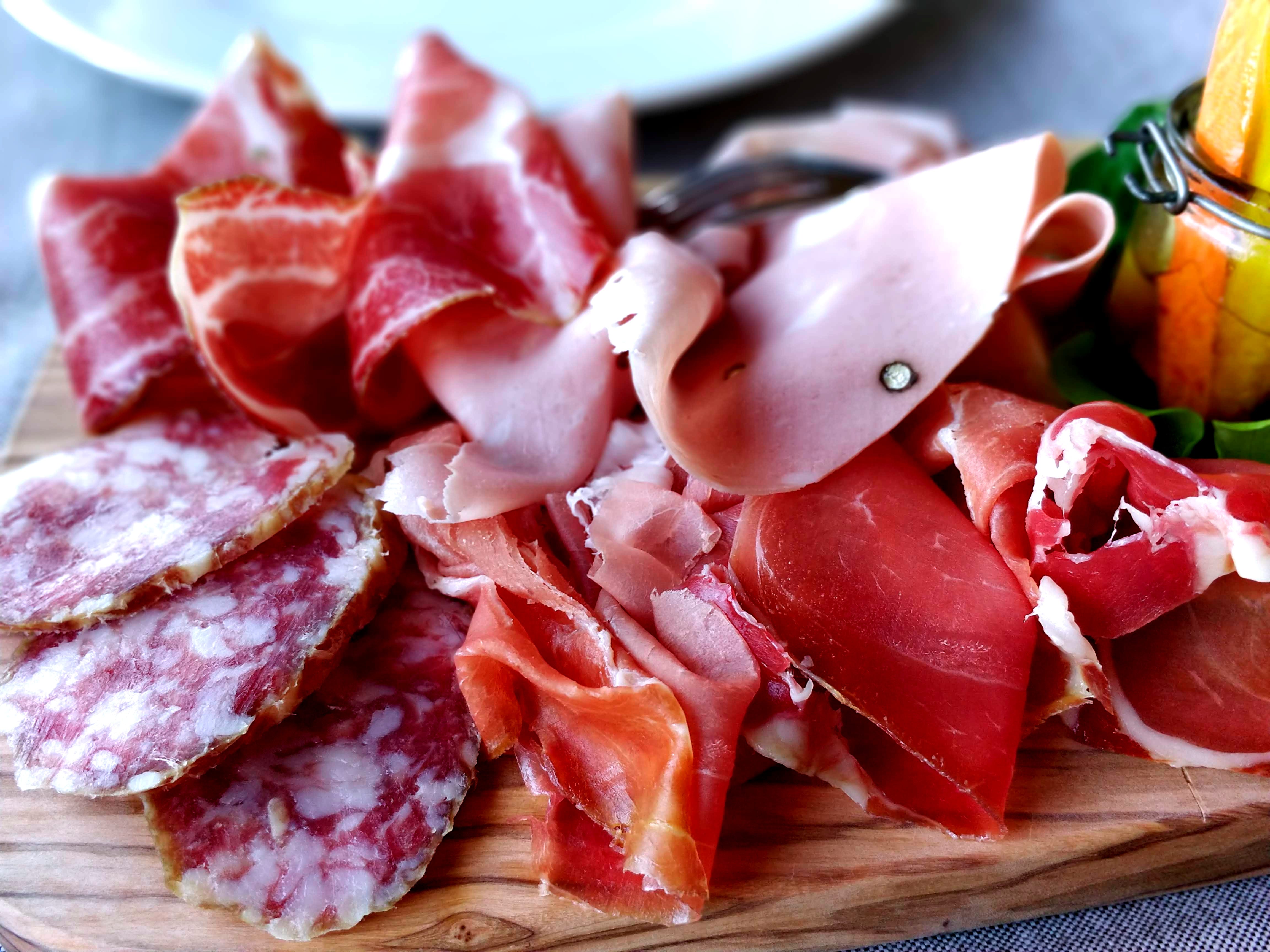
To me, this is a disingenuous line, conflating staving off hunger outside Europe with the EU’s export of expensive prosciutto, jamon, aged Comté, and parmigiano reggiano which brings “positive EU trade balance”.
The growing demand for these luxury items isn’t coming from people living hand-to-mouth in Myanmar, Venezuela, Gaza, or Sudan. It’s coming from affluent people around the world who are consuming more meat.

Thin’s Pickings
More on Commercial Determinants of Health
Two pieces relating to last week’s topic: “The Winner of the World Cup is....Coke?” from Unjunked and this LinkedIn post on how Bayer’s stock rose 17% after the Supreme Court ruling and what it means for public health.
The World Has an Anchovy Problem - Bloomberg
“The anchovy sits at the bottom of a crucial supply chain that sustains the $500-billion-a-year global aquaculture industry. Anchovies are the main ingredient in fishmeal, and without enough of it, global production of salmon, seabass, shrimp, oysters and other seafood will suffer, pushing up supermarket prices.”
What’s causing its shortage? El Niño.
More Palantir questions for WFP - The New Humanitarian

As always, please feel free to share this post and send tips and thoughts on bluesky @thinink.bsky.social, mastodon @ThinInk@journa.host, my LinkedIn page, twitter @thinink, or via e-mail thin@thin-ink.net.
For more on Via Campesina's position:
https://www.eurovia.org/press-releases/eu-livestock-strategy-and-protein-plan-recognise-the-value-of-territorial-livestock-systems-but-must-go-further-on-fair-prices-market-regulation-and-food-sovereignty/
I agree that the livestock strategy was a very mixed bag and it had not sufficient measures to limit industrial livestock.
In that context, I am not convinced that any public insurance for livestock farmers is a good idea. Here in Sweden, the government picks up most of the bills when livestock producers are harmed by certain diseases. The biggest egg producer (2 million hens) have repeatedly got huge sums as payment for costs associated with salmonella. Extensive systems are much more robust and less likely to face major disease outbreaks.
As for methane, I believe the EU strategy is partly correct to point to flaws in the concept of carbon dioxide equivalence and the metrics which are applied. Unfortunately, they still recommend the use of methane reducing feed additives - again a measure suitable for intensive livestock, but not for extensive production. In general, the whole methane discourse is flawed and it is a tragedy that so many environmental groups have got the analysis wrong. The methane focus is essentially favoring the worst kinds of livestock system from an environmental and animal welfare perspective.
https://gardenearth.substack.com/p/the-methane-ruminations