

First off, I need to draw attention to a mistake in last week’s post where the percentage of food insecure people in the UK was miscalculated.
I had reviewed and edited the copy but in my rush, did not double check the numbers. That’s on me.
I’ve since updated the data and put a correction note up top. So if you want to share the post, please use the web link above instead of the email which still has the wrong number.
Thanks André and Jen for pointing out the mistake!
Secondly, RIP Patrick Stewart, the best (IMHO) Star Trek Captain and X-Men.
Now to the programme.
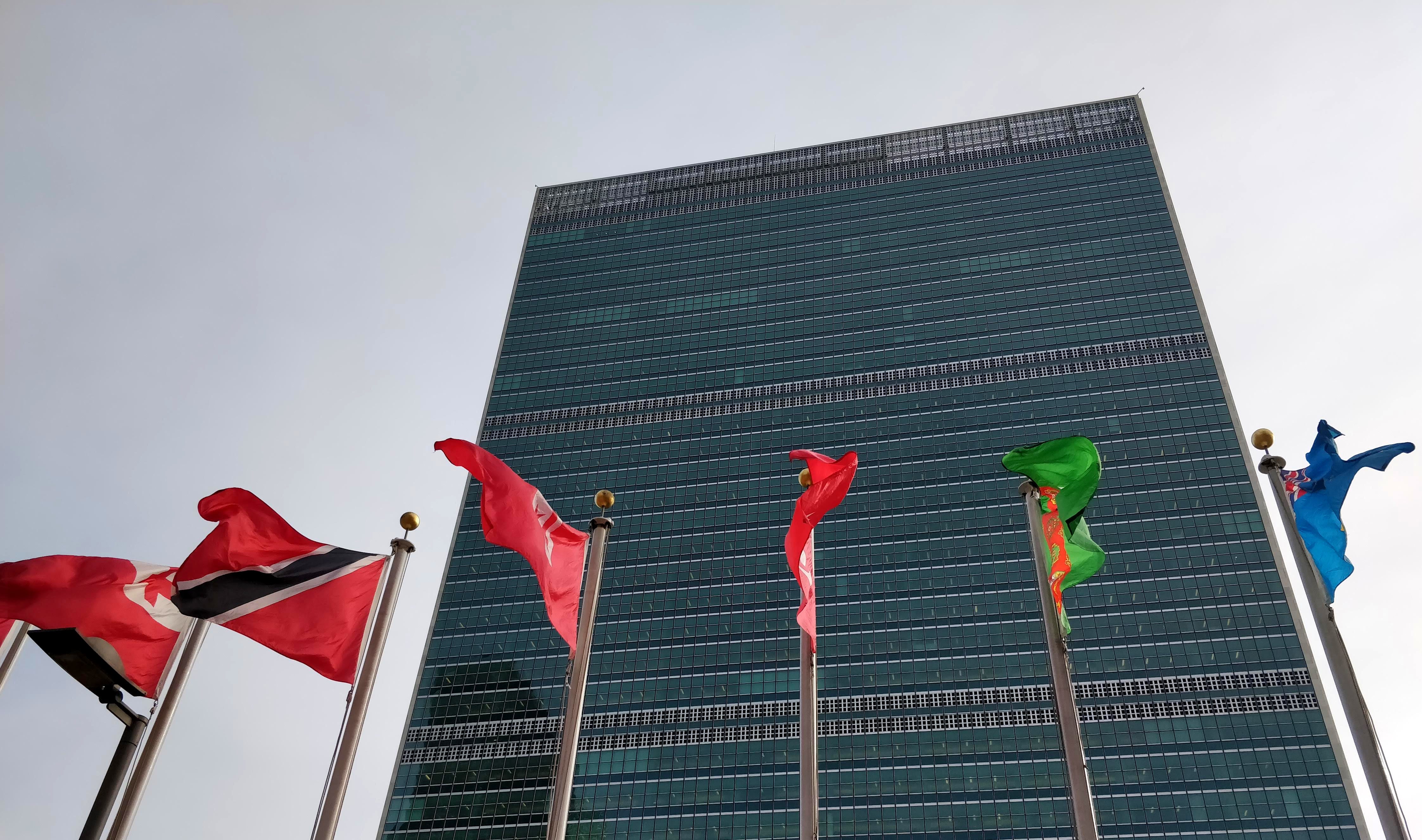
“The worth of the individual human being is the most unique and precious of all our assets and must be the beginning and end of all our efforts. Governments, systems, ideologies and institutions come and go, but humanity remains.” - U Thant
This is one of my favourite quotes of all time. I’ve loved it ever since I came across it many, many moons ago - I used to collect quotes when I was a precocious teenager, surprised?
Perhaps it affected me all the more because it was written by a fellow Burmese, in his last report as the United Nations’ Secretary-General, a post he held for 10 years from 1961 to 1971 at a time of major geopolitical upheaval: Congo, the Cuban missile crisis, Vietnam War, just to name a few.
Not terribly unlike the world we’re inhabiting now.
This quote has taken up renewed space in my head because the world this week has been focusing on elections in Brazil, Serbia, Israel, and the U.S., all of which have the potential to change things both at global and national levels on climate action, environmental protection, and respect for human rights and the rule of law.
These elections are also about something incredibly basic: understanding what it means to be a decent human being, neighbour, and member of a wider community.
Those who care about human rights and planetary health let out a massive sigh of relief when the Brazilian results came in, and continued with Serbia.
Israel’s election results looks set to reverse the trend, although to be honest, I didn’t have a lot of hope anyway, and this Ezra Klein op-ed in the NYT spelled out very clearly why.
We now await with bated breath which way the U.S. mid-terms will go.
In the meantime, I’d like us to pay close attention to at least four other upcoming “elections” that also have the potential to shape our responses to the challenges we’re facing today, from food and climate to wars, inequality, and AI.
The Other Elections
None of the votes are national (they are all for the UN), immediate (spread out between now and next July), or elections as we know them (governments vote and much of the deal-making is behind closed doors).
In my humble opinion, these factors make it even more imperative that we keep a close watch, ask the right questions, and not get distracted.
After all, the only things that are at stake are… our food systems, our health, and our ecosystems.
I’m not a full-throated supporter of the UN and it’s been decades since I had rose-tinted views of the institution. It is bloated, often ineffective, very flawed, prone to self-aggrandising, and parts of it are very corrupt.
Yet, it is also the closest thing we have to an institution that could save humanity from hell.
I mean, what alternative do we have to this multilateral model? A multistakeholder platform, where unelected but powerful actors have the same seat, say, and sway, as elected representatives? When has that ever worked out in favour of the poorest, the most marginalised, and the most vulnerable?
So until we find a better model, we are stuck with this one, and we need to make it the best version of it possible.
Desperately Searching a Sec-Gen
Which is why the question of who will take over from Antonio Guterres as the new UN Secretary-General as of Jan 2027 is a critical one.
Eight candidates were in the running for a while - two have even dropped out - but what’s ruffling feathers as the race enters its final stretch is the emergence of a new (ninth) candidate who is being talked up as a front runner. And no, I’m not talking about Viktor Orbán.
Lana Nusseibeh, a former United Arab Emirates (UAE) ambassador to the UN, may be late to the game, but has been racking up endorsements and support along the way.
Will she be like Kofi Annan, who clinched the post despite being nominated only a few weeks before taking office? By the way, this old BBC article explains how the UN chief is chosen.
If she prevails, her appointment will finally bring a woman to the world’s highest diplomatic post, and one with Palestinian origins, no less.
Alas, Nusseibeh has also been the face of a regime that has been credibly accused of arming a faction in the ongoing Sudan war, causing one of the most devastating humanitarian crises in the world.
The UN-backed IPC has confirmed famine in parts of Sudan since late 2024. This is a direct result of the conflict, where both sides have used food as a weapon of war.
Watch this 30-min video from Search Party that featured two Lighthouse colleagues, Julia Steers and Jack Sapoch, and their work, which linked UAE with Sudan’s war.
Nusseibeh has publicly denied the UAE’s involvement and even rejected the findings of UN experts on UAE’s role in the war.
As Nesrine Malik argued in this Guardian op-ed:
“Against this backdrop, the appointment of Nusseibeh, who has been the face of the UAE’s Sudan strategy, would be a slap in the face to the millions of people suffering the horrors of war, a dereliction of duty towards those thousands who have already been killed, and a green light to the prolonging of conflict.”
The incredibly conservative petrostate has also used sports - buying Manchester City, anyone? - to improve its global image, cosied up to the Trump family through multiple investments, and is engaging in what critics call a “modern-day land grab” in parts of Africa either through carbon crediting deals or the more traditional land deals for food production.
Meanwhile, its treatment of migrant workers critical for the functioning of its gleaming desert cities as a permanent underclass is well-documented (also here).
I am a firm believer of the need to work actively to advance gender and race equality, even if it means imposing quotas or some form of parameters to level the playing field. But Nusseibeh gender and ethnicity should not give her a free pass to the world’s top diplomatic job.
(In case you’re wondering, when U Thant was serving as Burma’s ambassador to the UN, my birth country was led by Prime Minister U Nu. When General Ne Win staged the coup on March 2, 1962, U Thant was already the Sec-Gen. So no, U Thant was never the face of Myanmar’s coup regime.)
Food Systems at a Crossroads
We are in the midst of yet another food price crisis… by IPES-Food’s count, this is the fourth such wave in just 20 years.
We are also bracing for more impact on food production due to a combination of super El Niño and the ongoing tensions in the Black Sea and Strait of Hormuz.
We continue to struggle with stubbornly high levels of malnutrition in both rich and poor countries, where healthy diets are out of reach for nearly 1 in 3 people globally.
At the same time, a small number of corporations and asset managers control and influence how we grow, what we grow, and who gets to eat.
I said this during a recent webinar about rising food prices, but I think it applies to this wider context too.
“Food price volatility is not just about external shocks like the pandemic or El Nino or the war in Iran.
It’s also about choices that we have made or our policymakers have made on how we grow our food, who controls it, and who profits when things go wrong. That means different choices are possible.”
Two upcoming elections in the UN food agencies will play a critical role in whether we continue the same path or make different choices.
The Food and Agriculture Organization (FAO) will be electing a new Director-General by July 2027.
Qu Dongyu, the current DG who is finishing his second term, has touted the new initiatives and partnerships he has established, but the agency has also been criticised for becoming too close to the private sector under his watch.
The partnership agreement with CropLife International, the pesticide industry’s lobby group, is just one example.
More recently, his remarks that human rights belonged in Geneva - and thus not in Rome, where FAO is based - and the exit of Benjamin Davis, a veteran staffer who spoke out about famine in Gaza, have created a furore.
As for who might replace him, three Europeans have already been put forward: Spain’s agriculture minister Luis Planas, Italy’s Maurizio Martina (currently an FAO deputy DG) and Ireland’s former EU agriculture commissioner Phil Hogan.
Turkey’s Mehdi Eker (former agriculture minister) and Angola’s Josefa Sacko (former African Union commissioner for agriculture and the only woman in the list) round out the current candidate list.
IFAD, the UN’s fund for small-scale farmers, picks its next president on 2 February 2027. Nominations close on 24 November, and I can’t find the list of candidates as yet. The incumbent, Álvaro Lario, can run for a second four-year term.
This election matters for Africa, which now has more hungry people than Asia for the first time (309 million versus 292 million), and where two in three people can’t afford a healthy diet.
Meanwhile, the third UN food agency, the World Food Programme, has an “America First” Trump loyalist already at the helm: Luke Lindberg, who appears to have no experience in emergency response, took office this week.
Whether his politics will influence one of the world’s largest humanitarian agencies remains to be seen, particularly in its food assistance programs and its stance on the use of food as a weapon of war (something U.S. ally Israel and the UAE-backed group in Sudan have both done).
Big Interests vs. Our Health
When news broke that Calley Means, a senior adviser to Health Secretary Robert F. Kennedy Jr. and a key leader of the MAHA (Make America Healthy Again) movement, had resigned from the White House, share prices of Big Food companies went up.
When Lula was re-elected against a climate-denying opponent who had vowed to dismantle environmental protections, stocks plummeted and the country’s currency went down by more than 8% against the dollar, possibly “the sharpest single day weakening… since early 1999”.
This is the world we live in, where efforts to improve public health, whether it is through reducing the use of pesticides and the consumption of ultraprocessed foods, or protecting the Amazon, are diametrically opposed to the way unregulated capitalist markets function.
And it is the backdrop for the next head of the World Health Organization (WHO) who will take over from Tedros Adhanom Ghebreyesus in August 2027. The World Health Assembly will pick a winner in May.
Hot off the press! There are seven candidates: Hans Kluge (Belgium), María Neira (Spain), Hanan Balkhy (Saudi Arabia), Hanan Al-Kuwari (Qatar), Budi Gunadi Sadikin (Indonesia), Gevorg Tamamyan (Botswana’s nominee but from Armenia), and Song Li (China). Their CVs and proposals are here.
The next DG has plenty of challenges awaiting them.
One will be standing up to Big Food and Big Oil, which are likely to derail any attempt to link our rapidly deteriorating health outcomes to our unhealthy diets and our polluted, poisoned environments.
Another will be standing up to a malignant US, which has left the organisation, but is still fighting over language and aligning itself with some of the most repressive and sexist regimes.
At the UN’s pandemic preparedness vote this month, Washington said it “strongly opposes the inclusion of harmful gender ideology, including comprehensive sexuality education”, and found an unlikely ally in Iran.
In June, the US and Russia both voted against the UN’s HIV declaration. Russia complained of “non-consensus-based language on gender”, and nine Middle Eastern states abstained.
In March, Washington attempted - and failed - to narrow the definition of “gender” to mean “men and women” at the Commission on the Status of Women (CSW), and together with Argentina, Russia and Saudi Arabia, “sought to water down or reopen language drawn verbatim from previous CSW agreements”.
In remarks after the failure at CWS, Bethany Kozma, Director at the Secretary’s Office for Global Affairs U.S. Department of Health and Human Services, said the policy of the United States is to recognise only two biological sexes and that there is “no international right to abortion”.
“There has unequivocally never been an international commitment on “sexual and reproductive health and rights,” and we strongly oppose the use of this terminology.”

Thin’s Pickings
How the UAE got too powerful to punish - Search Party
Great, succinct, and timely video tracing UAE’s capture of both soft and hard power in many parts of the world, and how its investments in Manchester City and Trump family projects are holding back any accountability of the atrocities the country is accused of, from arming Sudan’s militias to destabilising many parts of Africa.
I work in the food industry – and the UK is heading for full supply-chain collapse - The Bureau of Investigative Journalism
A warning from an industry insider.
“The British public is in the dark about the fragility of our food system and if we don’t wake up to the urgency of the situation, we will soon sleepwalk into disaster.”

As always, please feel free to share this post and send tips and thoughts on bluesky @thinink.bsky.social, mastodon @ThinInk@journa.host, my LinkedIn page, or via e-mail thin@thin-ink.net.