

Every two years, tens of thousands of people from all over the world descend on Torino for Slow Food’s Terra Madre Salone del Gusto, a festival celebrating good, clean, and fair food.
There are farmers, fisherfolk, food justice advocates, chefs, food and wine producers, academics, journalists, policymakers, and food aficionados.
It's just getting underway as I write this, so I can't do it justice this week but I hope to do more next week.
This year, it’s happening right in the city centre, and if you happen to be here, there’s amazing food as well as conversations, characters, and workshops happening. Find them here.
Ergo, my headless chicken state continues.

Normally, I dedicate a whole day each week to work on this newsletter. This time, I have less than half a day because of travel delays, a bit of jet lag, and… Terra Madre!
Which is to say, I didn’t have time to write a proper newsletter.
I did, however, make a conscious decision - after some vacillation - to start with a hard-hitting report that is likely to raise your blood pressure, and close with something more hopeful.
That's the overwhelming feeling I took away from NY Climate Week, notwithstanding the hectic schedule and some misgivings that we may be preaching mostly to the choir.
The Agribusiness Financial Complex

Did you know that…
A hundred of the world’s largest companies by revenue across global food and agriculture collectively generated $4.5 trillion in revenue in 2022?
Context: That is more than the entire GDP of Germany ($4.2 trillion) that year, the world’s fourth-largest economy, and nearly double the combined GDP of all of Sub-Saharan Africa ($2.29 trillion).
Three asset managers alone own 22% of the shares in these companies, while if you widen that to 20 asset managers and a sovereign wealth fund, the ownership rises to 41%?
Just 20 grain, fertiliser, meat, and dairy companies paid shareholders $53.5 billion in 2021-2022.
Context 1: This is more than the UN-estimated $51.5 billion it would cost to feed the world's 230 million most vulnerable people in 2023.
Context 2: In 2021, nearly 193 million people were in need of urgent food assistance across 53 counties and territories, surpassing “all previous records”.
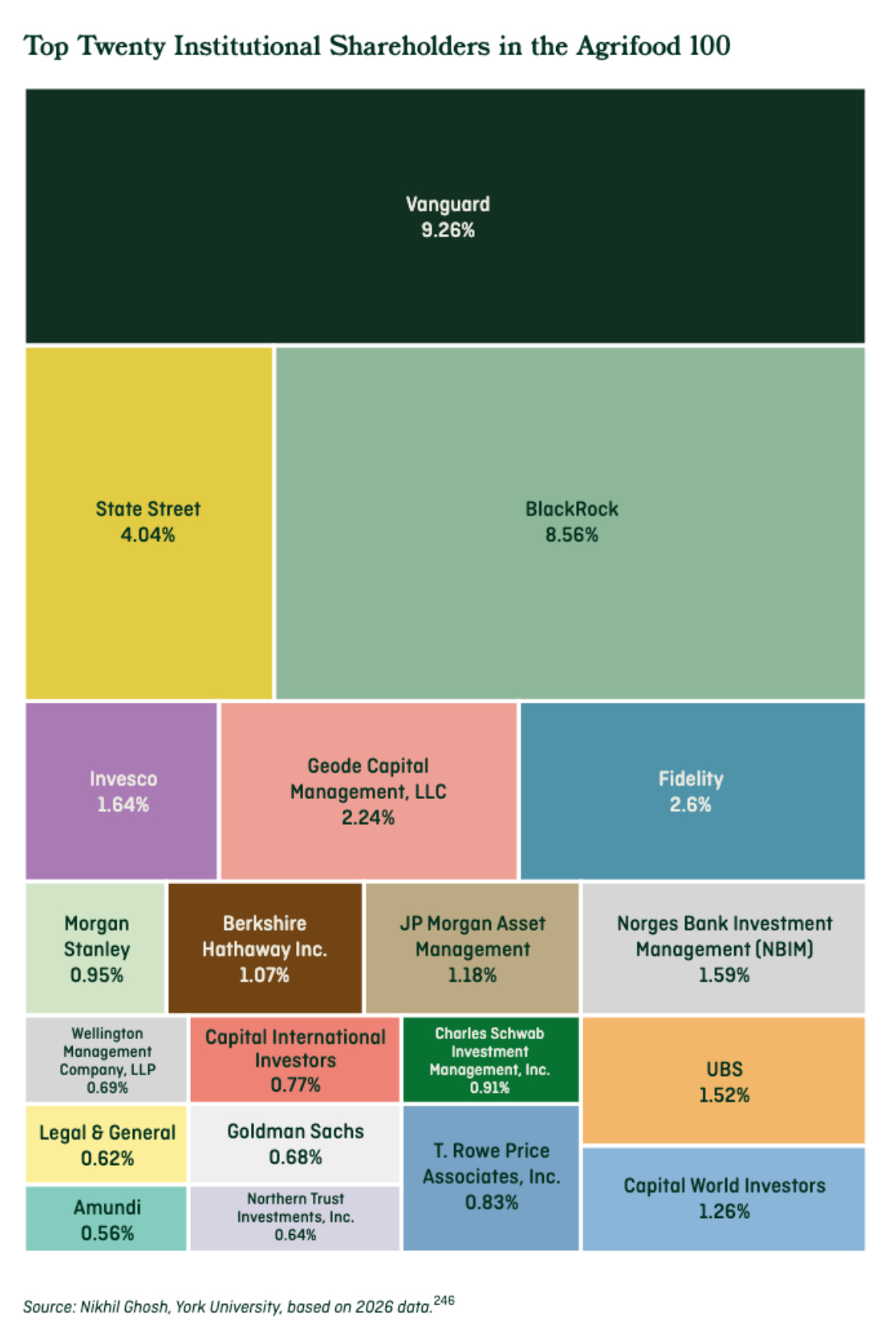
These are the findings of Food, Land & Money, a report by Friends of the Earth U.S., launched on Tuesday, Sep 22, during the NY Climate Week as part of A People’s Forum on Food, Land, Forests & Finance.
Developed with the support of a dozen other organisations, the report argues that the current system is fundamentally driven by profit and financial speculation.
“It’s not a food system; it’s an agribusiness financial complex... it’s almost incidental that it produces food,” Jeff Conant, Deputy Director, Food, Forests & Finance at FoE U.S. and co-author of the report, said during a fireside chat with me at the report’s launch.
“It produces obesity. It produces land grabs... it produces ecocide, and it produces wealth for the 1%... if we want to transform the food system, we need to recognise that finance is really at the heart of it.”
The financialisation of our food and agriculture gets far too little airtime, despite eye-popping findings like this one from the UN’s Trade and development report 2025:
“In global food markets, for example, over 75% of the income of major food trading companies now comes from financial operations like agricultural derivatives – not from moving wheat, coffee, cocoa or other agricultural products.”
This resonated with me deeply, because in May 2022, we published Hunger Profiteers, which found that excessive speculation by investors who have little to do with food production was driving food prices for ordinary people like us.
One enduring takeaway for me: most of us see the financial system and commodity markets as too complex and technical to understand, and those who benefit from the confusion would prefer we stay ignorant and leave it all to the ‘experts’.
The lack of transparency and data is shocking only until you realise it is a feature, not a bug.
“With the Trump regime we say the cruelty is the point, and one of the little headlines in here somewhere about this is the opacity is the point,” Jeff said.
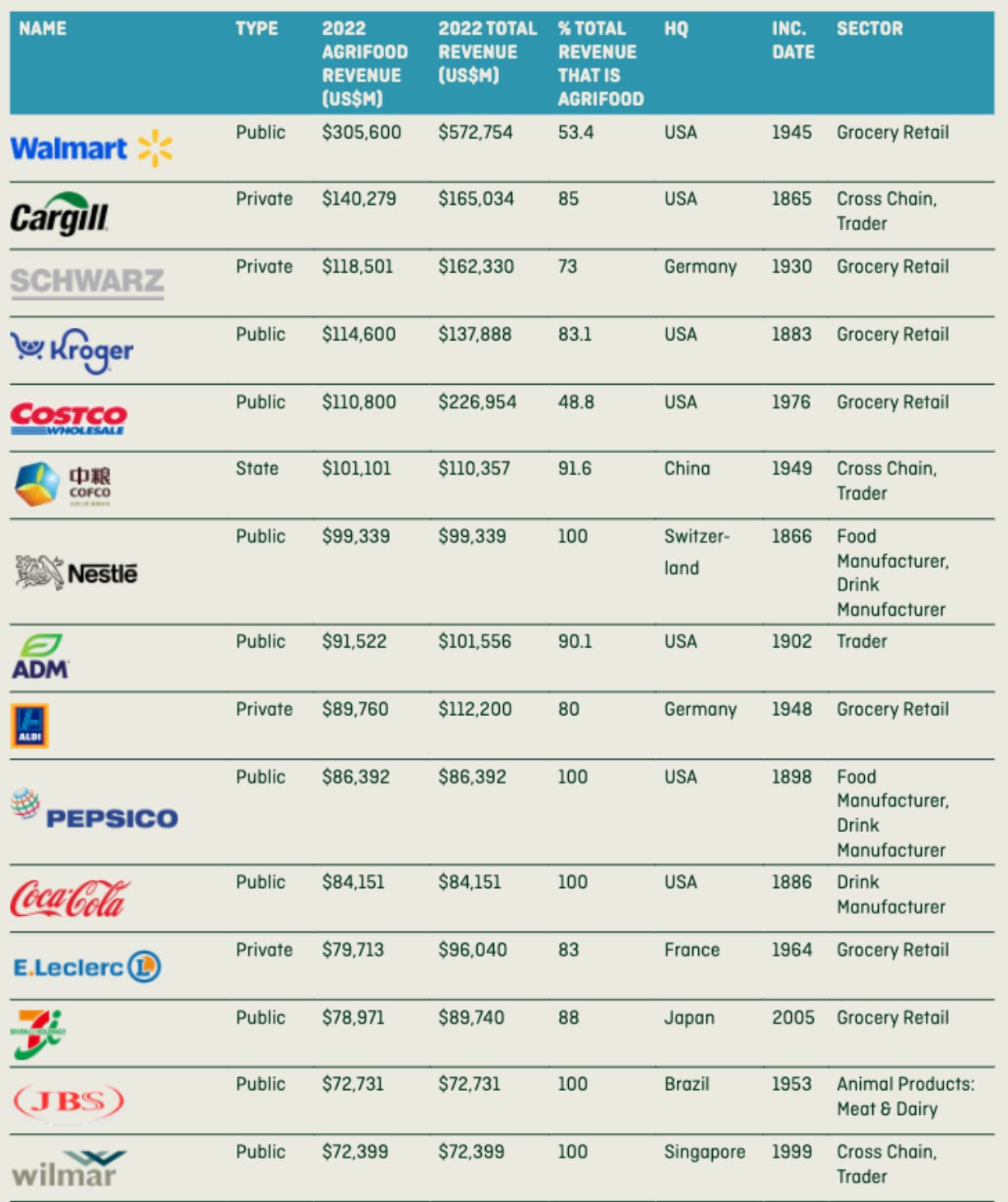
I can’t do justice to the report in this short write-up, but I urge you to have a read. It’s a great primer on where our food systems are and how we got there. Particularly useful for those who are just dipping their toes into this issue.

Hopewashing
I also attended two other events during my whirlwind trip: the Food Solutions Summit and Food Day. At the latter, I was struck when a participant talked about the need for “Hopewashing”.
No, not the kind that allows corporations and powerful folks to peddle the idea that they’re improving the world, but the kind that’s more like the Hope-based Communication developed by Thomas Coombes and inspired by Anat Shenker-Osorio.
I met so many like-minded folks, including several I’ve only known over Zoom, LinkedIn, and email, heard from inspiring speakers, and had enough galvanising conversations to leave the city genuinely energised. Just to name a few:
Monti Lawson on bringing together BIPOC, queer, and trans farmers through the Webatuck Valley Farm Collaborative in Hudson Valley, New York, and how they provided 1.45 million pounds of healthy, fresh food in the 2025 pilot year alone
James Beard-winning chef Sean Sherman talked about his efforts to improve health in Native communities through Indigenous foods
Iowa State Representative and physician Megan Srinivas spoke about how a group of determined Iowans mobilised communities to stop a bill that would have shielded agrochemical giant Bayer from lawsuits and how they are continuing this work
Steven Chen on his role as Chief Medical Officer for Alameda County’s Recipe4Health programme which has linked 23 health centres with 45 local, organic, and/or regenerative/agroecological farms and has served nearly 12,000 people so far
Michelle Hughes, executive director of National Young Farmers Coalition, on how 83% of respondents in a survey of 10,000 young farmers said they are in this profession for conservation or environmental stewardship
Andrew Steer, Chair of the Board of Trustees of the Royal Botanic Gardens, Kew, and Professor at the London School of Economics, on the current twisted incentives for corporations and the need to rethink our financial system
Emma Stewart of Climate Spring on how they are supporting screenwriters and filmmakers globally to see food and climate issues in a way that resonates with viewers who spend hours on their screens
Multiple speakers highlighted the power imbalances in our food systems and called for the issue to be front and centre in any discussion on food and agriculture.
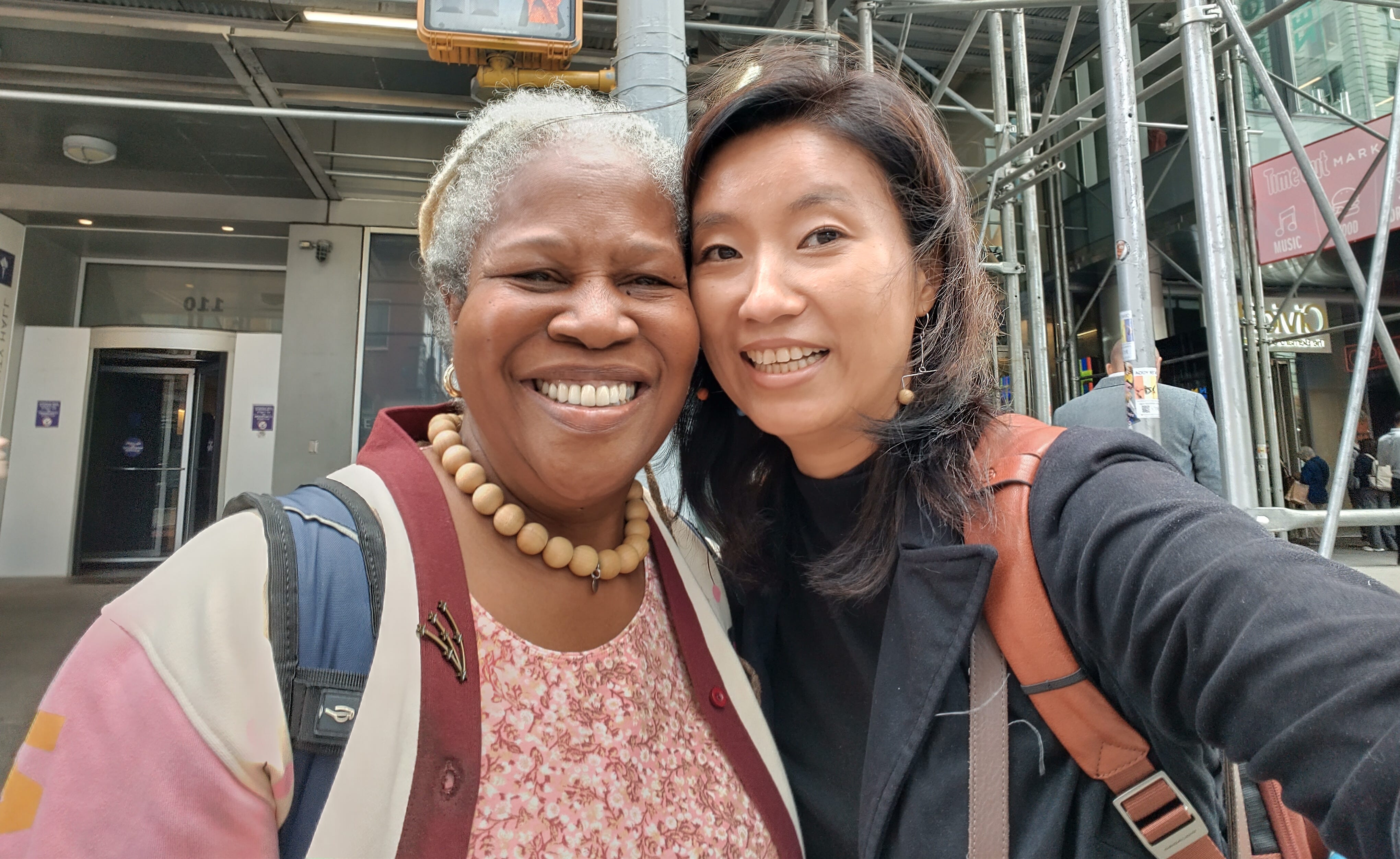
One of my favourite moments was the chance to meet Karen Washington, the founder of Rise and Root Farm and the doyenne of urban farming in New York.
I interviewed her six years ago in the depths of COVID for a feature story about food apartheid in the U.S., and the conversation profoundly shaped the way I view food access and power.
The resulting article remains one of my favourites to this day. So of course, I had to ask her for a selfie. If I look slightly unhinged in this photo, it’s because I was fangirling hard.

Thin’s Pickings
Beyond the Technical Fix: Why Managing Domestic Politics is the Key to Unlocking Health Taxes - LSE Blogs
“Political economy analysis should no longer be treated as a useful add-on to health tax reform. It should sit at its centre,” argue Will Klemperer and Douglas Mushinge, two policy advisors with Kivu International, drawing their conclusions from an analysis they did with Cancer Research UK on what’s happening in Kenya, Tanzania, Uganda, and Zambia.
MAHA Moms Built a Movement. MAGA Bros Have Taken It Over - Food & Environment Reporting Network and Mother Jones
Thought-provoking piece from Jill Filipovic, who wrote: “Much attention has been paid to the MAHA moms, and rightly so… But it’s the movement’s men who have ascended to the highest levels of power.”

As always, please feel free to share this post and send tips and thoughts on bluesky @thinink.bsky.social, mastodon @ThinInk@journa.host, my LinkedIn page, twitter @thinink, or via e-mail thin@thin-ink.net.
Thank you for your investigative sleuthing into which man-fangled companies own the crap-masquerading-as-food behemoths who do not give a flying false tooth about nourishing humans.....the only expansion they seek are trans-fattening their bottom lines.
When looking at the hugeness of the sector it is easy to become overwhelmed and believe 'there's nothing I can do'
BUT
when using the metaphorical and literal examples of being small and nimble, our smaller, personal, intimate and local-knowledge food groups possess the capacity to get things done when needed to.
Yep - we need to get over the idea we have to seek permission before we do anything.
Yep - we need to be visionary, brave and activate Gandhi's advice for civil disobedience and non-violent demonstrations.
If it is to be it is up to me......and my eating friends :-)
There certainly is a lot of preaching to the choir at climate weeks. I think of it sometimes as "therapy for those lost in the climate world." God knows it's hard in the climate world at the moment, so on the whole that's a good thing. However, as the first part of your essay points out, there's a whole world out there that works differently, and it's how we engage in those spaces that will determine how we deal with climate, food, and so on.