

When the world feels like it’s on fire and headlines are consumed by a single, all-encompassing event, I find myself asking: follow the zeitgeist, or stay the course? This was one of those weeks.
There is no doubt that fragile food systems will be among the casualties of so many cruel decisions like this and this. But there are people far better qualified than me to dissect the immediate fallout (see Thin’s Pickings below).
I’m sticking to what I had planned, which also speaks to a community disproportionately affected by both conflict and climate change: women.
Sunday, Mar 8, marks International Women’s Day. The United Nations has also designated 2026 as the “International Year of the Woman Farmer”. Besides, it has been two years since a landmark report provided hard data on how women farmers are affected by climate impacts.
We can be sceptical of what sometimes feel like symbolic gestures. But as a woman - and as someone who has reported on women farmers and the structural barriers they face - I cannot let this moment pass without stating the obvious: inclusion is not a nice-to-have. It is a precondition for resilient food systems.
Women are central to producing food, and they must be central to shaping its future.
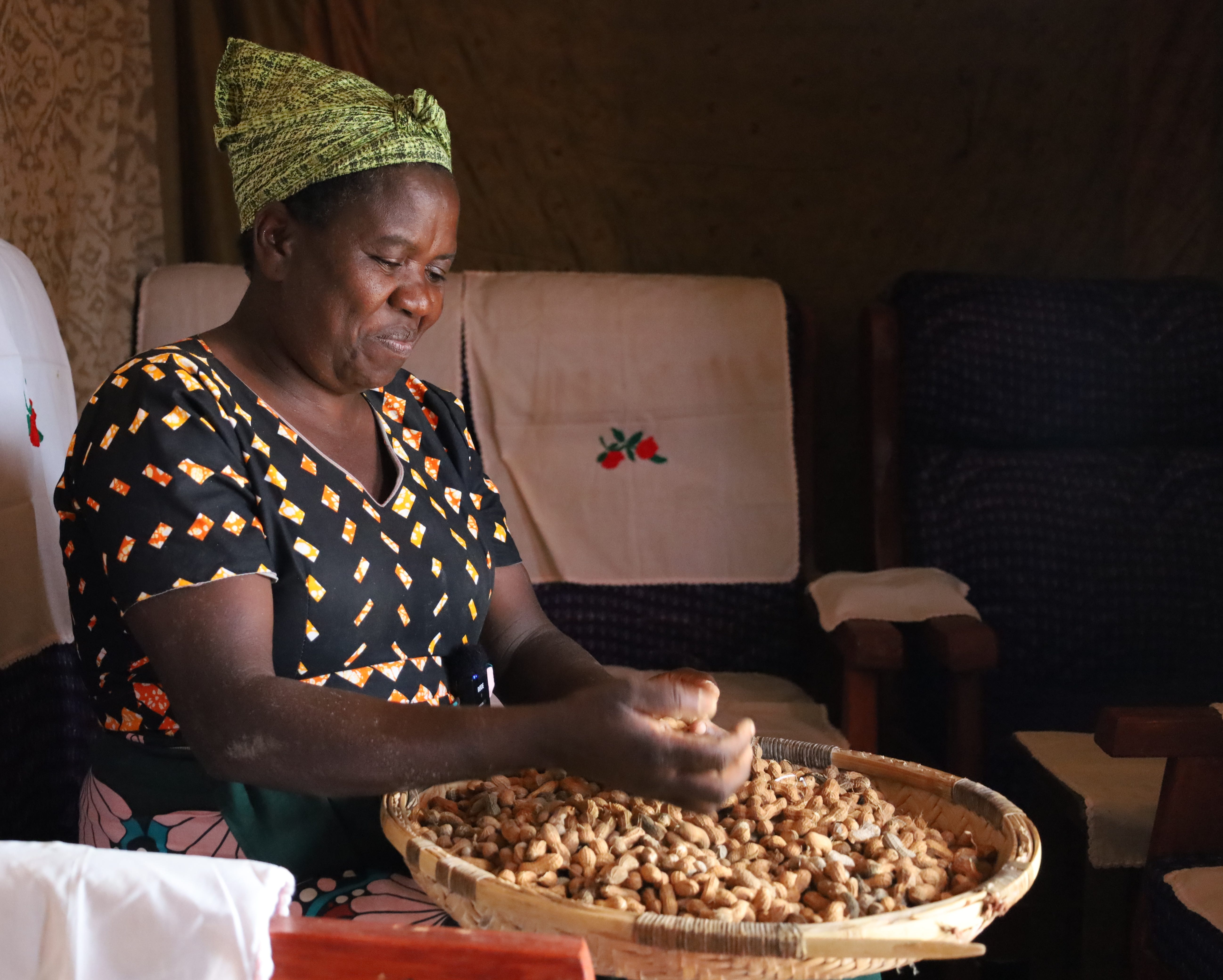
Two years after FAO’s landmark report The Unjust Climate laid out how climate change hits women farmers harder, the question isn’t whether we know enough: it’s whether we’re acting on it. Thin Ink covered the report here.
As the International Year of the Woman Farmer gets underway, I spoke to Piedad Martin, Deputy Director of FAO’s Office of Climate Change, Biodiversity and Environment (OCB), about what happens when women are not treated as climate victims, but as architects, and why, in climate finance, what gets measured still determines what gets funded.
Note: The conversation has been lightly edited for length and clarity.
Q: Two years ago, the FAO published The Unjust Climate, a landmark report on how climate change hits women farmers harder. As we head into International Women’s Day and the International Year of the Woman Farmer, what has actually changed for rural women since that report came out?
A: It’s impossible to say exactly what has shifted for rural women in just two years. But what has changed, I think, is that we now have much sharper evidence on how climate risk widens existing gender gaps and we know policy and finance have a very big role to play.
From our work on Global Environment Facility projects, we know that when women’s participation and leadership is at the centre - not just an add-on - local initiatives have stronger ownership, fewer implementation bottlenecks, and the outcomes, both environmental and economic, are sustained for longer.
One finding from The Unjust Climate that I think is very important: women farmers are as capable as men of adopting climate-adaptive practices when facing climate extremes. The problem is not willingness, it is the structural constraints: land ownership, access to credit, access to climate information, technical support, whether they are participating in cooperatives and water user associations.
Something that is very important I’ve seen in the field is time poverty, driven by unpaid care, and discriminatory norms that limit mobility and market participation.
These barriers are economic, institutional and cultural, but they limit the ability to act on climate action, even if women have the knowledge and the interest. When we dismantle these barriers, the transformation is immediate and visible, and awareness of these constraints is increasingly shaping better programme design.

Q: Some of the findings in The Unjust Climate - that women face steeper losses from climate shocks, that they are more exposed and less protected - felt almost intuitive. Why does it matter to put hard numbers behind something we might already sense to be true? And did anything in the data actually surprise you?
A: When it comes to the intersection between environmental, climate data and gender, we still lack enough data on how climate change is impacting women, because most systems are not collecting, analysing and reporting sex-disaggregated and gender-responsive information.
And something that has been discussed in the loss and damage discussion is that non-economic and qualitative losses - where many gender impacts are concentrated - are very difficult to measure. Until these gaps are addressed, women’s climate realities are only partially visible, and climate policies risk reinforcing existing inequalities instead of closing them.
Yes, it seems obvious that when there is a climate extreme, you need more time to look for water, or you have more burden if you are a woman because your children cannot go to school. But if we don’t have hard data, it’s easier to dismiss these issues.
Data turns the “women are vulnerable” theme into a quantifiable risk to food security and resilience, so we can have an appropriate response. And it matters because, unfortunately, what gets measured gets attention and funds. If the problem is not documented, it doesn’t show up in investment cases and monitoring systems, and if it’s not in those systems, it doesn’t attract sustained financing or accountability.
This data helps answer the “so what?”, not just that women are hit harder, but why. And this can lead to solutions that work best for them. I can give you an example.
I’ve been doing vulnerability analysis in the field, and when you talk to men, they tend to identify damages to crops. But when you talk to women, they tell you about the house, the elderly, the children - a completely different story about what the problem is and what the solution could be. That’s why it has to stop being only a collection of anecdotes and become more systematic.

Q: Women are so often portrayed as the victims of climate change: passive, exposed, waiting for intervention. From your work, where are women already acting as genuine decision-makers? And what happens when they are given real authority?
A: We are sure that women are not just experiencing climate impacts: they are actively shaping climate solutions. They are organising cooperatives, participating in Farmer Field Schools, managing restoration groups, and running producer associations. But the real shift is happening, as I said, when women hold authority over resources, decisions and economic opportunities, not just when they are consulted.
When women gain these leadership roles and economic power, we are seeing three things. Climate actions become more grounded in local reality and more effective. The adoption rate of those actions increases, because women can be true agents of change. And women tend to reinvest the gains in the family, which leads to more consistent stewardship.
In Cambodia, we have a project called PEARL where women are not just attending training - they are planning climate-resilient production systems, running business plans, and managing to access loans. Through cooperatives, they are designing planting calendars to manage climate variability, being trained in Farmer Field Schools, but also training others in pest management, increasing yields and improving quality. They are accessing markets and credit, shifting from decision-making power at the plot level to influencing decisions along the entire production and commercialisation chain.
In the DRC, we have Dimitra clubs that empower women to organise and lead community restoration, but also problem-solving processes. They are coordinating across the community to agree on what land use they want, how to manage conflicts, and how to plan the use of resources. As a result, we are seeing stronger, climate-resilient livelihoods, but also more social cohesion - which is very important for resilience - and restoration that is aligned with community priorities because women’s voices are shaping those collective decisions.
And in Barbados, we have women in the Central Fish Processor Association turning fish waste into livestock feed and fertiliser, entering higher-value markets. The fish industry is very informal, so they are adopting circular economy solutions, diversifying their income, and building commercially viable enterprises - participating not just in low-margin roles, but in innovation, value addition and enterprise development.
I think this is why portraying women only as victims is misleading. It hides the fact that their leadership is one of the most under-recognised accelerators of climate and nature action.
Q: Are there plans within FAO for follow-up work on these themes?
A: We are focusing now on developing a technical review of more than 40 Global Environment Facility projects. What we want to look at is what happens when women’s empowerment is included from the start, particularly in programmes that work across the entire value chain, not just pilots. We tended to have pilots to try how women’s participation works, but now we are looking at the entire value chain.
The focus is on real inclusion: what happens when women’s voices are in the decision-making, when they have access to resources and services, and when they can also control the benefits.
What we are seeing is a pattern of having stronger results - higher uptake of climate practices when women are in the information and training, stronger livelihood options when they access markets and credit is translated into income, more durable biodiversity and land results because the stewardship is anchored in the community, and better delivery with fewer bottlenecks, more legitimacy and more sustained momentum for environmental actions.
That’s why we think this follow-up work matters. It helps move from good intentions to seeing what is really working and what we can change, so these investments deliver for women as well as for everyone else. We are finalising it this year, we want it to strengthen all the programming for the next GEF cycle.
Q: What are the most common gender-related blind spots in the design of climate and biodiversity programmes?
A: I would name four. The first is time poverty. When you schedule training, the workload assumptions are normally built around men’s availability and often around urban people’s availability.
I have been in communities where people say: we cannot meet early in the morning because we need to care for the cows first. The care burdens and the extra labour are a real constraint for women. It is not a motivation issue.
The second is that solutions requiring capital without first fixing access to finance leave women behind. If women don’t have the collateral or access to banking and financial services, these beneficial practices are simply out of reach for them.
The third is land and tenure realities. Programmes promoting long-term stewardship - trees, restoration, soil improvements - need to address land rights and decision authority. If we don’t have tenure security in the community and for women specifically, investing in nature-positive practices is very risky.
And the fourth, which I think we sometimes miss, is the potential for backlash if we empower women without bringing men along as allies. There is a risk of resentment, or worse, or of undermining any chance of success. We have also seen issues with gender-based violence, and we have to be very mindful of these realities when working with men and women together.
Q: I’ll be honest. I get impatient about this issue. We have known for decades that women face structural discrimination. At what point do we stop producing evidence and start shifting money, land rights and decision-making power?
A: I think it is shifting. The number of countries where women have legal access to land is increasing, but of course it needs to accelerate. All the multilateral environmental conventions and the funds associated with them now have clear requirements related to gender action plans and women’s empowerment in the field. But I agree that we still need initiatives like the International Year of the Woman Farmer so people don’t forget.
I think it is even more important now to highlight the benefits of investing in women farmers - not only to have them in the projects, but as an investment opportunity, because we know they will deliver spillovers in food security and nutrition.
We are not paralysed by the limitations on data. We are trying to build the evidence with them. This means designing investments with them, implementing through them, and monitoring successes also through the women’s lens. But it is still a challenge, as I said at the beginning.
Q: Climate stress can tighten the squeeze on land and water in ways that spill over into conflict. Have you seen cases where women’s participation has actually reduced those tensions?
A: Yes. Climate stress is tightening the squeeze on resources - rivers are drying up, soils are eroding - and we are seeing tensions across communities on who gets the water, who gets access to productive land.
The control over those resources is not always including women. But where they are involved, it is improving trust and fairness in resource management.
In Yemen, in many areas, women have a traditional role as impartial conflict resolution actors - they are able to mediate across tribal and community lines. We implemented a project explicitly framed around mitigating water-based conflict, and we identified that role and built on it.
We supported the establishment of women’s water user groups and conflict resolution committees that mediate these disputes, alongside rehabilitating irrigation canals and other infrastructure. And we are seeing this mechanism work - an increase in access to irrigation water, but also an increase that is more fair across the community.
Q: It’s the International Year of the Woman Farmer. By the end of this year, what would make you feel it wasn’t just symbolic?
A: Success would mean it’s not a one-year campaign. I would like to continue seeing women farmers on the agenda of climate, biodiversity and food investments after the year ends.
Success would mean they are at the front and centre when it comes to finance and project design, and that we can actually see and visualise the changes on the ground - in finance, extension, time-saving infrastructure that makes participation more possible.
It will also mean that women have real authority, not just attendance - more women in decision-making roles in cooperatives, in committees, in value chain governance, with measurable gains in access to land, credit and markets. Inclusion should be framed as a smart investment that improves returns.
I would like to see higher uptake of resilient practices and more durable land and biodiversity outcomes, and to be able to scale up as an investment, including bringing in private investment to scale up what we know works.
Q: Any final thoughts?
A: Maybe that in environmental and agricultural projects, power dynamics shape who benefits and who participates.
Women rarely face one barrier - many are rural or indigenous, landless, they head households, or they work in the informal economy. These overlapping discriminations mean that they start with less access to land, credit, training and decision-making spaces, which limits their ability to adopt climate solutions or lead adaptation efforts.
That’s why, even in what we call technical projects, we cannot ignore power and discrimination. If women don’t control the land they farm, or they cannot access loans, or they are not part of the governance of cooperatives, climate interventions risk reinforcing inequalities.
When these structural barriers are removed, they can have real authority and they can move from being described as vulnerable to being the change agents we need them to be.
Maybe the final message is this: we cannot have projects that only address some of the results while remaining blind to all the multiple discriminations that are happening on the ground.
Thin’s Pickings
Two sharp takes on the latest war and food systems
“How the war makes food more expensive” from Raj Patel is characteristically incisive. A long-time favourite voice (and former Thin Ink guest), Patel breaks down the ripple effects with clarity.
Meanwhile, Million Belay warned of Africa becoming “an economic casualty” because of the continent’s heavy reliance on imports for food, fertiliser, and fuel, in “The Gulf Crisis and Africa’s Food Calculus: A Hidden Vulnerability”.
What might a tax on unhealthy food look like? Four things we learned from our modelling - Nesta
Four lessons from a larger report on modelling a novel tax based on the UK’s nutrient profiling model (NPM), which evaluates food and drink products based on their overall nutritional composition rather than a single ingredient.
Why does this matter? Well, around two-thirds of adults in the UK are living with obesity and excess weight. The politics may be tricky, especially when it comes to taxation, but the status quo is neither natural nor acceptable.
Grain of Hope - Fix the News
A much-needed heartwarming - yet clear-eyed - story from Amy Rose.
“Australian silos were full. Sudanese refugees were starving. Rob’s response was blunt. He told Ken it was up to them. If governments around the world were slashing aid, it was time for ordinary people to step in.”
Pro tip: read this before the Picking below.WFP Executive Director Cindy McCain to step down, citing health concern - Devex (registration required)
Wishing Cindy McCain a full and speedy recovery.
What’s more concerning is the part about her possible successor: Kip Tom, a former U.S. ambassador to the U.N. agencies in Rome during President Donald Trump’s first term who publicly trashed agroecology and runs a farm regarded as one of Monsanto’s largest seed producers.
He’s “the frontrunner”, wrote Colum Lynch and Ayenat Mersie, citing a Republican source, who added, “He will implement an America First agenda in WFP and the UN more broadly. WFP could use a good DOGE-ing and Kip would definitely do that.”
For anyone who cares about global hunger, that is not a minor subplot.How feminist economics could change Europe - The Europeans
Not related to food systems but this interview from friends at The Europeans with Emma Holten, author of the book Deficit: How Feminist Economics Can Change Our World, is timely and a good listen.

As always, please feel free to share this post and send tips and thoughts on bluesky @thinink.bsky.social, mastodon @ThinInk@journa.host, my LinkedIn page, twitter @thinink, or via e-mail thin@thin-ink.net.